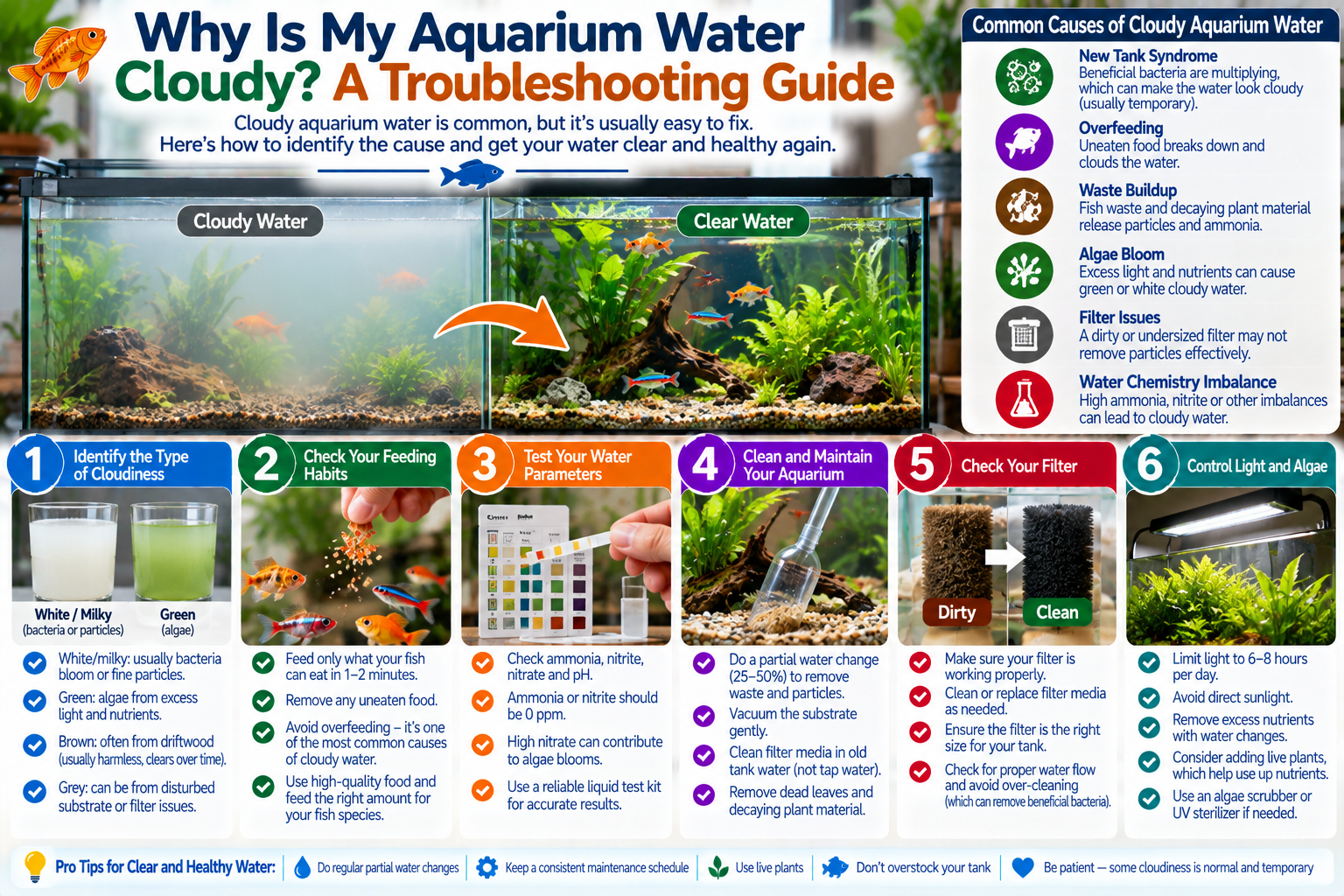

Cloudy aquarium water can look alarming, but its color and timing offer clues. A new tank, a recent deep clean and uneaten food point to different causes. Before adding a chemical clarifier, check the fish and the water.
Check the fish first
Fish gasping at the surface, acting weak or refusing food need urgent attention. Test ammonia and nitrite, confirm the filter is running and increase aeration if oxygen may be low. Seek advice from an experienced aquatic veterinarian or reputable aquarium specialist when fish seem distressed.
Use test results to decide
Cloudiness can have several causes. Test the water first, then change one part of the routine at a time.
| What you notice | Try this | Check next |
|---|---|---|
| New tank looks milky | Test water and review the cycle | Ammonia and nitrite readings |
| Cloudiness follows heavy feeding | Reduce excess food and remove waste | Fish behavior and test results |
White or gray haze
A milky haze in a new aquarium may be a bacterial bloom as the system settles. In an established tank, excess waste, rotting plant matter or overfeeding may contribute. Remove visible debris and uneaten food, and resist the urge to replace every piece of filter media at once.
Green water
A green tint often points to suspended algae. Review how long the aquarium light is on and whether direct sunlight reaches the tank. Excess nutrients can contribute too. Use a consistent light schedule and feed only what the fish consume; avoid drastic changes that stress livestock.
Cloud after cleaning
Disturbed substrate can suspend fine particles. Check that the filter is appropriate and working, then allow time for particles to settle or be collected. If cloudiness returns repeatedly, look at how much debris collects between water changes.
Use tests, not appearance alone
Clear water can still contain harmful ammonia or nitrite, and cloudy water does not reveal the exact chemistry. Record test results, temperature, recent maintenance and fish behavior. A measured partial water change with appropriately treated water may be needed, but match conditions to the species and current test results.
Our guides to cycling a new aquarium and doing a water change cover the basics behind stable water. Aqueon explains common causes of cloudiness here: Aqueon guide.
Check the numbers before changing equipment
Test ammonia and nitrite, especially in a new aquarium or after a filter has been cleaned. Cloudiness alone cannot tell you whether fish are safe. Preserve established filter media and make measured water changes when tests warrant them. Our aquarium cycling guide explains why a new tank may look unsettled.
A calm twenty-four-hour check
Write down when the cloudiness appeared, whether the tank is new, when you last cleaned the filter and how much food went in. Test ammonia and nitrite and note how the fish are behaving. A change in appearance without a change in the fish is still worth investigating, but it gives you time to work methodically.
If the tests show a problem, follow a measured water-change plan and keep the established filter media wet in tank water. Avoid cleaning every surface and replacing all media on the same day. Take another reading afterward so you know whether the step helped.
Frequently asked questions
Should I replace all the water?
Usually avoid a complete change, which can destabilize conditions. Follow test results and make measured changes as needed.
Will a new filter clear it immediately?
Not necessarily. Find the cause and preserve beneficial bacteria in established media.