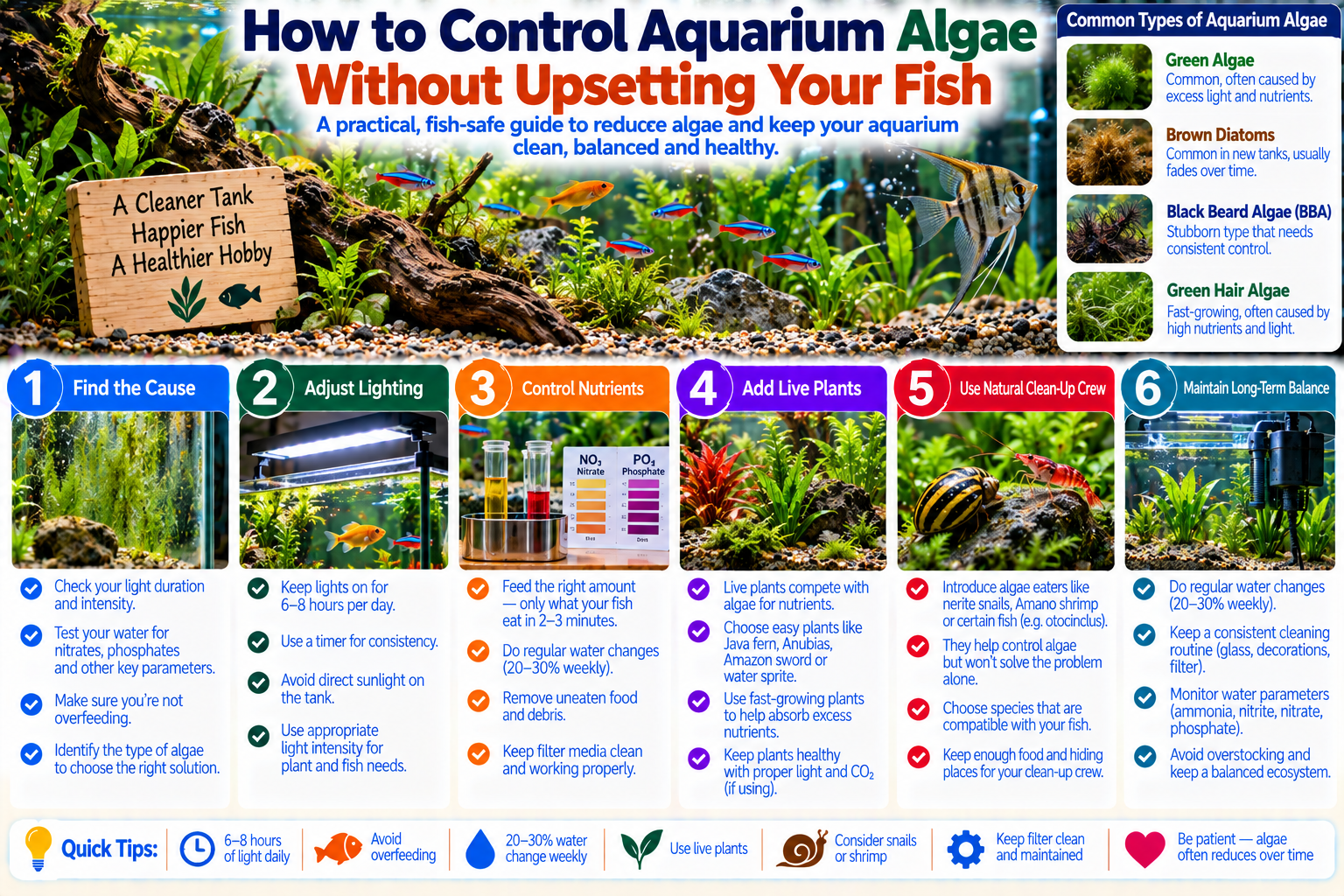

A little algae is normal in many aquariums. When it takes over the glass or plants, the useful question is what changed in light, nutrients or maintenance. A steady routine usually helps more than a sudden chemical treatment.
Identify the pattern
A green film on glass, long strands on plants and water that looks green are different problems. Take a photo before cleaning and note where algae grows fastest. This makes it easier to judge whether a lighting or feeding change is working.
Change one cause at a time
Algae control works best as a series of small observations, not a tank reset.
| What you notice | Try this | Check next |
|---|---|---|
| Algae spreads after long lighting | Shorten the light period modestly | New growth over the next week |
| Waste accumulates on surfaces | Remove debris during routine maintenance | Water tests and fish behavior |
Review the light
Place the aquarium away from direct sunlight where possible and use a timer for a consistent lighting period. Live plants have their own requirements, so avoid an arbitrary blackout without considering them. Adjust one factor at a time and observe the tank over several weeks.
Reduce leftover nutrients
Feed an amount appropriate to the species and remove obvious uneaten food. Check for decaying leaves and debris. Regular partial water changes and gentle cleaning can help keep waste from building up. Test water parameters, particularly if fish behavior has changed.
Clean carefully
Wipe the glass with an aquarium-safe tool and remove algae-covered dead leaves. Keep household cleaners and soap away from the tank. Do not scrub all filter media or replace it at once, because the filter supports the biological system that helps process fish waste.
Be cautious with algae eaters
A fish or snail should never be bought as a disposable cleaning tool. Every species has adult size, diet, water and social needs. Choose livestock only if you can care for it permanently and it suits the existing aquarium.
Track the response to each small change. Aqueon’s overview of nuisance algae discusses light, feeding and maintenance: Aqueon guide.
Change one variable at a time
Shorten the lighting period modestly and remove visible algae during regular maintenance. Then watch the tank for a week before changing food or fertilizer. This makes it easier to see what helped without destabilizing the aquarium. Follow our water-change guide for a consistent routine.
Work out where the algae is growing
Algae on a sunlit pane suggests a different first adjustment from algae on plants beneath a long-running lamp. Note where it appears and how many hours the light is on. Remove what you can during normal maintenance, then shorten lighting modestly if it is excessive.
Give the change a week before altering food or fertilizer too. A tank can look cleaner for a day after scrubbing without the underlying pattern changing. Keep testing water and watching fish throughout.
Frequently asked questions
Should I add an algae-eating fish?
Only if the species suits the tank for its whole life. Do not add an animal solely as a cleaning tool.
Is all algae harmful?
A little algae is common. Rapid growth is a reason to review light, nutrients and maintenance.