
At breakfast, one cat empties their bowl and heads straight for the other. The second cat pauses, backs away and leaves half a meal untouched. There may be no hissing or fight, yet the arrangement is not working for either of them. In a multi-cat home, the place and pace of feeding matter as much as what is in the bowl.
The aim is simple: each cat should be able to reach food, eat without being watched or blocked, and leave by a clear route. You can often improve meals by changing the layout before buying any special equipment.
Signs that mealtimes are tense
A cat does not have to growl to feel pressured. Watch what happens before, during and after food appears. These small signals are easy to miss if you only see both bowls empty later:
- One cat waits at the doorway or hangs back until the other has finished.
- A cat eats rapidly, glances around repeatedly or carries food away.
- One cat stands between another and the bowls, or follows them from station to station.
- A cat leaves unfinished food when the other approaches.
- Hissing, swatting or chasing happens near meals, even if the cats otherwise tolerate each other.
Check the pattern over several meals. A cat that walks away once may simply be full; a cat that repeatedly loses access to food needs a different setup. If possible, record who eats each measured portion rather than assuming that empty bowls mean both cats ate.
Is it social tension, or a health problem?
The timing and the cat’s behavior offer clues, but they cannot diagnose a medical issue. Changes in appetite, thirst or weight deserve a veterinarian’s assessment, especially when they happen suddenly.
| What you notice | Try changing the setup | Ask your vet about |
|---|---|---|
| One cat leaves when another approaches | Feed behind a closed door or out of sight; watch the full meal | Any continued low intake or weight loss |
| A fast eater steals the second bowl | Supervise separate stations and remove leftovers after meals | New hunger, weight change or a diet that no longer suits the cat |
| A cat suddenly refuses food even when alone | Offer a quiet space, but do not wait for a layout change to fix it | Prompt evaluation for illness, pain or dental trouble |
Cats can hide illness well. If a cat stops eating, seems unwell, vomits repeatedly or is losing weight, contact a veterinarian promptly. A bowl move may make a healthy cat more comfortable, but it cannot treat pain or disease.
Set up feeding stations that cats can actually use
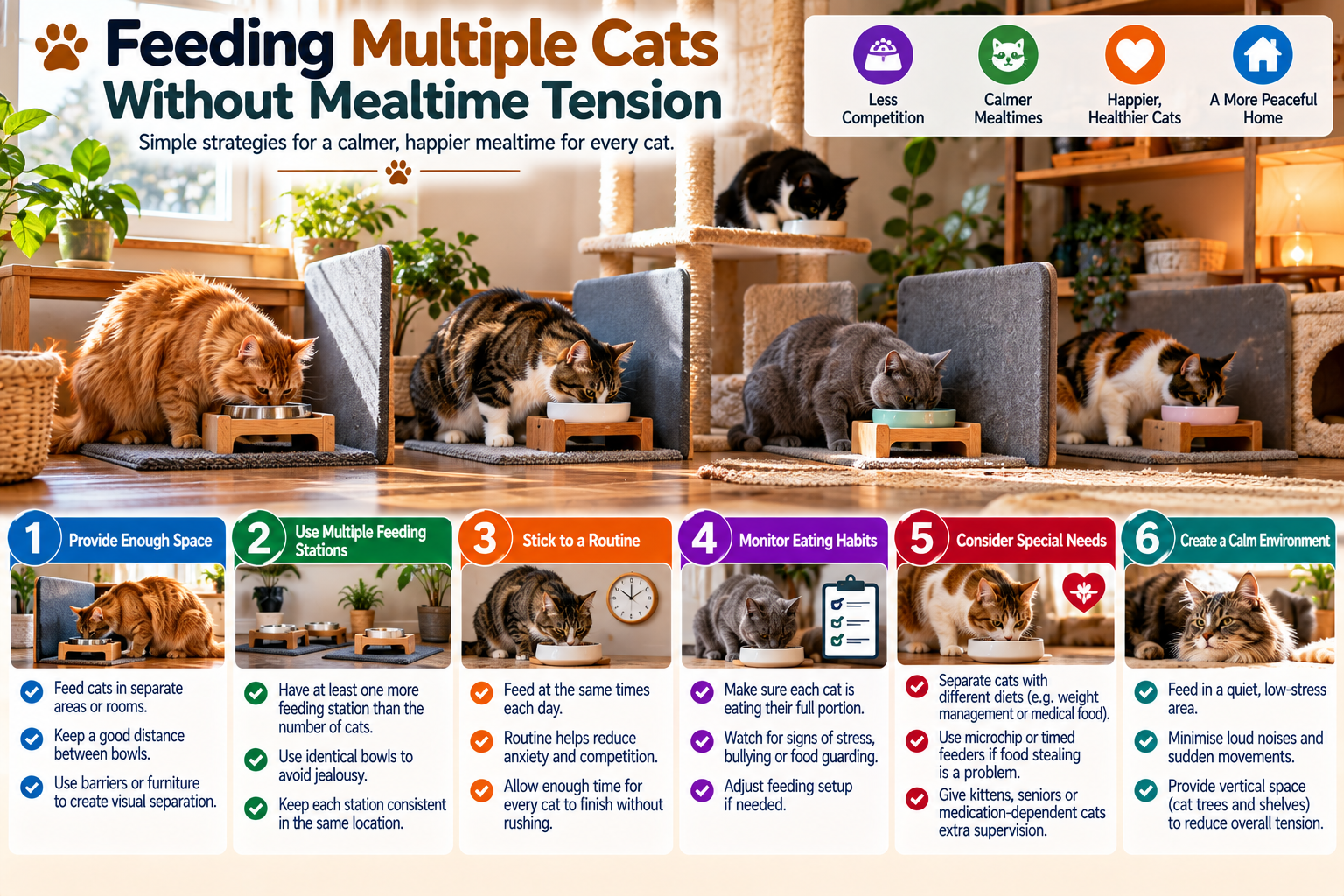
Separate the bowls by sight, not just inches
Two bowls at opposite ends of the same counter can still feel like one shared feeding spot. Use different rooms or positions where the cats cannot stare at each other while eating. Avoid a dead-end corner where one cat can block the exit. If a cat is older or less mobile, place their station somewhere they can reach without jumping or passing another cat.
Keep the routine predictable
Offer measured meals at a consistent time and stay nearby at first. If one cat finishes quickly, pick up that bowl and redirect them away from the slower eater. A door between cats for ten or fifteen minutes may be simpler than trying to referee an open room. Introduce the new arrangement gradually and watch whether each cat relaxes.
Track each cat’s portion
Separate feeding makes it easier to notice a change in appetite. Write down the amount offered and roughly how much remains for a few days, particularly if one cat has a prescribed diet or needs weight management. Do not put a cat on a restrictive diet without veterinary guidance. A microchip feeder may help in some homes, but it is an optional tool rather than the first step.
Water and other resources matter too
A cat may avoid a water bowl for the same reason they avoid food: another cat controls the route. Offer several fresh water sources in calm locations away from litter trays, and clean them regularly. Keep familiar bowls available while trying a fountain or new shape; let the cats show you what they prefer.
Food stations work best as part of a home with enough resting spots, hiding places and litter trays. If one cat guards several resources, the problem extends beyond dinner. Our indoor cat enrichment guide covers ways to add choice and usable space.
Mistakes that keep tension going
Assuming silence means comfort. Blocking and withdrawal can be quiet. Watch who approaches, who leaves and who actually eats.
Leaving one cat to “sort it out.” Repeated competition can mean missed meals. Use a door or other separation while you redesign the routine.
International Cat Care’s home-modification guide recommends distributing feeding and drinking resources around a multi-cat home. The exact distances depend on your rooms and on how your cats respond.
When to get more help
If one cat continues to hide, guard access or lose weight after you separate meals, speak with your veterinarian. Ask about a qualified cat behavior professional if the cats’ relationship is affecting daily life. Bring notes or a short video of mealtimes; the sequence is often more informative than a description of one argument.
If the tension began when another cat joined the home, slow down the introduction instead of forcing shared meals. Our cat introduction guide explains how to use separate spaces and gradual contact.
Frequently asked questions
Should my cats eat in separate rooms?
Yes, if one cat blocks, rushes or steals from another. A closed door lets you measure each portion and gives the slower cat time to finish. If both cats are relaxed at distant stations, separate rooms may not be necessary.
How many food bowls should I provide?
Each cat needs reliable access to their own portion. In practice, use one station per cat at mealtime and place them far enough apart that no cat has to negotiate another’s space. Add options if your home layout or the cats’ behavior calls for them.
Will a microchip feeder stop food stealing?
It can control access to a particular bowl, especially for different diets, but it will not by itself remove tension around the location. Give the cat a quiet route to the feeder and watch whether they use it comfortably.
What if one cat suddenly stops eating?
Contact a veterinarian promptly, particularly if the cat seems unwell or the change is abrupt. Offer a quiet feeding place while you arrange advice, but do not assume the other cat is the cause.