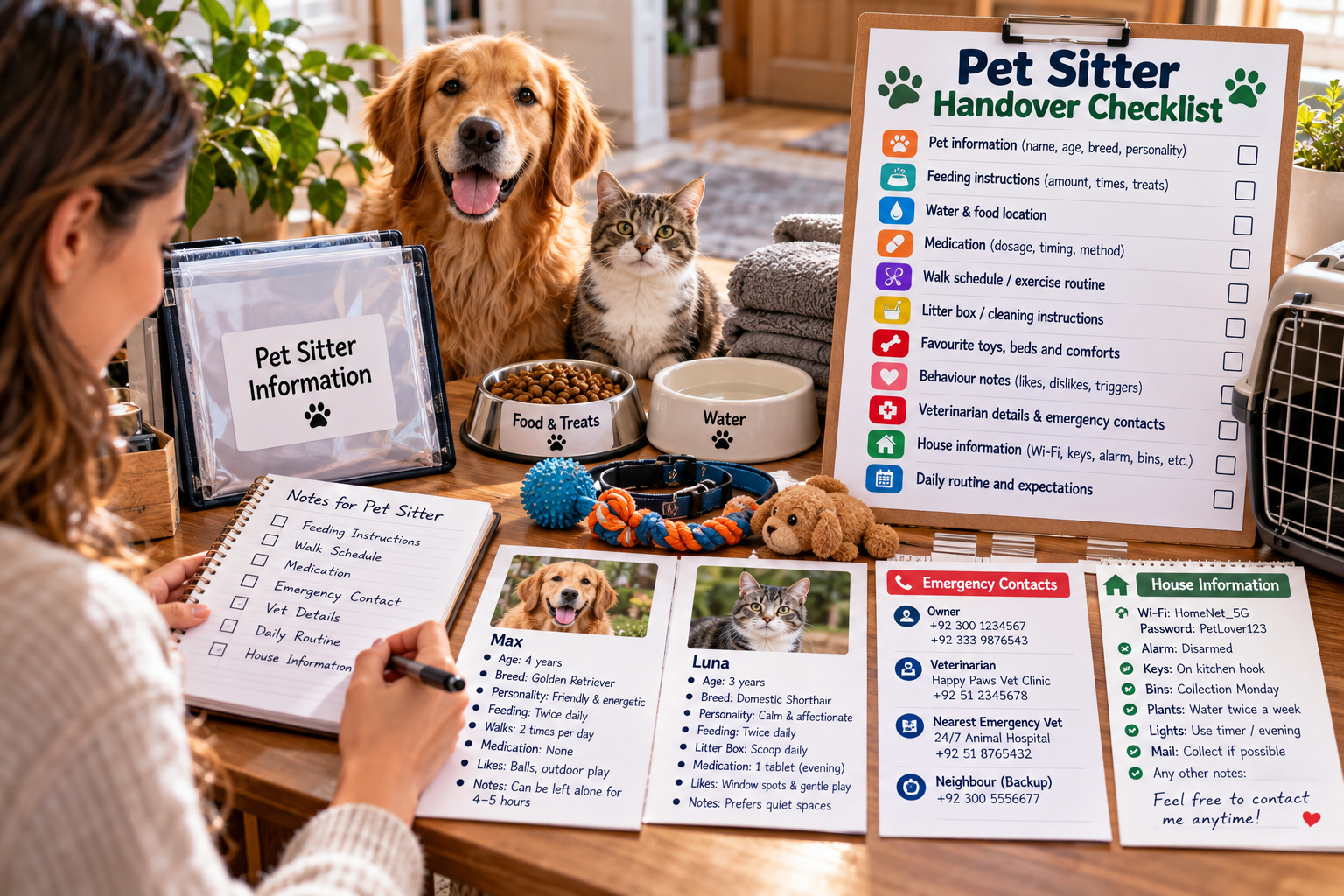

A good pet sitter should not have to guess which food belongs to which animal or where the carrier is stored. A short written handover makes ordinary care consistent and helps the sitter respond quickly if something changes.
Write the daily routine
List each pet’s name, feeding amount and time, water needs, exercise, cleaning and usual behavior. Show where supplies are kept. State which rooms, outdoor areas or other pets must remain separate. Include any habits that might look worrying but are normal for that animal.
Confirm the sitter knows the routine
A handover is complete when the sitter can find supplies and explain the emergency plan back to you.
| What you notice | Try this | Check next |
|---|---|---|
| Medication instructions are complex | Demonstrate and provide written directions | Sitter can repeat the steps |
| Pet eats less while you are away | Set a clear threshold for contacting you or the vet | Daily intake and behavior |
Explain medication exactly
Provide the veterinarian’s written instructions, dose and timing for prescribed medicine. Demonstrate the routine if possible and make sure the sitter is comfortable with it. Do not ask anyone to improvise treatment or change a dose.
Give emergency contacts
Leave your phone number, a backup contact, the regular clinic and an emergency clinic. Explain how to transport the pet safely and where its carrier, lead or medical records are kept. Agree in advance on how urgent veterinary decisions and costs should be handled.
Do a practical walk-through
Show the sitter door locks, feeding stations and any escape risks. Ask them to repeat key points and send a daily update. Leave written permission and contact details that the clinic may require, according to its policies.
Keep the sheet current whenever food, medicine or contact details change. A simple handover reduces uncertainty for both the sitter and the pet.
Walk through one normal day
Show where food, cleaning supplies and carriers are kept, then demonstrate any medication routine. Put the veterinarian and emergency contact numbers in writing. Ask the sitter to repeat the key steps and arrange updates so you can catch problems early.
Make the handover usable at 2 a.m.
Put the most urgent details on one page: pet names, medication times, veterinarian, emergency contact and the address where you are staying. Keep fuller feeding and cleaning notes underneath. The sitter should not have to search through a long message during a problem.
Walk through one ordinary day together and ask them to show you where the carrier, lead and supplies are. Agree how often they will send an update and which changes require an immediate call.
Frequently asked questions
What details matter most?
Food quantities, medication, usual behavior, vet contacts, emergency decisions and access instructions are essential.
Should I leave written instructions?
Yes. A written handover reduces guesswork even after a thorough walk-through.