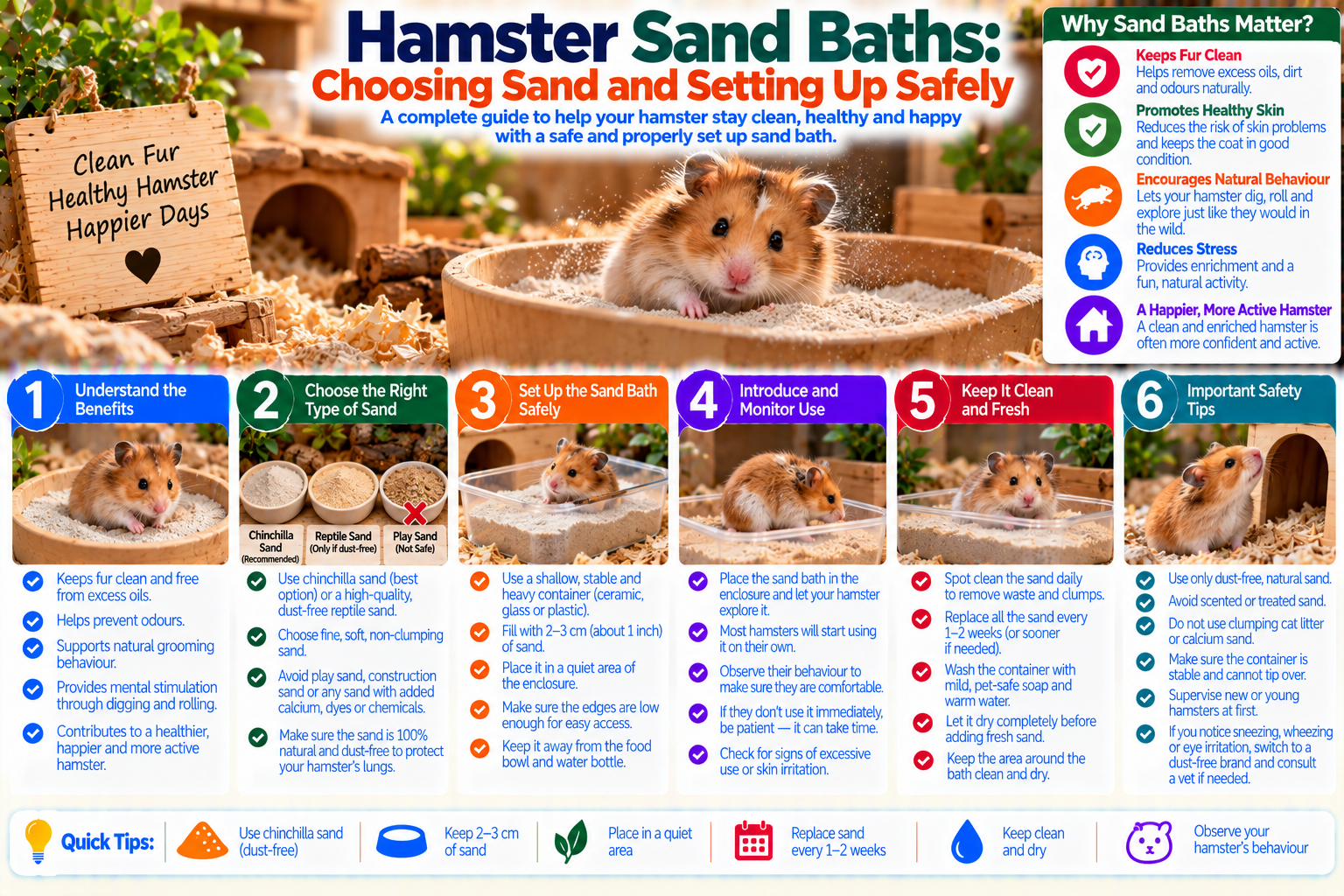

A sand bath gives a hamster another way to groom and explore. It is a distinct area within a varied enclosure, not a replacement for deep bedding, hiding places, and an appropriate wheel. A useful setup begins with the material and the stability of the container, not how decorative it looks.
Quick answer: Offer suitable low-dust hamster bathing sand in a stable container your hamster can enter and leave easily. Avoid dusty powders, scented products, and unknown outdoor sand. Remove wet or soiled areas regularly and keep the bath dry.
Choose sand carefully
Look for a product explicitly suitable for hamsters from a reputable supplier, and read the material information rather than relying on a picture of a small animal. Fine bathing dust sold for another species is not automatically appropriate. Avoid perfumes, dyes, and added calcium or other unnecessary additives.
If a product produces a cloud of dust during normal handling or the description is unclear, ask an experienced small-mammal veterinary team or welfare organisation before using it. Do not collect sand from a beach, building site, or garden, where contamination and composition are uncertain.
Select a container that supports normal movement
Choose a smooth, undamaged dish with enough usable space for turning and grooming. The entrance should be easy for your individual hamster to negotiate, including an older animal with reduced mobility. Avoid narrow openings or lids that create entrapment risks.
A heavy ceramic or glass dish needs stable support. Do not balance it on loose bedding where burrowing underneath could make it sink or tip. Position heavy items on a suitable secure base or platform, designed so the hamster cannot become trapped beneath it.
| Check | What you want |
|---|---|
| Material | Suitable low-dust sand without fragrance or unnecessary additives |
| Container | Smooth edges, room to turn, easy access |
| Support | Stable even when nearby bedding is tunnelled |
| Position | Dry, away from leaking water, with safe surrounding routes |
| Maintenance | Easy to inspect and remove soiled sand |
Let your hamster investigate voluntarily
Place the prepared bath in the enclosure and observe during the hamster’s normal waking period. Do not wake them up or place them repeatedly in the dish for a demonstration. Some explore immediately; others use it when the room is quiet.
Digging, grooming, and brief visits can all be part of use. Your hamster does not need to perform a particular rolling movement on demand. If the bath is ignored, check access and location before assuming the animal needs to be taught.
Keep a practical cleaning routine
Inspect the bath daily and remove wet or visibly soiled areas. Some hamsters use part of it as a toilet. Replace contaminated sand and clean the dish as needed with an appropriate pet-safe method, rinsing and drying fully before refilling. Do not simply cover damp sand with a fresh layer.
For example, check the bath when you replace drinking water, then note whether a particular corner is repeatedly wet. A leaking bottle or splashed bowl may require repositioning. Match maintenance to actual use rather than waiting for a strong smell.
Understand what sand cannot fix
A sand bath does not treat mites, skin disease, diarrhoea, or a persistently greasy coat caused by illness. Hair loss, wounds, severe scratching, a wet rear end, or reduced activity needs veterinary advice. Routine water bathing is not a substitute and can stress or chill a hamster; ask a vet about contamination that requires cleaning.
Roborovski hamsters particularly benefit from ample suitable sandy space, but the enclosure still needs other resources. Avoid filling the entire habitat with sand and removing the burrowing area.
See hamster cage and wheel basics and a balanced enclosure-cleaning routine.
Frequently asked questions
Can I use chinchilla dust?
Do not assume it is suitable. Very fine dust can irritate airways; choose an appropriate low-dust hamster sand and check the product details.
What if my hamster toilets in the bath?
Remove wet and soiled sand promptly and refresh as needed. This does not automatically mean the bath must be removed.
Does a sand bath replace bedding?
No. Hamsters also need appropriate deep bedding for burrowing, plus other resources and enrichment.