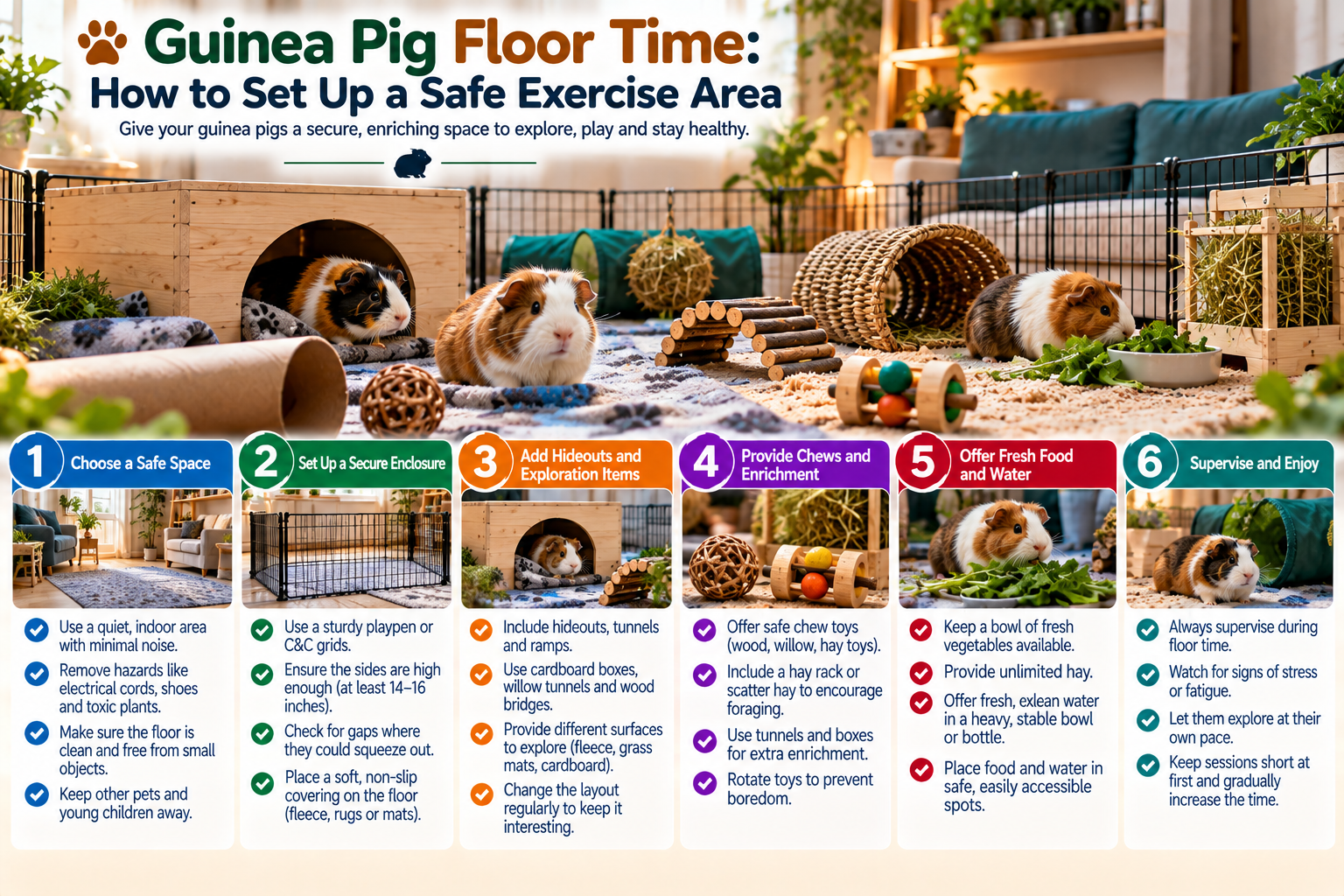

Guinea pigs need more than a place to sleep and eat. A roomy, safe exercise area lets them move, investigate and spend time with their companion. It can be simple: a secure floor space, several places to hide and constant access to hay and water.
Choose a quiet, contained space
Pick a room or pen where your guinea pigs cannot slip behind furniture, chew cables or reach cleaning products. Close doors and check for gaps. Keep cats and dogs out, even if they seem calm around the guinea pigs. Place a washable, nonslip surface over slippery flooring and remove anything that could topple.
Check the exercise area
Give your guinea pigs cover and an easy route between hides. Watch them before enlarging the space.
| What you notice | Try this | Check next |
|---|---|---|
| Guinea pig explores between hides | Keep cover available and expand slowly | Normal eating and movement |
| Guinea pig freezes in the open | Add cover and reduce noise | It begins to move at its own pace |
Add shelter before toys
A prey animal may hesitate in a completely open area. Put out several hideaways, ideally with more than one exit, so a guinea pig can move without feeling cornered. Add tunnels, hay piles and familiar bedding. If two guinea pigs share the space, offer enough resources that one cannot monopolize every hide or food spot.
Let them set the pace
Move the guinea pigs gently into the prepared area, then give them time to explore. Sit nearby and speak softly. Avoid chasing or repeatedly picking them up for play. You can scatter a little of their usual food in hay to invite natural foraging, but keep the normal diet balanced.
Check temperature and surfaces
Guinea pigs do poorly with extremes of heat or cold. Keep exercise away from direct sun, drafts and damp floors. Outdoors requires a secure run, shade, supervision and careful checking for unsafe plants or lawn treatments. An indoor pen can be a reliable option in unsuitable weather.
Return them without a scramble
Use a familiar carrier or hide to guide them back rather than grabbing a frightened animal. Clean soiled areas, refresh hay and check that the pen remains secure. If a guinea pig becomes unusually inactive, stops eating or seems unwell, contact an experienced veterinarian promptly.
Floor time should add to a spacious permanent home, not compensate for a cramped cage. Blue Cross explains guinea pig space and exercise needs in its care guide: Blue Cross guide.
A practical floor-time test
Place two hides with more than one exit at opposite ends of the space. Add hay nearby and sit quietly for ten minutes. If your guinea pig stays frozen, reduce noise and add more cover before expanding the area. The permanent enclosure matters just as much as playtime; see our guinea pig cage setup guide.
Frequently asked questions
How long should floor time last?
Follow the animals’ comfort and your ability to supervise. Short, calm sessions are more useful than a long stressful one.
Can I use an exercise ball?
Do not use a small-pet exercise ball for a guinea pig. A secure, open exercise area allows natural movement and hiding.