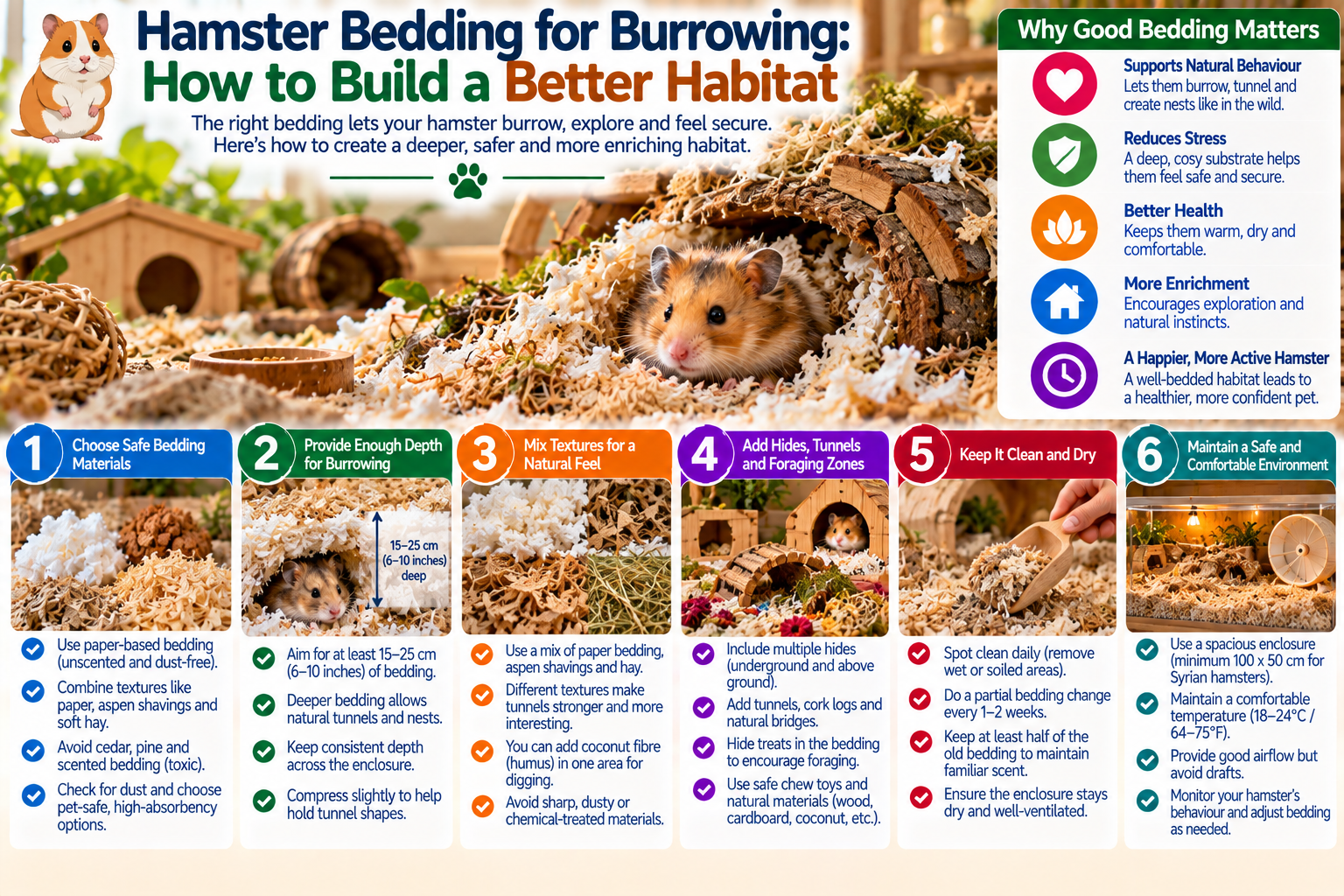

A hamster is built to dig and make tunnels. A thin layer of bedding may look tidy but leaves little opportunity for that natural behavior. The goal is a roomy enclosure with a generous, stable area of suitable substrate.
Plan for depth and floor space
Choose an enclosure that can hold a deep bedding section without spilling. Floor area still matters: a deep corner in a tiny cage is not a substitute for a spacious habitat. Arrange heavy items on solid supports so a tunnel cannot collapse beneath them.
Test the burrowing setup
A burrowable layer has to hold a tunnel and keep heavy furnishings from shifting.
| What you notice | Try this | Check next |
|---|---|---|
| Tunnels collapse immediately | Try more depth or a supportive mix | Hamster can burrow safely |
| Heavy hide shifts when bedding moves | Support it on a stable base | No risk of collapse |
Choose safe materials
Look for low-dust, unscented bedding suitable for hamsters and avoid fluffy nesting fibers that may tangle around limbs or be swallowed. Mix compatible materials if needed to help tunnels hold shape. Offer plain paper nesting material separately. Check the supplier and species-specific welfare guidance.
Make the burrow inviting
Put a multi-chamber hide or an entrance near the bedding so the hamster can start digging under cover. Add tunnels and scatter some of the normal food rather than putting every piece in a bowl. Give the hamster time to rearrange the habitat; frequent major changes can be disruptive.
Clean without removing every familiar scent
Spot-clean soiled areas regularly. During a larger clean, preserve some clean, familiar bedding where safe, and replace damp or dirty material. Watch for mold and verify that water bottles or bowls are not leaking into the substrate.
If a hamster sleeps, stores food and travels through tunnels, the habitat is doing real work. Blue Cross covers bedding and burrowing in its hamster care advice: Blue Cross guide.
Check whether tunnels hold their shape
Press a small test tunnel into the bedding and see whether the sides stay in place. Mixed paper bedding can offer better support than a shallow loose layer. Put heavy hides on a stable platform so digging cannot undermine them. Our hamster cage and wheel guide covers the rest of the setup.
Keep heavy objects above the digging zone
A hamster can move surprising amounts of bedding overnight. A ceramic hide, sand bath or wheel set directly on a deep loose layer may shift as tunnels grow underneath it. Support heavy items on a stable platform that reaches the enclosure floor.
Leave a broad area of uninterrupted bedding for digging rather than filling every surface with accessories. Check tunnels and furnishings during normal cleaning without dismantling every burrow at once.
Frequently asked questions
How deep should bedding be?
Provide enough continuous depth for real burrowing; the exact amount depends on the hamster and enclosure. More usable depth is generally better than a thin layer.
Can I use cotton fluff?
Avoid loose fluffy nesting materials that can entangle limbs or be swallowed. Choose suitable paper-based bedding instead.