
A rabbit may need a vet visit even when it dislikes travel. A sturdy carrier and a little practice can make the trip safer and calmer. Prepare the setup before the appointment so there is no rush to catch a frightened rabbit at the door.
Choose a secure carrier
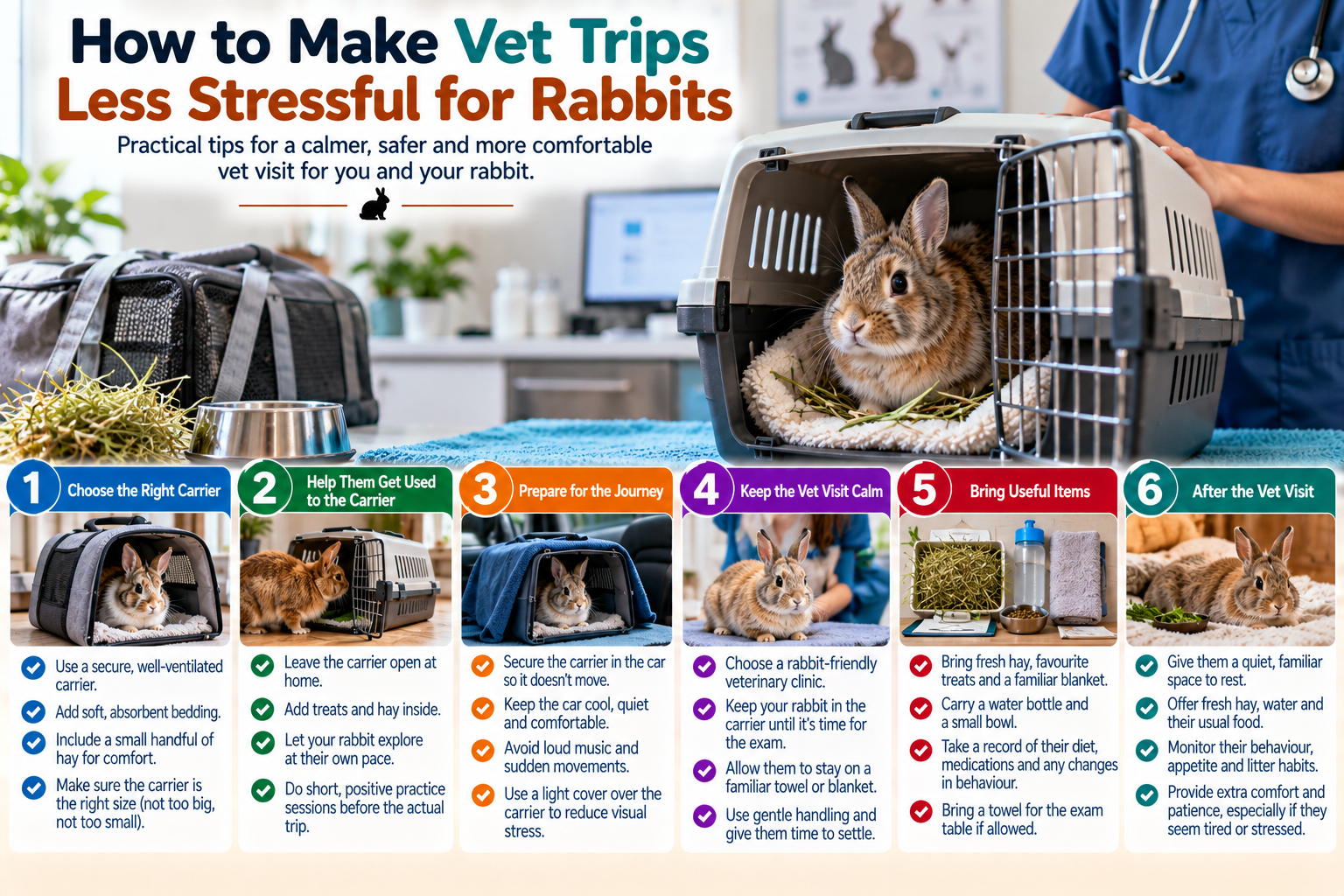
Pick a well-ventilated carrier with a solid floor and a reliable door. It should be large enough for the rabbit to turn and settle, but compact enough to remain stable in the car. A top-opening design can make gentle handling easier at the clinic. Line the floor with a nonslip towel or bedding, and add hay.
Watch eating after the trip
The return home is part of the trip. Eating and droppings are more useful clues than whether the carrier stayed tidy.
| What you notice | Try this | Check next |
|---|---|---|
| Rabbit enters carrier voluntarily | Reward calm exploration before the visit | Normal eating continues |
| Rabbit refuses food after returning | Call your veterinarian the same day | Droppings and alertness |
Make the carrier familiar
Leave the clean carrier in the rabbit’s usual space for several days before a planned visit. Place hay or a small amount of familiar food inside and allow voluntary exploration. Never shut the door suddenly as a surprise. Short practice sessions can build a positive association without forcing the rabbit to stay inside.
Travel with a bonded companion
If your rabbits live together, ask the clinic about bringing the bonded pair together. Separating companions can add stress and may complicate their relationship after a visit. Both rabbits still need enough room to sit comfortably in the carrier, and the clinic should know which rabbit needs examination.
Keep the journey steady
Secure the carrier so it cannot slide or tip during braking. Keep the car cool and well ventilated, and avoid direct sun, loud music and abrupt handling. Rabbits overheat easily, so in warm weather travel outside the hottest part of the day. Carry the rabbit into the clinic inside the closed carrier. A light cover may help some rabbits feel sheltered, provided airflow remains good.
Plan the return home
Put the carrier back into a familiar, quiet area and let the rabbit come out at its own pace. Check appetite, droppings and activity after the visit. Follow the veterinarian’s instructions exactly. If the rabbit stops eating or producing droppings, contact the clinic straight away. In rabbits this can turn serious within hours.
For urgent illness, do not delay veterinary care to practice carrier training. Source: Rabbit Welfare Association & Fund, “How to Transport Your Rabbits Safely” (Rabbit Welfare Association guide).
After the appointment
Keep the carrier available between visits so it becomes a familiar resting place. Our rabbit home guide helps you prepare a quiet recovery area.
Frequently asked questions
Should I withhold food before the trip?
Do not fast a rabbit unless your veterinarian gives a specific instruction. Bring hay and follow the clinic’s advice.
Can I use a cardboard box as a carrier?
A secure, well-ventilated carrier with a stable base is more reliable for transport.