
A comfortable car trip starts before the engine does. Dogs need a secure place to ride, a chance to get used to the car and a few familiar essentials within reach. A short practice journey can tell you more than an expensive travel accessory.
Choose a secure travel setup
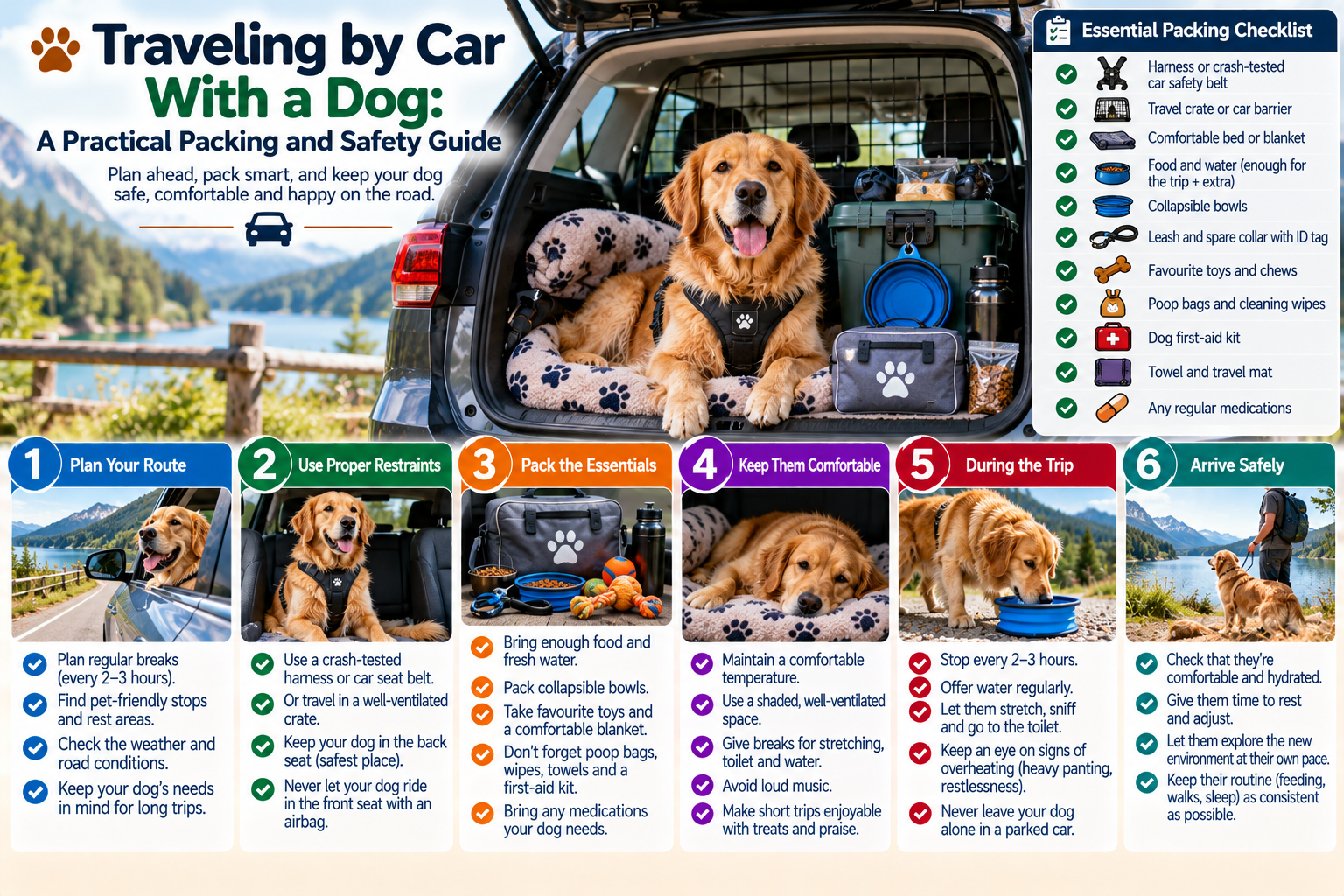
Use an appropriate crate, carrier or restraint that fits the dog and the vehicle. The dog should be able to settle comfortably without wandering into the driver’s space. Check the product instructions and the laws where you drive. Never let a dog ride unrestrained on a lap or with its head out of a window.
Use practice drives as a guide
A short rehearsal tells you more than a long packing list. Notice how your dog behaves before increasing travel time.
| What you notice | Try this | Check next |
|---|---|---|
| Dog settles on a short practice drive | Repeat before extending the route | Comfort remains steady |
| Dog drools, vomits or panics | End the practice safely and call your vet | Do not attempt a long first drive |
Practice before a long journey
Let your dog explore the parked car, then try a very short drive that ends somewhere pleasant. Increase trip length gradually. Some dogs find the motion stressful or become carsick. If your dog drools excessively, vomits or panics, ask a veterinarian for a plan before attempting a long trip.
Pack for the dog you actually have
Bring water, a bowl, waste bags, a lead, identification, any prescribed medicine and a familiar blanket. Pack the usual food if the trip overlaps mealtime. Keep a towel handy for muddy paws or spills. A pet first-aid kit can be useful, but it does not replace veterinary care.
Plan calm stops
On a longer trip, stop for water, a toilet break and a chance to stretch. Clip the lead on before opening the car door. Choose a safe stopping place away from traffic. Avoid leaving your dog alone in a parked car: temperatures can become dangerous quickly even when the day feels mild.
Make the destination easy
Check pet rules ahead of time and identify a quiet resting place on arrival. Keep the first hour simple: water, a toilet opportunity and familiar bedding. New environments can be noisy and overwhelming, so give the dog room to settle before introductions.
The safest setup depends on your dog, vehicle and route. Blue Cross has a fuller guide to traveling with dogs by car: Blue Cross guide.
The night-before checklist
Put the carrier or restraint in the vehicle and check its fit while the car is parked. Fill a water bottle, pack the normal food and medication, and save the clinic number for your destination. On the morning of travel, allow time for a calm toilet break. An anxious dog may need more preparation than a packing list can solve; short practice journeys and veterinary advice about motion sickness are better starting points than a long first drive.
Frequently asked questions
Can my dog ride loose in the back seat?
A suitable restraint or secured carrier is safer for the dog and people in the vehicle. Check fit before travel.
How often should we stop?
Plan regular breaks based on your dog’s age, needs and the weather, always using a lead before opening the car door.