
Pet birds need regular, uninterrupted sleep to stay healthy and well-behaved. Many companion birds do best with around 10 to 12 hours of quiet darkness each night, although the exact amount varies by species, age and daily routine.
In short: aim for about 10 to 12 hours of dark, quiet sleep each night, with the same bedtime and wake-up time every day. Keep the cage away from late-night noise and screens, use a breathable cover if it helps your bird settle, and talk to an avian vet if sleep or behavior changes suddenly.
Why sleep matters for pet birds
In the wild, most parrots and other companion birds sleep from sunset to sunrise. Indoors, lamps, TVs and late-night activity can easily cut that short without you noticing.
A bird that isn’t getting enough rest is often grumpier and more likely to scream, bite or overreact to things that normally wouldn’t bother it. Ongoing poor sleep can also add to stress, which may play a part in problems like feather plucking. A predictable night routine helps your bird settle and rest properly.
How much sleep do birds need?
| Bird | Typical nightly sleep |
|---|---|
| Budgies and cockatiels | Around 10 to 12 hours |
| Most medium and large parrots | Around 10 to 12 hours |
| Canaries and finches | Roughly in line with natural daylight, often 10 to 12 hours |
These are general guidelines. Your bird’s needs can change with the seasons, during breeding behavior or as it gets older. An avian vet can advise on your bird’s species.
Many birds also take short naps during the day. That’s normal, and it doesn’t replace a proper night’s sleep.
Create a calm night environment
- Keep the room quiet and dark at night, away from TVs, phones and bright lamps.
- Avoid sudden noise or people walking through the room late in the evening.
- Stick to the same bedtime and wake-up time every day.
- Place the cage against a wall in a secure spot, not in front of a window where headlights and outside movement can startle your bird.
- Keep the room at a steady, comfortable temperature, away from drafts and heaters.
If your main living room stays busy late into the evening, a small, simple sleep cage in a quiet bedroom can be a good solution. Your bird only needs to go into it for the night.
Should you cover the cage?
Some birds settle better with a cover over the cage, while others are perfectly fine without one. If you use a cover, choose a breathable fabric and leave some airflow, usually by leaving the lower part or one side slightly open. The goal is darkness and quiet, not an airtight box.
Check that there are no loose threads your bird could pull into the cage and get tangled in. Some birds chew their cover, so watch for that too.
Night frights
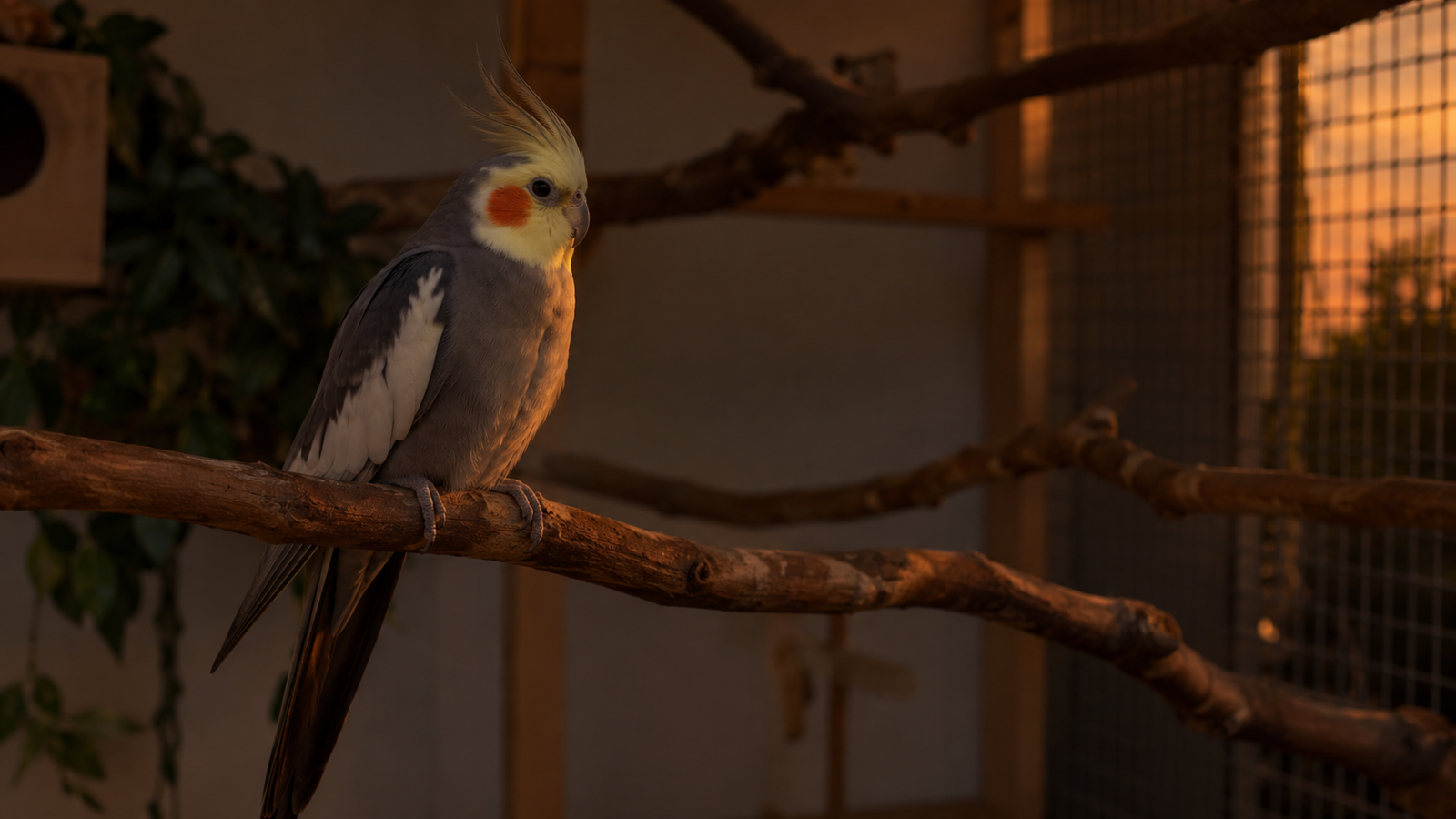
Some birds, especially cockatiels, can panic in the dark after a sudden noise or movement and thrash around the cage. This is often called a night fright, and it can cause bruising, broken blood feathers or other injuries.
If your bird is prone to night frights, a very dim night light near the cage can help it see where it is and settle faster. Keep perches clear of too many toys at night so there’s room to move safely.
Watch for sleep problems
Signs your bird may not be sleeping well include:
- Being unusually tired or sleepy during the day
- Restlessness, calling or moving around at night
- More screaming, biting or irritability than usual
- New feather plucking or overgrooming
Start by reviewing the sleeping setup. If the problem continues, or your bird seems unwell, talk to an avian vet. Sleeping far more than usual, especially sitting fluffed up during the day, can be a sign of illness rather than a sleep problem, so it’s worth getting checked promptly.
Keep the routine consistent
A regular sleep schedule is one of the simplest ways to support your bird’s health and behavior. You don’t need a complicated setup. Darkness, quiet and the same routine every night matter far more.
Tired birds are often noisy birds, as our guide on why cockatiels scream explains. For cage placement tips, see how to set up a lovebird cage.
Frequently asked questions
How many hours of sleep does a pet bird need?
Many companion birds, including budgies, cockatiels and most parrots, do best with around 10 to 12 hours of quiet darkness each night. Needs can vary by species, age and season.
Should I cover my bird’s cage at night?
It depends on your bird. Some settle better with a cover and others don’t need one. If you use a cover, choose a breathable fabric, leave some airflow and check for loose threads your bird could get caught in.
Is it normal for my bird to nap during the day?
Short daytime naps are normal. However, sleeping much more than usual, especially while sitting fluffed up, can be a sign of illness, so contact an avian vet if you notice it.
What is a night fright in birds?
A night fright is when a bird panics in the dark after a sudden noise or movement and thrashes around the cage. It is common in cockatiels. A dim night light near the cage can help your bird settle.