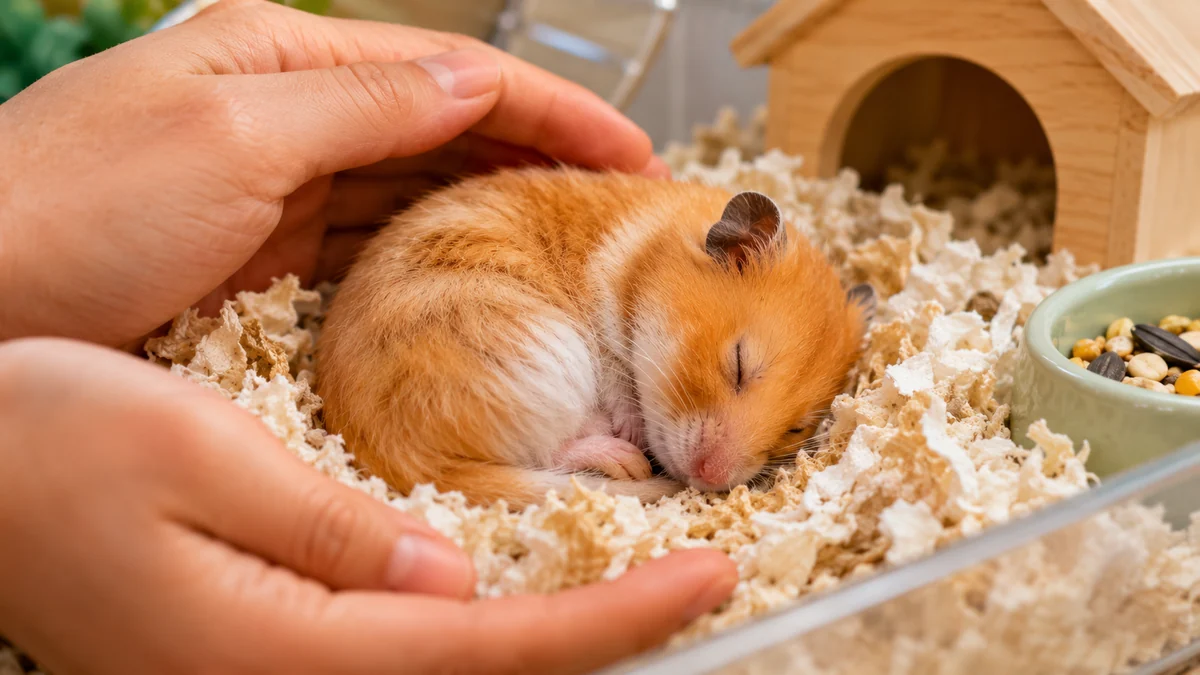

Finding your hamster cold, limp and barely breathing is frightening, and many owners assume the worst. Sometimes, though, the hamster has gone into torpor, a short, deep, energy-saving sleep that some hamsters slip into when they get too cold. A hamster in torpor can look almost lifeless but often wakes once it is warmed gently. It is not a healthy state for a pet, and it shouldn’t be left to carry on, so knowing how to spot it and what to do matters.
Quick answer: Torpor is a cold-triggered state where a hamster’s breathing, heart rate and body temperature drop for hours or days. Check carefully for slow breathing and a floppy body, then warm the hamster gradually in your hands or in a warm room. Never use a heating pad, hair dryer or other direct heat. If it doesn’t wake within a few hours, is stiff, or doesn’t respond at all, see a vet. Prevent it by keeping the room at about 65–75°F (18–24°C) without drafts.
What is torpor in hamsters?
Torpor is a short-term drop in body temperature and metabolism that helps small animals save energy when it is cold or food is scarce. It is similar to hibernation but much shorter, usually lasting a few hours to a few days. True long hibernation is mostly seen in wild hamsters; pet hamsters are more likely to go into torpor when their room gets too cold.
Cold is the main trigger, but shorter daylight hours and a lack of food can make it more likely. Vet guidance generally gives 65–75°F (18–24°C) as the comfortable range for pet hamsters. Sources vary on exactly when torpor starts. PetMD notes that very cold conditions, under about 41°F (5°C), are the most common cause, while other vets say a hamster in a cold spot or draft may go into torpor in a room that otherwise feels fine to you.
Torpor carries real risks. A hamster in torpor isn’t eating or drinking, and long periods can lead to dehydration, low body temperature and death. It is a sign that the setup needs to change.
Signs your hamster may be in torpor
- Deeply asleep and very hard to wake
- Cool to the touch, especially the feet, ears and tail
- Very slow, shallow breathing, sometimes only every minute or two
- A floppy body that is still soft and loose
- Occasional shivering or twitching
- Little or no eating, drinking, peeing or pooping
Torpor or dead: how to tell
Take your time here. Torpid hamsters can be very hard to read.
- Watch for breathing for several minutes in good light. Look closely at the sides and whiskers.
- Hold a small mirror near the nose and see if it mists up.
- Feel for a heartbeat very gently on the chest just behind the front leg, for a couple of minutes. It may be very slow and faint.
- Check the body. A hamster in torpor is cool but still floppy, and its legs move if you gently stretch them. A hamster that has died is usually cold and stiff.
- Try gentle stimulation. Lightly touch the whiskers or cheeks. A torpid hamster may twitch or respond slowly.
If you are unsure, assume the hamster may be alive and start warming it.
How to wake a hamster safely
- Warm it gradually. Hold your hamster in cupped hands or tucked inside your shirt against your skin, or wrap it loosely in a soft cloth warmed to body temperature. Move the cage to a warm, draft-free room.
- Avoid direct heat. Never use a heating pad, hot water bottle, radiator, hair dryer or oven. These can burn a hamster or warm it far too fast.
- Be patient. Gentle stroking can help. Many hamsters start to stir within a few hours once warmed.
- Offer food and water once it is awake. Let it eat and drink in its own time. Don’t force water into its mouth.
- Call your vet if it doesn’t wake after a few hours of warming, doesn’t respond to touch on its whiskers or cheeks, is stiff, or seems weak or unwell once it does wake.
Important: a hamster that seems to be “hibernating” in a warm room may actually be ill or injured. Don’t assume it is torpor. If the room is warm and your hamster is lethargic, cold or not eating, see a vet that treats small mammals promptly.
How to prevent torpor
- Keep the room comfortable. Aim for about 65–75°F (18–24°C) day and night, and keep an inexpensive thermometer near the cage. Watch for rooms that get cold overnight or when the heating switches off.
- Avoid drafts and cold spots. Keep the cage away from windows, outside doors, air conditioning and fans, and off cold floors. In hot climates, don’t put the cage right in front of the AC.
- Give deep bedding. Plenty of paper-based bedding lets your hamster burrow and build a warm nest. See our guide to bedding for burrowing.
- Keep food available. Make sure your hamster always has its food and water, and that its hoard isn’t removed completely when you clean. Our hamster cage cleaning guide explains how to spot clean without taking away its stash.
- Keep a regular day-night routine with normal room light, rather than leaving the hamster in a dark, cold spare room.
Overheating is a danger too, so don’t overcorrect with heaters aimed at the cage. Our guide to choosing a hamster cage and wheel covers where to place the setup in your home.
Frequently asked questions
Do pet hamsters hibernate?
Pet hamsters don’t normally hibernate in the full sense. If they get too cold, they can go into torpor, a shorter, hibernation-like state that lasts hours to days. It is a sign the environment is too cold, not a normal part of a pet hamster’s year.
How long can a hamster stay in torpor?
Usually from a few hours to a few days. The longer it lasts, the higher the risk of dehydration and low body temperature, so warm the hamster gently as soon as you notice and call a vet if it doesn’t wake.
What temperature is too cold for a hamster?
Most vet guidance recommends keeping hamsters at about 65–75°F (18–24°C). Rooms that fall well below that, especially at night or in drafty spots, make torpor more likely.
Can I use a heat mat to keep my hamster warm?
It is better to heat the room than the cage. Heat mats and lamps can overheat or burn a small animal that can’t move away from them. Keep the room comfortably warm and give plenty of bedding instead.