
Ferrets can be wonderful pets for the right household. They’re curious, playful and genuinely funny to watch, and many bond closely with their owners. They are also far more demanding than their size suggests, with specific needs around diet, space, safety and vet care that catch plenty of new owners off guard.
So are ferrets good pets? The honest answer is that they suit people who have daily time to give, a home they can make ferret-safe and access to a vet who knows exotic animals. Here’s what life with a ferret actually involves.
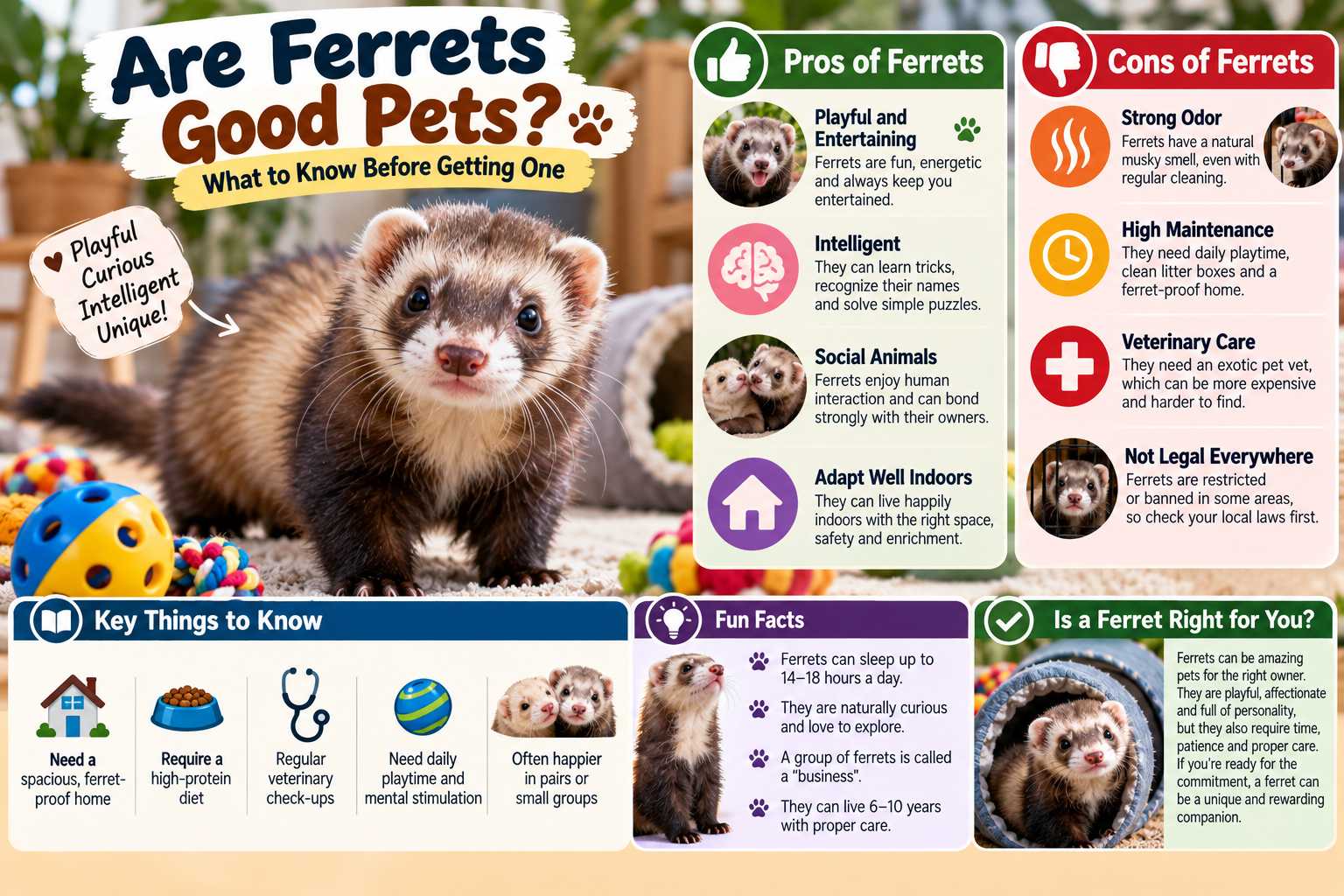
In short: ferrets commonly live around 6–10 years, sleep much of the day, and need several hours of supervised time out of their cage every day. They’re social, strict carnivores with a natural musky smell, and young ferrets often nip. They need vaccinations, regular vet checks and a thoroughly ferret-proofed home. They’re banned or restricted in some places, including California, Hawaii and New York City, and they don’t mix safely with small prey pets.
What daily life with a ferret looks like
Ferrets can sleep up to 18 hours a day, often so deeply in a hammock or blanket that they’re hard to wake. That can make them seem low maintenance. They aren’t. When they wake, they’re full of energy and need space to explore, play and burrow, plus company.
A cage alone isn’t enough, however large. Ferrets need several hours outside it every day, with 2–4 hours often given as a minimum, in a safe, supervised area. They tend to be most lively in the morning and evening, so many owners split play into two sessions. A ferret that’s kept caged most of the time can become bored, frustrated and harder to handle.
They’re also social animals. Many ferrets are happiest living with at least one other ferret, which gives them a playmate when you’re busy. They still need daily handling and play from you.
What people love about ferrets
- Personality. Ferrets are inquisitive, bold and playful, and each has its own quirks.
- Interaction. Well-socialized ferrets often enjoy being handled and playing games with their owners.
- Litter training. Ferrets can learn to use a litter tray, especially if trays sit in the corners they already choose as toilet spots.
The parts that surprise new owners
The smell
Every ferret has a natural musky scent. Neutering reduces it noticeably, and in the US many pet ferrets are sold already neutered and with their anal scent glands removed. Even then, some musk remains, and bathing won’t get rid of it. Washing bedding and keeping litter trays clean makes the biggest everyday difference. If you’re sensitive to smells, spend time around ferrets before committing.
Nipping
Young ferrets play rough with each other, and they often try the same games with people. Nipping is normal kit behavior, not aggression, but their teeth are sharp. Most learn to be gentle with patient, consistent handling. It does mean a young ferret isn’t a good match for a household that can’t put that work in.
Ferret-proofing your home
Ferrets are experts at squeezing into tiny gaps and will investigate anything they can reach. Before letting one loose, block off:
- Gaps behind and under appliances, cabinets and furniture
- Recliners and sofas with foam or hollow bases a ferret could burrow into
- Holes in walls, floors and vents (if a ferret can fit its head through a gap, its body will usually follow)
- Anything made of foam, rubber or soft plastic that they could chew and swallow
- Electrical cables, cleaning products and medications
Swallowed pieces of foam, rubber or plastic can block the intestines, which can be fatal, so check the room each time before play.
A strict meat-based diet
Ferrets are obligate carnivores. They need a diet high in animal protein, with a good amount of fat and very little carbohydrate or fiber. A commercial food made specifically for ferrets is the usual choice. Dog food isn’t a substitute, and sugary or plant-based treats don’t fit their needs. Their short digestive tract and fast metabolism mean they eat little and often, so food and fresh water should be available at all times.
Vet care and common health problems
Ferrets need a vet with exotic animal experience, so check there’s one near you before bringing one home. Plan on at least a yearly checkup. Ferrets are often considered seniors from around 3–4 years old, and your vet may suggest more frequent visits from then on.
Vaccination against canine distemper is recommended, starting when they’re young kits and followed by boosters. The disease is almost always fatal in ferrets. In the US, ferrets should also be vaccinated against rabies in line with local laws, and some states and localities make it a legal requirement.
Two hormone-related diseases are especially common, mostly in middle-aged and older ferrets:
- Adrenal gland disease, often showing as hair loss that starts at the tail and rump and spreads forward. Females may develop a swollen vulva, and males can have trouble urinating.
- Insulinoma, a tumor of the pancreas that causes low blood sugar. It’s very common in ferrets over three years old. Signs include lethargy, weakness in the back legs, drooling and teeth grinding.
Both need veterinary diagnosis and ongoing treatment, which is worth factoring into your budget.
Urgent: get your ferret to a vet immediately if it collapses, has a seizure, is unusually hard to wake, or strains to urinate, or if you think it has swallowed foam, rubber or plastic. These can signal dangerously low blood sugar, a urinary problem or an intestinal blockage.
Check they’re legal where you live
Ferrets aren’t allowed everywhere. In the US, they’re banned as pets in California and Hawaii and within New York City, and some other cities, counties and states require permits or have restrictions. Rules also vary in other countries. Check with your local government before you buy or adopt, and check your lease too, since many rental agreements limit exotic pets.
Children and other pets
Ferrets are natural hunters, and small animals such as rabbits, guinea pigs, hamsters, rats, mice and birds are prey to them. Keep those pets well out of a ferret’s reach. Some ferrets form friendships with non-prey animals like calm cats and dogs, but only after careful introductions, and they shouldn’t be left alone together.
They aren’t a good fit for families with babies or toddlers. Ferrets can nip, especially if they haven’t been well socialized or are startled or grabbed, and small children can easily hurt them. If you have young children, talk to a vet before getting a ferret. With older children who handle them gently, and with an adult responsible for their care, they can do well.
Who ferrets suit, and who they don’t
A ferret is likely to suit you if you’re home enough to give several hours of supervised play every day, you enjoy an active, mischievous pet, you can live with a mild musky smell and you’re prepared for vet costs, including for age-related illness. They’re less suited to people who want a quiet, hands-off pet, homes with small prey animals, families with very young children, or anyone whose schedule leaves the animal caged most of the day.
If you’re still weighing up options, choosing the right pet for your home walks through the questions to ask about time, space and cost. And for another small exotic with very different needs, see whether hedgehogs make good pets.
Frequently asked questions
How long do ferrets live?
Most pet ferrets live around 6–10 years, though some sources give a shorter average of 5–8 years. Accidents and illness shorten many lives, so a safe home and regular vet care make a real difference.
Are ferrets good pets for beginners?
They can be, if you’re prepared for the time they need. Ferrets need several hours out of the cage daily, a ferret-proofed home, a specialist diet and an exotic vet. People expecting a low-effort pet often struggle.
Do ferrets smell bad?
They have a natural musky scent that never disappears completely, even in neutered and descented ferrets. Neutering, washing bedding and cleaning litter trays keep it down. Bathing won’t remove it.
Should I get one ferret or two?
Many ferrets are happier with a companion of their own kind, especially if you’re out for part of the day. You still need to give each ferret daily time and attention.