
Hedgehogs can make fascinating pets, but they aren’t right for everyone. Pet hedgehogs, usually African pygmy hedgehogs, are nocturnal, fairly independent and need specific housing, steady warmth and a vet who knows how to treat them. Understanding what they need before you buy one is the best way to decide whether a hedgehog fits your life.
In short: hedgehogs suit patient owners who are happy with a quiet, mostly night-time pet. They need a warm, stable enclosure (roughly 72–80°F / 22–27°C), a large space with a solid wheel, a careful diet and access to an exotic vet. They’re also restricted or banned in some places, so check local rules first.
| What to know | Details |
|---|---|
| Activity | Mostly active in the evening and at night |
| Temperament | Independent. Some enjoy handling, others stay shy. |
| Social needs | Solitary. Best kept one per enclosure. |
| Temperature | Around 72–80°F (22–27°C), kept steady |
| Lifespan | Often around 4–6 years |
| Vet care | Needs a vet experienced with exotic small mammals |
Hedgehogs are mostly nocturnal
Hedgehogs usually sleep through the day and become active in the evening and at night, when they run, explore and eat. If you want a pet that’s awake and sociable during the day, or you’re a light sleeper and the enclosure would be in your bedroom, a hedgehog may not be the best fit. Their wheel can be surprisingly noisy at 2 a.m.
They need a warm environment
Pet hedgehogs need a stable, warm enclosure. Many care guides recommend keeping them at around 72–80°F (22–27°C). If they get too cold, they may try to hibernate, which is dangerous for pet hedgehogs and can be fatal.
- Use a digital thermometer in the enclosure, not just the room.
- If your home gets cold, use a ceramic heat emitter or other safe heat source controlled by a thermostat.
- Keep the enclosure away from drafts, windows and direct sun.
Warning sign: a hedgehog that feels cool to the touch, is unusually sluggish or wobbly, or won’t wake up properly may be attempting to hibernate. Warm it gradually, for example against your body, and contact an exotic vet straight away.
They need enough space
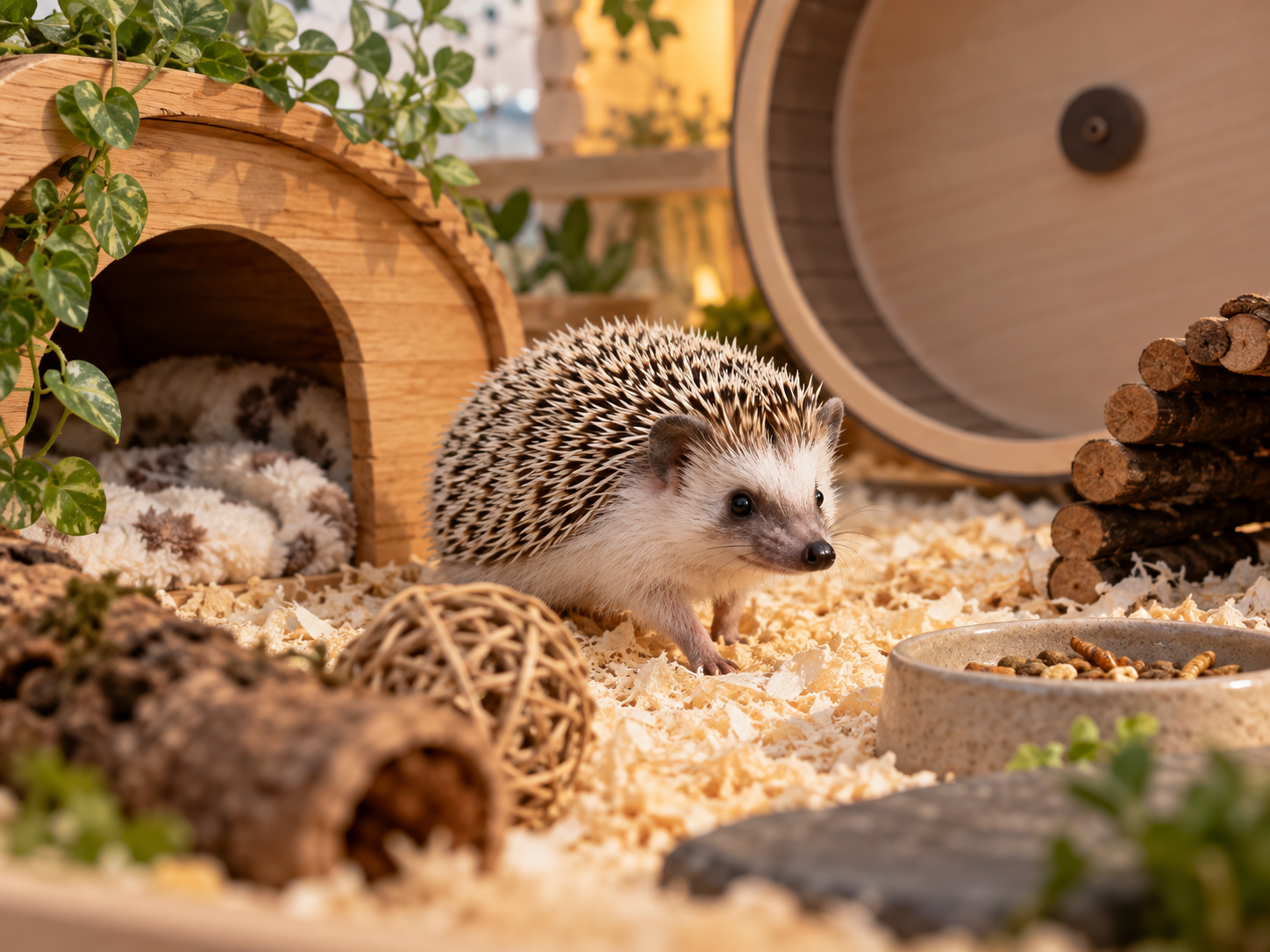
Hedgehogs can run a long way in a night, so they need more room than many people expect. A floor area of at least 4 square feet (for example, about 120 × 60 cm) is a commonly cited minimum, and bigger is better. Include:
- A secure sleeping hide
- A solid-surface exercise wheel, around 10.5–12 inches (27–30 cm) across. Avoid wire or mesh wheels, which can injure feet.
- Safe bedding, such as paper-based bedding or fleece liners. Avoid cedar and pine shavings.
- A heavy food bowl and fresh water in a dish or bottle
- Simple enrichment, like tunnels, dig boxes and toys to push around
Expect to clean the wheel every day, as hedgehogs often go to the toilet while running.
They need a careful diet
Hedgehogs are mainly insectivores. Most owners feed a good-quality hedgehog food or a high-protein, lower-fat cat food, plus small amounts of insects such as mealworms, crickets or dubia roaches. Pet hedgehogs are prone to obesity, so measure portions and keep fatty treats like mealworms limited. Ask your vet to help you choose a suitable diet.
Handling takes patience
Some hedgehogs become comfortable with gentle, regular handling, while others remain more independent all their lives. A frightened hedgehog rolls into a ball, raises its quills and may huff or pop. Short, calm daily sessions help build trust over time. Let it sniff your hands, and try handling it in the evening when it’s naturally awake.
Two normal behaviors surprise many new owners:
- Quilling: young hedgehogs lose baby quills as adult ones grow in, and can be grumpier than usual during this time.
- Self-anointing: when they smell something new, hedgehogs may froth at the mouth and spread foamy saliva over their quills. It looks odd but is normal.
Like many animals, hedgehogs can carry salmonella, so wash your hands after handling them or cleaning their enclosure.
Veterinary care can be specialized
Not every vet treats hedgehogs. Before bringing one home, make sure you can reach a vet experienced with exotic or small mammals. Hedgehogs can be affected by conditions such as dental disease, skin mites, tumors and Wobbly Hedgehog Syndrome, a progressive neurological disease, so regular checkups are worthwhile.
Check local rules
Keeping hedgehogs as pets is restricted or banned in some places. In the United States, for example, it’s illegal in some states, including California and Hawaii, and some cities have their own rules. Other countries have their own laws too. Check the regulations where you live, and any housing or tenancy rules, before buying or adopting.
Are hedgehogs right for you?
Hedgehogs can suit owners who are happy with a quiet, night-time pet and are prepared for their specialized care. If you want a cuddly, sociable daytime companion, another pet may be a better match. Learning their needs before you commit is the best way to make the right choice for both of you.
Thinking about other unusual pets? Our guide on whether miniature pigs can live indoors covers another pet that needs more care than many people expect.
Frequently asked questions
Are hedgehogs good pets for beginners?
They can be, for patient owners who are prepared for their needs. Hedgehogs are nocturnal and independent, need a warm, stable enclosure and a careful diet, and require a vet experienced with exotic small mammals.
What temperature do pet hedgehogs need?
Many care guides recommend around 72–80°F (22–27°C), kept steady. If a pet hedgehog gets too cold, it may try to hibernate, which can be fatal.
Do hedgehogs like to be held?
It depends on the individual. Some become comfortable with gentle, regular handling, while others stay shy. Short, calm sessions in the evening, when they’re naturally awake, help build trust.
How long do pet hedgehogs live?
Pet African pygmy hedgehogs often live around four to six years with good care.