
A rainy day does not have to mean a bored dog. Scent games turn an ordinary room into a place to explore, and they need surprisingly little equipment. Start with a few pieces of your dog’s usual food, clear some floor space and let the nose do the work.
Begin with a simple “find it”
Show your dog a piece of food, toss it a short distance and say “find it” as they search. When that feels easy, place another piece behind a table leg or beside a chair while your dog watches. Gradually make the hiding places less obvious. Use part of a normal meal for several rounds rather than adding a large number of treats.
Adjust the challenge to your dog
A game is useful when the dog can solve it and wants another turn. These clues tell you when to raise or lower the difficulty.
| What you notice | Try this | Check next |
|---|---|---|
| Dog finds every treat immediately | Move one reward slightly farther away | Sniffing stays relaxed and eager |
| Dog gives up or paws at a container | Reveal the reward and reduce choices | The next attempt succeeds without help |
Try the three-cup game
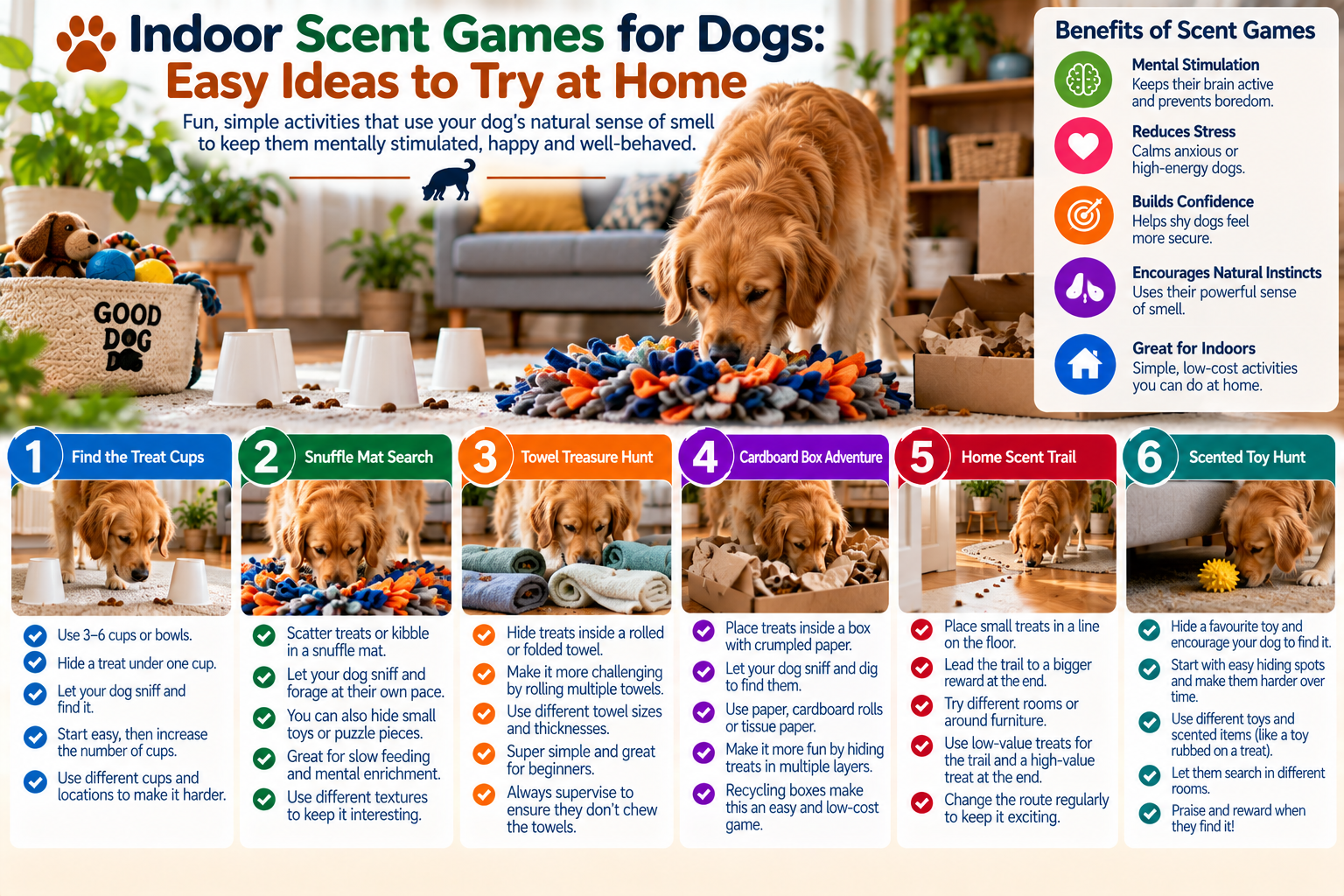
Place three sturdy cups on the floor. Let your dog see you put a treat under one cup, then invite them to investigate. Lift the cup when they indicate the correct one. At first, leave the treat partly visible. Later, hide it completely or move the cups gently. Use cups your dog cannot swallow or break, and supervise so the game stays calm.
Make a room search
Ask your dog to wait with another person, then place a few small food rewards around one safe room at nose level. Invite them in and allow plenty of sniffing time. Begin with obvious spots and add difficulty gradually. Avoid electrical cords, household chemicals, sharp corners and anything your dog might chew. If your dog does not know “wait,” simply keep them behind a door for the brief setup.
Use a towel or puzzle feeder
Scatter a small amount of kibble across an open towel. Once your dog understands the game, roll the towel loosely so food falls out as they nudge it. A suitable puzzle feeder or snuffle mat offers a similar challenge. Supervise dogs that chew fabric or toy parts, and choose equipment that fits their size and habits.
Watch the dog, not the clock
Short, successful sessions are better than a frustratingly difficult puzzle. If your dog walks away, scratches at a hiding place or becomes overexcited, simplify the game. Dogs with mobility limitations may prefer low, accessible hiding spots. Scent work can sit alongside walks, play and rest; it does not replace physical activity or companionship.
For more ideas, read our guide to keeping an indoor cat active if your household has both pets. Sources: Blue Cross, “Scent Work for Dogs” (read the guide); VCA Animal Hospitals, “Behavior Management: Enrichment and Activity Toys” (read the guide).
Make the game easier when your dog gets stuck
A dog that scratches at a cup or walks away has given you useful feedback. Reveal the treat partly, reduce the number of choices, or place the reward where the dog saw it last. Once the dog succeeds again, raise the challenge in small steps. For dogs who struggle when left alone, scent games can be one part of a broader routine; read our separation anxiety guide before relying on puzzles as a solution.
Frequently asked questions
How long should a scent session last?
A few enjoyable minutes can be enough. Stop while your dog is still interested and try another short session later.
Can scent games replace a walk?
They add mental activity but do not replace exercise, outdoor toileting and social needs.