
You come home to a scratched-up back door, a puddle in the hallway and a neighbor mentioning that your dog howled for most of the afternoon. Yet when you’re in the house, the same dog is calm and well behaved. That pattern, trouble only when the dog is left, is what makes owners start to wonder about separation anxiety in dogs.
It has nothing to do with spite. The dog is genuinely panicked at being apart from their people, and while most can be helped, the fix is slow practice at being alone rather than a quick trick.
Quick answer: separation anxiety in dogs shows up as distress that happens only, or mostly, when the dog is alone: howling, destruction around doors and windows, indoor accidents, pacing or drooling. Rule out health problems with your vet, then teach your dog that being alone is safe with very short absences you build up slowly. Never punish the aftermath, and don’t shut a panicking dog in a crate.
Signs of separation anxiety
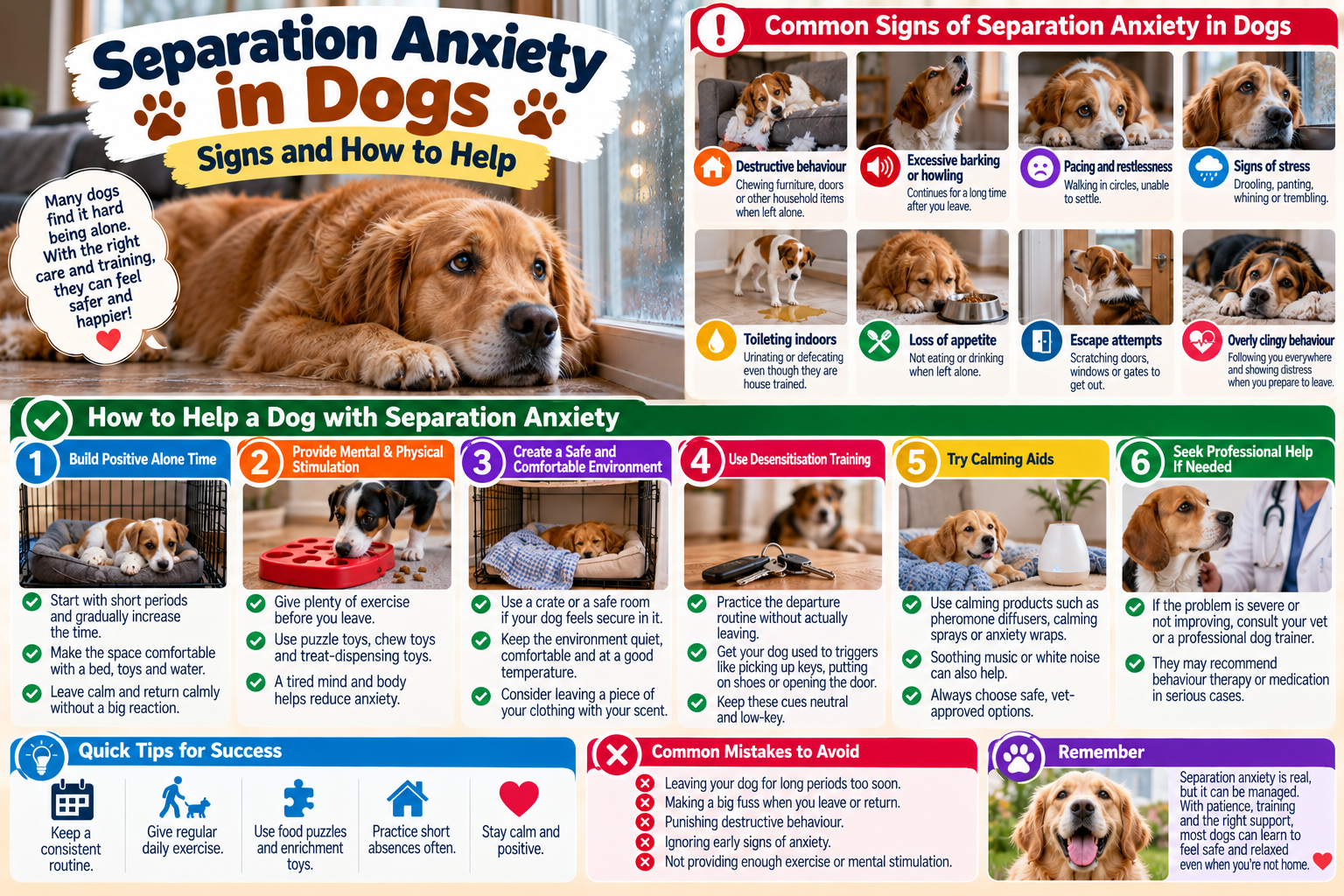
The behavior itself matters less than when it happens. In an anxious dog, the trouble usually starts within minutes of you leaving and doesn’t appear when you’re home. Look for:
- Barking, whining or howling that goes on and on after you’ve gone
- Chewing or scratching at doors, door frames, window sills and blinds, the places a dog might try to get out
- Peeing or pooping indoors, even in a dog that’s reliably house trained
- Pacing, often along the same route
- Heavy drooling or panting, trembling, and sometimes vomiting
- Frantic escape attempts, which can leave a dog with broken teeth, scraped paws or damaged nails
Many anxious dogs give clues before you go, too: panting, pacing or hiding when you pick up your keys or reach for a coat. When you get back, the greeting can be over the top and slow to settle.
Is it anxiety, boredom or something else?
Chewed furniture and accidents have plenty of causes, so check that separation is really the trigger.
| What you’re seeing | More likely separation anxiety if… | More likely something else if… |
|---|---|---|
| Chewing and damage | It’s focused on exits and happens only when the dog is alone | It happens when you’re home too, or targets random items like shoes and cushions (boredom or normal young-dog chewing) |
| Accidents indoors | The dog is otherwise reliable and only goes when left | Accidents also happen while you’re in the house (incomplete house training or a medical issue) |
| Barking | It starts soon after you leave and doesn’t stop | It’s set off by passing people, dogs or noises, and happens when you’re home as well |
Filming your dog while you’re out answers the question faster than any guesswork. A dog who naps for an hour and then chews a cushion is in a very different place from one scratching at the door within two minutes, and the footage is worth showing your vet or a behaviorist.
A vet check should come first, especially if house soiling is part of the picture. Urinary infections, bladder stones, diabetes, kidney disease, hormonal conditions and some medications can all make a dog need to go more often. Pain can make a dog more anxious in general, and in older dogs, age-related cognitive decline can bring restlessness, confusion and accidents that look a lot like separation distress.
Teaching your dog that alone is safe
The aim is to change how your dog feels about your absence, not just to stop the damage. That means gradual exposure: absences so short your dog stays calm, lengthened so slowly they barely notice.
Stop the practice runs of panic
This is the hard part. Every time your dog is left longer than they can cope with, the fear gets rehearsed and progress slips backward, which is also why jumping ahead after one good session rarely works. While you work on it, try not to leave your dog alone beyond their current limit. Friends, family, a sitter, daycare or taking your dog with you can fill the gaps.
Make leaving cues boring
If jangling keys or putting on your boots sets your dog off, do those things many times a day without going anywhere. Pick up the keys and sit down to watch TV. Over days and weeks, the cues stop predicting that you’re about to disappear.
Start with tiny absences
Begin with a door inside the house. Step out of sight for a second or two, come back calmly and repeat. When your dog stays relaxed, add a few seconds. Then do the same with the front door, and then with stepping outside and closing it behind you.
Watch your dog (live or on camera) for early stress signs: panting, yawning, drooling, trembling, whining or pacing. If you see them, the last step was too big, so drop back to a time your dog handled easily and go up in smaller jumps. Wait until your dog is fully relaxed before each new rep.
Expect weeks, often months. Most anxious behavior shows up in the first 30 to 40 minutes after you leave, so building up to that point is the slow stretch.
Keep the extras low-key
Leave quietly, greet calmly, and exercise your dog before you go. For a mildly worried dog, a long-lasting food toy you only hand out as you leave can link your departure with something good. A truly anxious dog often won’t eat alone, though, and an untouched toy when you get back tells you they’re still struggling.
Mistakes that make it worse
Punishing your dog. Scolding a dog for the mess won’t connect with something that happened an hour ago. It only adds to their worry about your return, and the behavior is driven by panic, not naughtiness.
Crating a dog who panics. A crate can be a comfortable den for a dog who already likes it, but for a dog with separation anxiety it can make things much worse. Heavy panting, drooling, frantic scrabbling at the door or nonstop barking in the crate are signs to stop, and dogs can hurt their mouths and paws trying to break out.
Safety note: if your dog is hurting themselves trying to escape (bleeding gums, broken teeth, damaged nails or cuts from doors and windows), stop leaving them alone wherever you can and speak to your vet promptly.
When to bring in a professional
Mild cases often improve with the steps above; moderate and severe ones usually need more. Start with your vet, who can check for medical causes and talk through whether anti-anxiety medication might help. Medication is prescribed by a vet and used alongside behavior training, not instead of it; it can lower your dog’s anxiety enough for learning to take hold.
For a tailored plan, look for a board-certified veterinary behaviorist, a certified applied animal behaviorist or a certified professional dog trainer experienced with fear and anxiety who uses reward-based methods. Get help sooner if training seems to make things worse or the problem started suddenly.
Separation anxiety is a different question from how many hours a dog can reasonably spend home alone; for that, see our guide to how long a dog can be left alone. Newly adopted dogs often need extra time before they’re comfortable alone, which we cover in the first weeks with a rescue dog.
Frequently asked questions
How do I know if my dog has separation anxiety or is just bored?
Film your dog while you’re out. Anxious dogs show distress soon after you leave, often at exits, and not when you’re home. Bored dogs chew more randomly, seem relaxed doing it and may do the same while you’re in.
Will getting a second dog cure separation anxiety?
It isn’t a reliable fix. Most anxious dogs miss their people specifically, not just company, so a second dog often doesn’t help. Work on training first and ask a behaviorist for advice.
How long does it take to treat separation anxiety?
It depends on how severe the anxiety is and how well you can avoid leaving your dog longer than they can cope with. Some dogs improve within weeks; moderate or severe cases often take several months.
Is there medication for separation anxiety in dogs?
Yes. Vets can prescribe anti-anxiety medication for dogs with separation anxiety. It works best combined with a gradual training plan, and your vet will decide whether it is suitable for your dog.