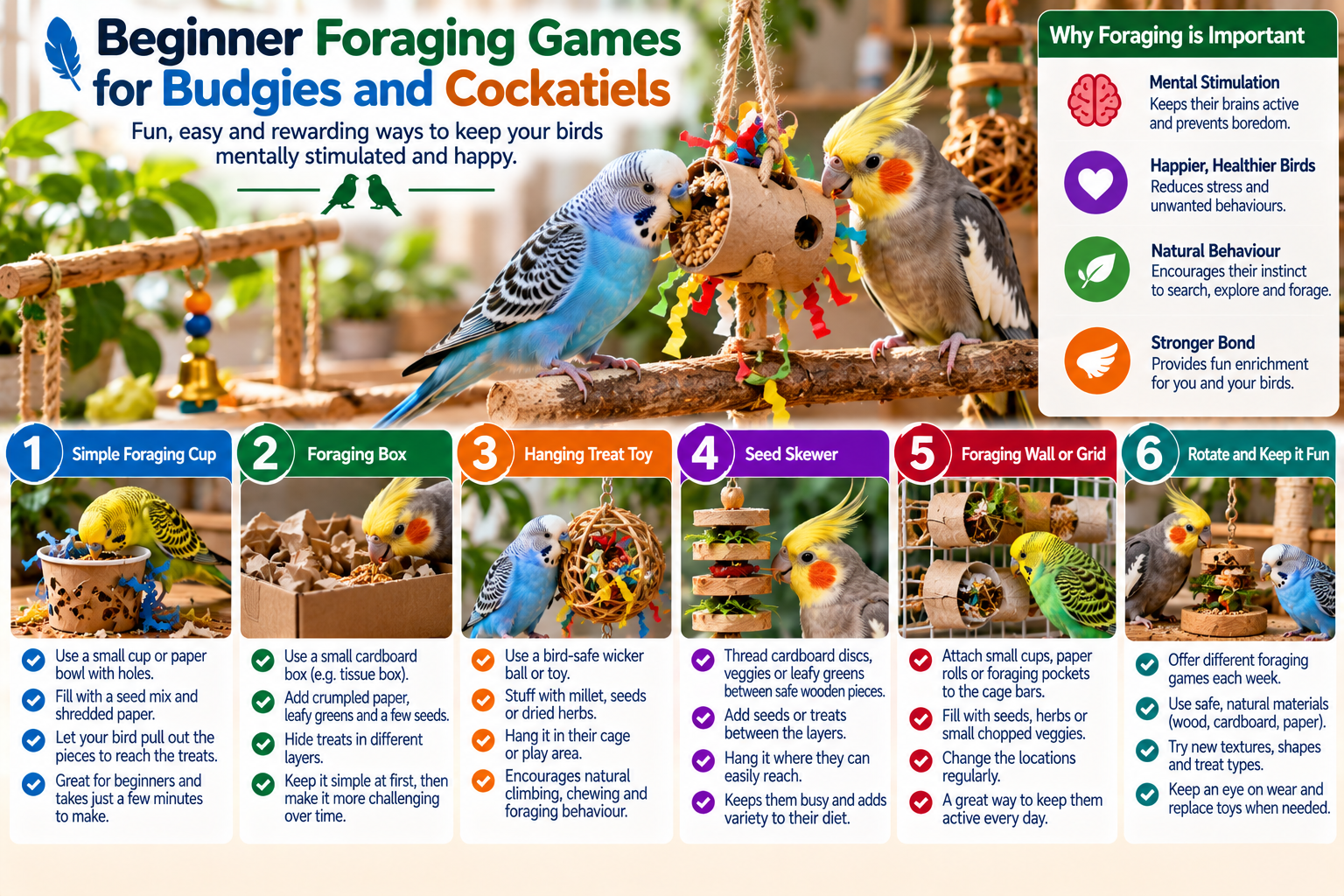

A bowl makes food easy to find, but a small foraging task gives a pet bird something to investigate. Start with familiar food and a game your bird can solve in seconds. As confidence grows, make the search a little more interesting without making meals difficult to access.
Start beside the food bowl
Place a small piece of a familiar, suitable food on a clean flat surface close to the usual bowl. Let the bird find it in plain sight. Once this is routine, place it partly under a piece of plain paper. A bird that ignores the game may be cautious rather than uninterested; leave the new object nearby for a while and try again later.
Follow your bird’s comfort
A bird that hangs back is giving you information. Make the next version easier rather than placing the toy closer by force.
| What you notice | Try this | Check next |
|---|---|---|
| Bird approaches and opens the parcel | Repeat the easy game | Eating and normal behavior continue |
| Bird backs away from the toy | Move it outside the cage and wait | The bird can still reach food and water |
Try a paper parcel
Wrap a tiny portion of the normal diet loosely in unprinted paper so the bird can uncover it easily. Some birds enjoy shredding the paper as much as finding the food. Supervise the first attempts and remove soggy or damaged material. Avoid tape, staples, string and tiny parts that could be swallowed.
Use more than one safe location
A second food station or a simple bird-safe foraging toy encourages movement. Keep everything easy to reach and do not make the bird work for every mouthful. A new object should not block a familiar perch, water or the normal food source. Give shy birds time to look at unfamiliar toys from a distance.
Check each toy closely
Inspect clasps, metal finishes, sharp edges and fraying fibers before use and during routine cleaning. A toy that was safe when new can become unsafe after heavy chewing. Choose materials suited to the bird’s size and chewing style. Ask an avian veterinarian about a toy if its materials are uncertain.
Notice what your bird enjoys
One bird may shred paper eagerly; another may prefer a puzzle that opens with a nudge. Rotate a few activities while preserving familiar places to rest and eat. If a bird becomes unusually quiet, stops eating or changes droppings, seek avian veterinary advice rather than assuming boredom.
Foraging works best as part of a larger routine with room to move, suitable social contact and rest. Sources: VCA Animal Hospitals, “Toys for Birds” (VCA Hospitals guide) and “Housing Small Birds” (VCA Hospitals guide).
When a new toy frightens your bird
A cautious bird may lean away from a bright object or refuse to approach the usual perch. Move the toy outside the cage at first, then closer over several days while normal eating continues. Do not make the bird pass it to reach food or water. The same bird may enjoy a nearly invisible paper parcel later. Our bird toy safety guide has more detail on parts and materials to inspect.
Frequently asked questions
What can I use for a first foraging game?
A small piece of familiar food in plain paper or a shallow tray is a simple start. Check every material first.
Should I leave a new toy in the cage?
If your bird avoids it, move it away. Introduce it gradually without blocking normal routes to food or water.