
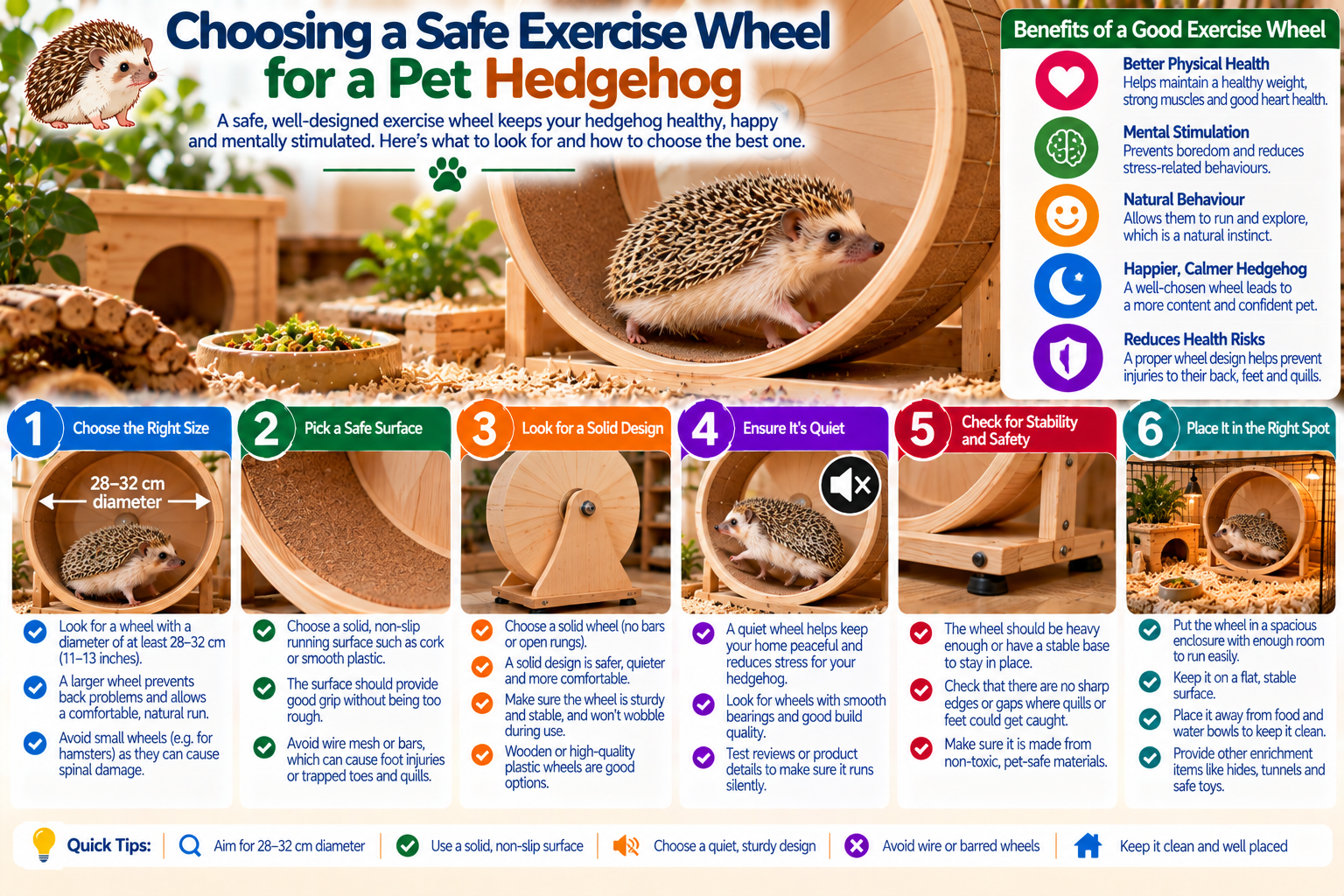

A pet hedgehog may spend much of the night exploring and running. An exercise wheel can provide useful activity, but the wrong surface or size creates avoidable risks. Consider the wheel as part of a spacious, well-managed enclosure rather than the entire exercise plan.
Choose a solid running surface
Look for a continuous, solid wheel surface rather than open rungs or wire mesh that can catch feet and toes. Check for gaps at the axle and along the edge. The wheel must turn smoothly without wobbling and should stand firmly on the enclosure floor.
Check wheel fit and safety
Run your hand around the wheel and spin it before your hedgehog uses it each night.
| What you notice | Try this | Check next |
|---|---|---|
| Wheel wobbles or catches | Replace or secure it before use | Stable, smooth turning |
| Hedgehog arches sharply while running | Consider a larger suitable wheel | A more natural running posture |
Give the body enough room
A wheel that is too small can force a hedgehog into an awkward curve while running. Choose a generous diameter appropriate to the individual animal and watch its posture in use. If the hedgehog cannot run with a reasonably straight back, ask a knowledgeable exotic-animal veterinarian or rescue group about a larger model.
Make cleaning easy
Hedgehogs often soil the wheel while running. Choose a design that can be cleaned and dried thoroughly without leaving rough residue. Inspect it each day for waste, cracks, sharp edges and loose fittings. Clean the surrounding floor and keep bedding away from moving parts.
Introduce it calmly
Put the wheel in a familiar area with enough clearance to enter and leave easily. Do not place a sleeping hedgehog on it or spin it to demonstrate. Let the animal discover it during its normal active period. If it avoids the wheel, check whether the surface is slippery, noisy or unstable.
Look beyond the wheel
Provide suitable hiding places, opportunities to explore and an enclosure with a solid floor. Hedgehogs have specific needs for temperature, diet and veterinary care; exercise equipment is only one piece of the setup. Ask an experienced exotic-animal vet about a change in gait or activity.
The Hedgehog Welfare Society’s care resources discuss solid flooring and safe wheel design: Hedgehog Welfare Society care sheet. Follow current advice from your own exotic-animal veterinarian for your hedgehog’s size and health.
A nightly wheel check
Before lights go out, spin the wheel by hand and check that it turns freely without wobbling. Feel for sharp seams, inspect the running surface and remove any dried waste. A wheel supports activity, but it cannot replace room to explore and places to hide.
Frequently asked questions
Can I use a wire wheel?
Avoid open bars or mesh that can catch feet. Choose a smooth, solid running surface.
Is a wheel enough exercise?
It supports activity, but a suitable habitat and supervised exploration remain important.