
A dog brush should fit the coat, not just the dog’s size. The wrong tool can miss tangles or make grooming uncomfortable. Start by looking at coat length, density and how readily it mats, then choose the gentlest tool that does the job.
Short, smooth coats
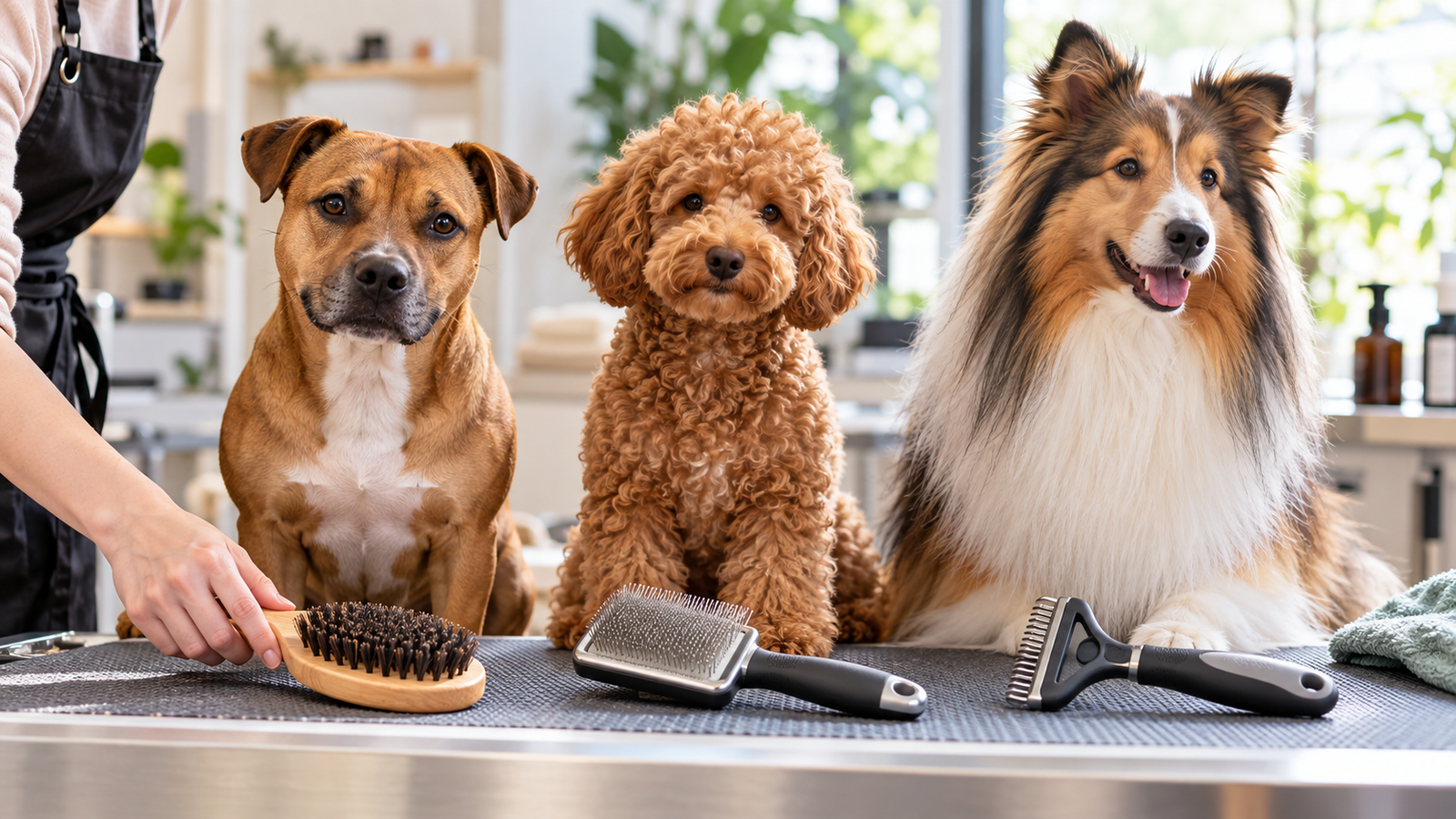
A soft bristle brush or grooming mitt may remove loose hair and dust while keeping sessions pleasant. Brush with the direction of the coat and use light pressure. Check the skin as you go for irritation or unusual lumps.
Match the brush to the coat
The right tool should pass through the coat without scraping skin or turning grooming into a struggle.
| What you notice | Try this | Check next |
|---|---|---|
| Brush snags and dog pulls away | Pause and change technique or tool | Skin stays comfortable |
| Dense undercoat sheds heavily | Use a suitable undercoat tool gently | No redness or overbrushing |
Long or curly coats
A pin or slicker brush may help work through longer hair, followed by a comb to find remaining tangles. Work in small sections and avoid scraping the skin. A tight mat should not be pulled hard; a professional groomer can remove it safely.
Dense undercoats
Some double-coated dogs need a tool that reaches loose undercoat without damaging healthy hair. Ask a groomer what suits the breed and season. More pressure or more frequent aggressive brushing is not automatically better.
Build a cooperative routine
Begin with short sessions and reward calm behavior. Handle sensitive areas gently and stop before the dog becomes distressed. A sudden refusal to be brushed may signal pain or a skin problem worth discussing with a veterinarian.
The American Kennel Club explains common brush types and coat matches: AKC grooming guide.
Try a short session first
Brush a small area in the direction of growth and check the skin underneath. If the coat snags or your dog pulls away, use a gentler tool or seek a groomer’s help with mats. Pair grooming with calm handling and breaks; our nail-trimming guide offers a similar gradual approach.
Brush in layers, with breaks
For a longer coat, part a small section and work gently from the outer hair toward the skin without dragging through a knot. Check behind ears, under the collar and where legs meet the body, since mats can hide there. A short session that ends calmly is easier to repeat.
If the brush pulls, stop and change tools or seek a groomer’s help. Red skin, sores or a painful reaction warrant a veterinary check before more brushing.
Frequently asked questions
Can one brush work for every dog?
Coat types differ. A short smooth coat and a long dense coat often need different tools.
Should I cut out a tight mat?
Scissors close to skin can cause injury. Ask a professional groomer or veterinarian for help.