
A clean bird cage is easier to maintain when small jobs happen regularly. Food, water and droppings need attention sooner than a monthly deep clean. Make a routine that keeps the bird’s familiar environment safe without using harsh household fumes.
Refresh food and water daily
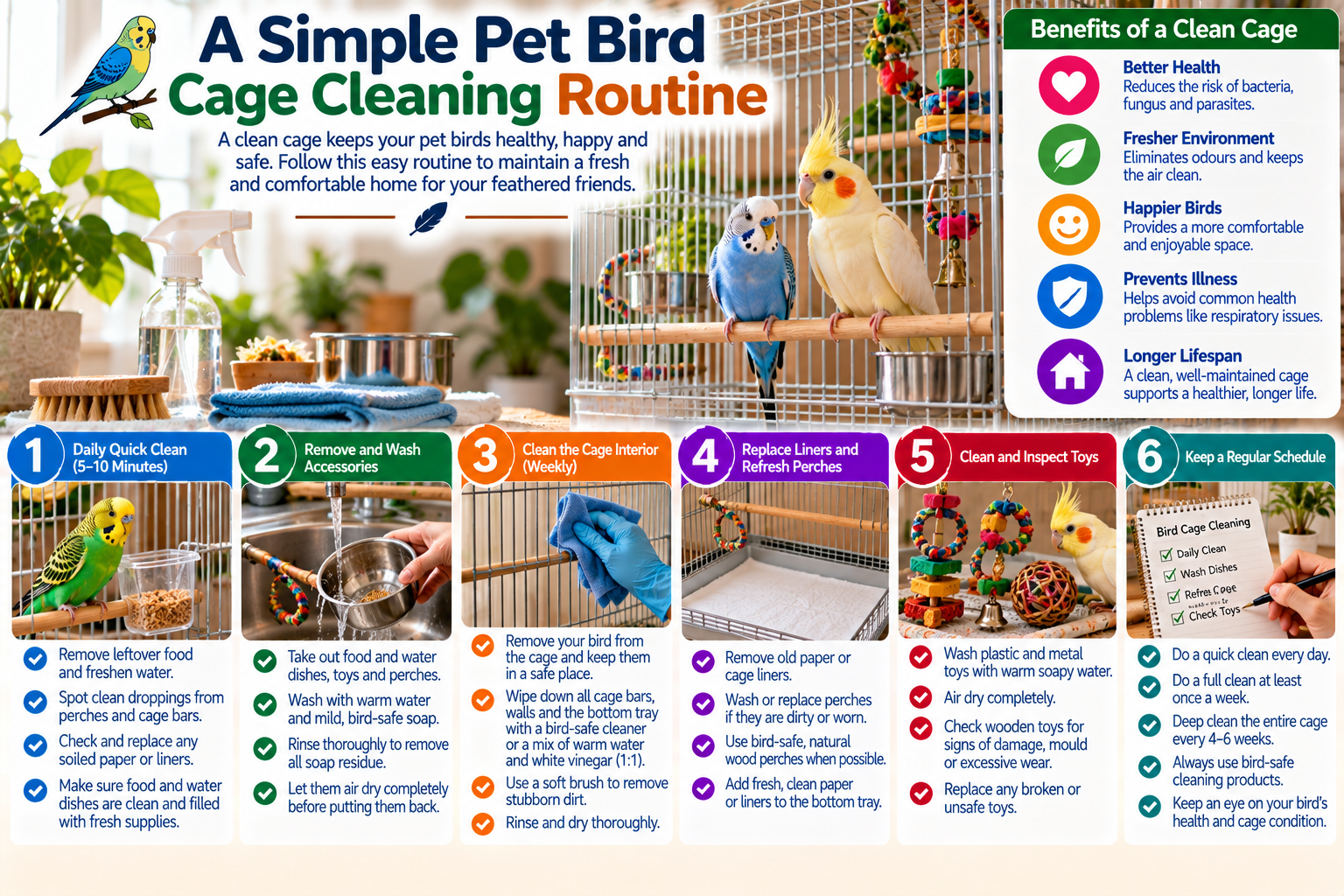
Wash bowls, refill fresh water and remove spoiled food. Wipe obvious spills and check areas under favorite perches. Paper cage liners can make droppings easier to see and remove; avoid sandpaper liners that a bird may ingest.
Notice changes during cleaning
Cleaning also gives you a daily chance to notice changes in food intake, droppings and toy condition.
| What you notice | Try this | Check next |
|---|---|---|
| Food or water is soiled | Replace and wash the container | Fresh supply remains accessible |
| Droppings change unexpectedly | Document the change and call an avian vet | Appetite and behavior |
Spot-clean perches and toys
Look for dried droppings, chewed parts and fraying fibers. Clean or replace dirty items as needed, then let them dry fully. Keep several safe perches available while others are being washed. A clean surface matters because birds spend so much time standing on their feet.
Deep-clean with a plan
Move the bird to a safe temporary space before washing the enclosure. Follow product directions for a bird-safe cleaner, rinse thoroughly and dry before reassembly. Keep fumes from sprays, scented products and strong disinfectants away from the bird.
Use cleaning as a health check
Changes in the amount or appearance of droppings, appetite or activity deserve attention. Cleaning helps you spot changes, but it cannot explain them. Contact an avian veterinarian if your bird seems ill.
The exact schedule depends on cage size, number of birds and mess. VCA’s cage hygiene guidance offers a useful baseline: VCA Hospitals guide.
Make cleaning predictable
Replace wet food and refresh water each day, then wipe obvious mess before it dries. A weekly deeper clean is easier when you rotate spare perches and dishes. Watch for droppings that look unusual while cleaning; our bird illness guide explains changes that warrant veterinary advice.
Separate the daily jobs from the deeper clean
A quick morning routine can cover fresh water, clean food dishes, a tray check and removal of wet produce. That makes a weekly wash of perches and cage surfaces less daunting. Keep a spare set of dishes so a clean one is ready while the other dries.
Move your bird to a safe place during deeper cleaning and follow the instructions for any bird-safe product. Rinse and dry surfaces as directed. If droppings, appetite or activity look unusual, document the change and call an avian veterinarian.
Frequently asked questions
Should I use strongly scented cleaners?
Avoid fumes and residues around birds. Use products your avian veterinarian considers safe, rinse as directed and dry thoroughly.
What should I check while cleaning?
Look at droppings, food intake, perch condition and any damaged toys or cage parts.