
A bird that looks sick is usually a bird that has been sick for a while. Budgies, cockatiels, parrots and finches are prey species, and they are remarkably good at acting normal until their bodies can no longer keep up the act. So the signs of illness in pet birds tend to be small at first and then change quickly.
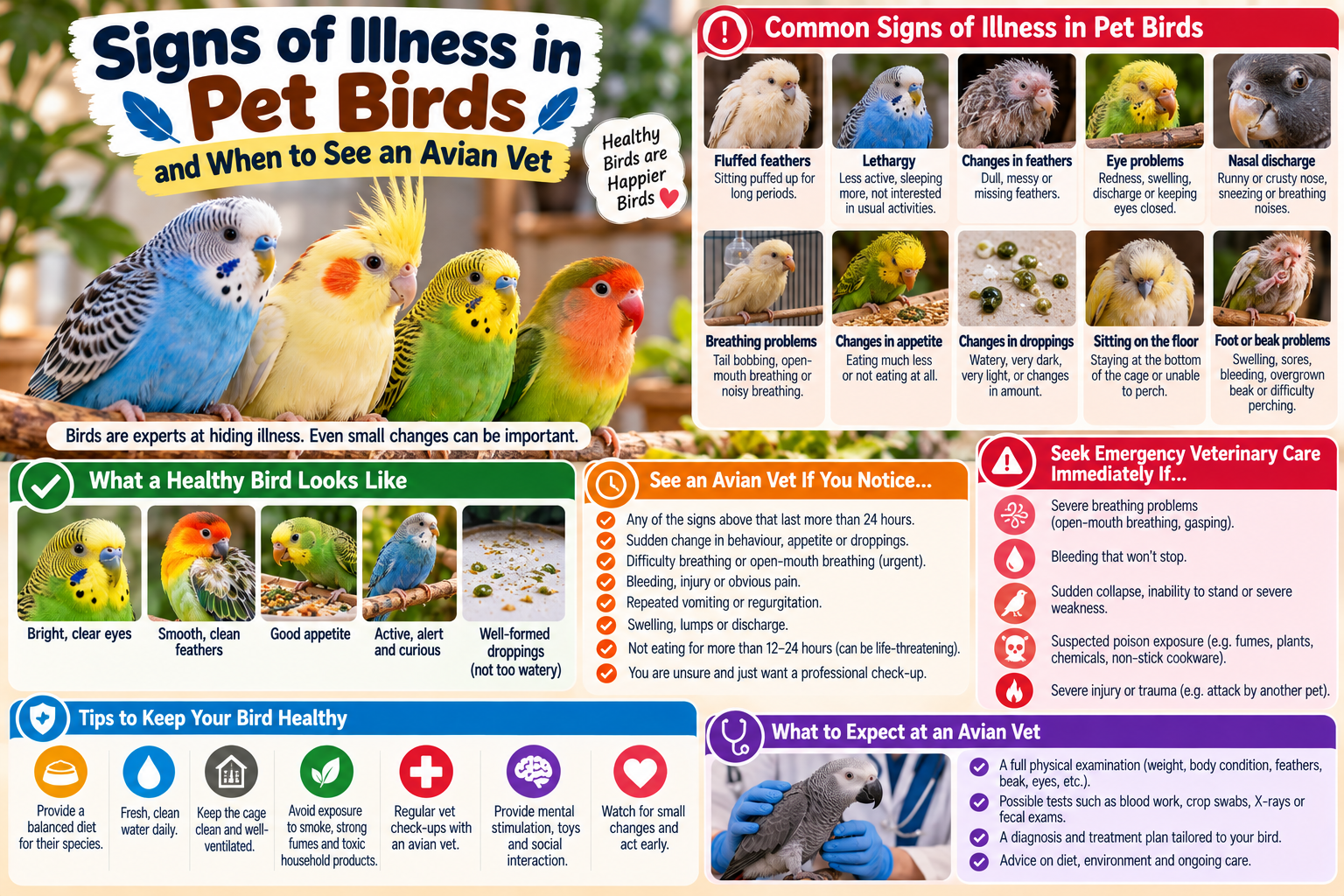
Quick answer: watch for a bird that sits fluffed up and sleepy, bobs its tail as it breathes, eats less, loses weight or passes droppings that change in color or texture. Discharge from the nostrils or eyes, a quieter voice and changes in behavior are also warning signs. A bird sitting on the cage floor, breathing with its mouth open or bleeding needs an avian vet immediately. Keep it warm and quiet while you get help.
Why birds hide illness so well
In a flock, a bird that looks weak is the one a predator picks out. Pet birds still carry that instinct, and they will keep eating, preening and even chattering while they are unwell. By the time the signs are obvious to you, the illness may be well advanced, and small birds in particular have little reserve to fall back on.
You see your bird every day, so nobody is better placed to notice small changes, and a bird that looks obviously unwell should be treated as urgent rather than watched for a few days.
The fluffed-up, sleepy bird
Birds fluff their feathers to trap warm air. A quick fluff and shake is normal, and a bird dozing with puffed feathers at night is simply sleeping. What should worry you is a bird that stays fluffed up during the day, looks dull or half-asleep, sits with its eyes partly closed and doesn’t respond to you or its surroundings the way it usually would.
Sick birds often sleep more in the daytime and show less interest in preening. They may also go quiet: less singing, less talking, less contact calling. Our guide to how much sleep pet birds need explains what a healthy sleep pattern looks like, which makes it easier to spot when daytime napping has become something more.
Watch the tail when your bird breathes
A resting bird should breathe so gently you barely notice it. If the tail pumps up and down with each breath while your bird is sitting still, that bobbing is a sign it is working hard to breathe. Other breathing warning signs include clicking or wheezing sounds, sneezing more than usual, stretching the neck to breathe and breathing with the beak open.
Some tail movement just after flying is expected and settles quickly. Tail bobbing at rest needs a vet.
What the droppings tell you
Droppings change early and you can check them every day. Each one normally has three parts, so look at each separately.
| Part | What’s usually normal | Changes to take to a vet |
|---|---|---|
| Feces (the solid part) | Formed, with a color that reflects the diet, often green to brown | Loose or unformed feces, blood, black or tarry feces, whole undigested seeds |
| Urates (the white part) | White or cream, sitting on or beside the feces | Yellow, green, red or brown urates |
| Urine (the liquid part) | Clear, in a small amount | Much more liquid than usual, or colored urine |
Before you panic, think about what your bird has just eaten. Brightly colored fruits and vegetables can tint the droppings for a short time, and stress (a car ride, a vet visit) often makes droppings temporarily watery. A change that lasts, or one that comes with any other sign on this page, is the one to act on. Changes in the number of droppings matter too: fewer droppings can mean a bird isn’t eating much.
Plain white or light-colored paper on the cage floor makes all of this much easier to see than colored bedding or grit.
Appetite, weight and a kitchen scale
Feathers hide weight loss remarkably well, so a bird can look plump while losing muscle underneath.
A digital scale that weighs in single grams is worth having long before you need it. Weigh your bird regularly, ideally at the same time of day, and write the numbers down. For a small bird like a budgie, a loss of just a few grams is a meaningful share of its body weight. A steady downward trend, or any sudden drop, is worth a call to your avian vet even if your bird seems fine.
Check the food bowl as well. A bird can look busy at its bowl while mostly scattering food, so notice whether the amount actually eaten has changed.
Other changes worth noticing
- Discharge from the nostrils or eyes, crusting around the nostrils, or swollen, red or cloudy eyes
- Regurgitating or vomiting food (some birds regurgitate to a mirror, toy or favorite person as courtship behavior, so note when and how it happens)
- Feathers that look ragged or dull, patches of feather loss, or new feather picking
- Limping, not using a foot, or trouble perching or gripping
- Lumps, swelling or a swollen belly
- A female that is straining, sitting fluffed up or has a swollen vent, which can mean she is having trouble passing an egg
- New aggression, clinginess or loss of interest in toys and people
A bird on the cage floor is serious
Healthy birds like to be up high. Some will hop down to forage, play with a toy or explore, then climb straight back up, and that is fine. A bird that sits on the bottom of the cage and stays there, especially one that is also fluffed up, breathing hard or unsteady, is usually very weak and may be close to collapse. This is not a wait-and-see sign.
Urgent: contact an avian vet or emergency clinic immediately if your bird is sitting on the cage floor, breathing with its mouth open or struggling to breathe, bleeding, having a seizure, straining without passing an egg, has been caught or scratched by a cat or dog (even if you can’t see a wound), or has been exposed to smoke or fumes such as those from overheated non-stick cookware.
While you contact an avian vet
Sick birds struggle to stay warm. Until your bird can be seen:
- Keep your bird warm. Move it to a warm room away from drafts, and partly cover the cage to hold in heat. Watch that your bird doesn’t pant or hold its wings away from its body, which means it is too hot.
- Keep things quiet and dim. Turn off the TV, keep other pets and children away and limit handling.
- Make food and water easy to reach. Lower perches or remove high ones, and put familiar food and water near where your bird is sitting.
- Don’t give medicines or home remedies unless your avian vet tells you to.
- Gather clues for the vet. Take a photo of recent droppings or bring the cage paper, and note your bird’s recent weights, what it has eaten and when you first noticed a change.
Not every general vet treats birds, so it helps to find an avian or exotic-animal vet, and an out-of-hours option, before you ever need one. Many emergencies in birds start with something in the home, and our guide to common household dangers for pet birds covers the fumes, foods and hazards to keep away from your bird.
Frequently asked questions
How can I tell if my bird is sick or just sleeping?
A sleeping bird wakes easily and looks alert once awake. A sick bird stays fluffed up and drowsy during the day, often with its eyes half closed, and responds less to you. If daytime sleepiness is new, check its droppings, appetite and weight and call your avian vet.
How often should I weigh my bird?
Weekly weighing on a gram scale is a good habit for a healthy bird, at the same time of day each time. Weigh more often, such as daily, if your bird is unwell or your vet asks you to, and write every reading down.
Is it an emergency if my bird is sitting on the bottom of the cage?
Usually, yes. Healthy birds prefer to perch, so a bird on the cage floor is often very weak. Keep it warm and quiet and contact an avian vet straight away.