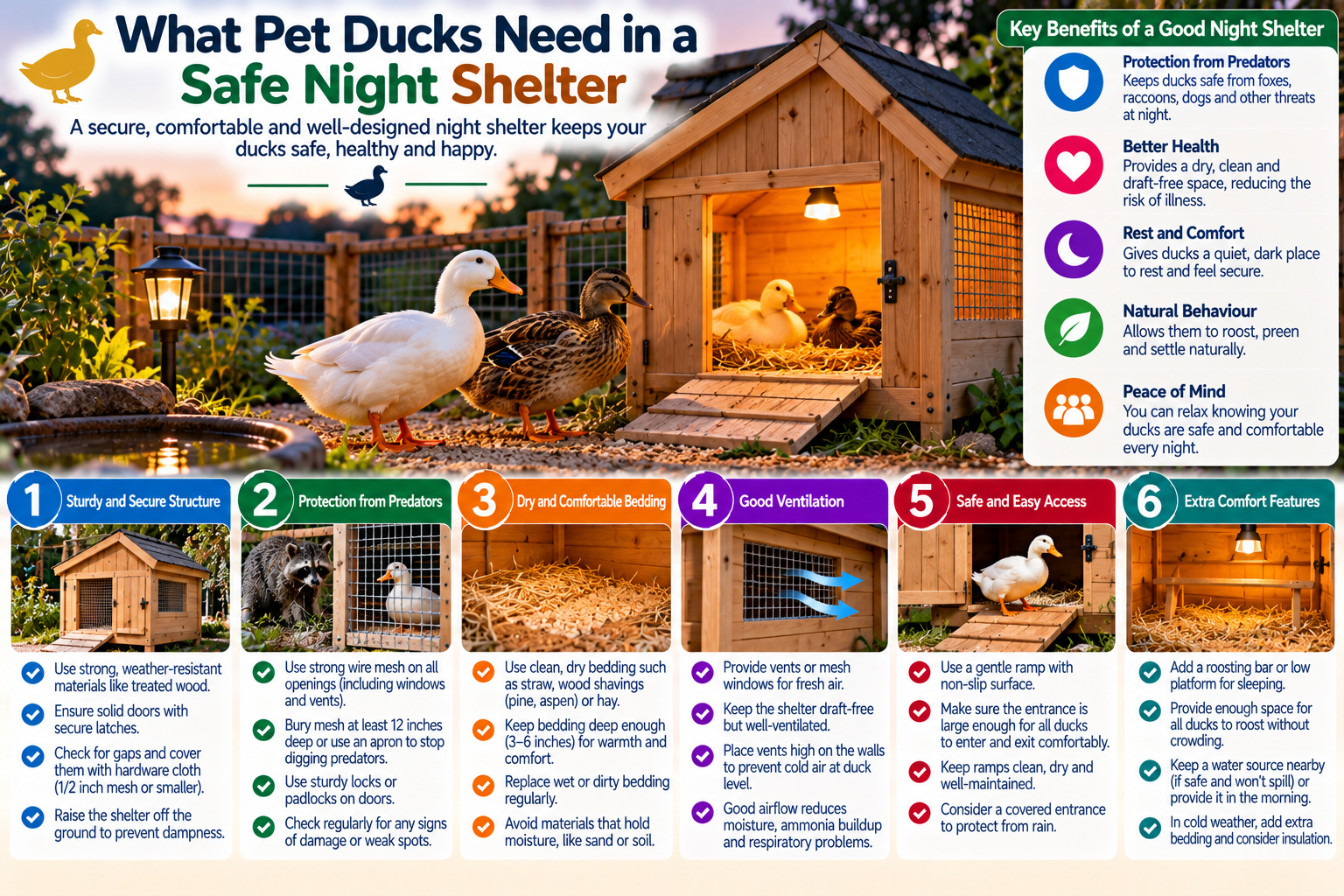

Ducks may love water and open space by day, but they still need a dry, secure place to rest. A night shelter protects them from weather and helps reduce predator risk. Plan it as part of a larger outdoor habitat, not as their only living space.
Prioritize a secure structure
Use sturdy walls, a sound roof and doors that close reliably. Check the perimeter for gaps and weak points, including places predators could dig beneath. A flimsy latch or open vent can undermine the rest of the design.
Check the shelter at dusk
The strongest shelter routine is one you can repeat every evening, including a quick look at the bedding and latch.
| What you notice | Try this | Check next |
|---|---|---|
| Bedding feels damp | Replace it and find the source | Dry resting area |
| Door or mesh has gaps | Repair before nightfall | Secure closure |
Keep it dry and ventilated
Provide clean, dry bedding and airflow without a strong draft at bird level. Wet bedding should be replaced promptly. The shelter needs room for ducks to move and settle without crowding, with a safe way to reach the outside area.
Protect the outdoor area too
Offer shade, weather protection and appropriate water access during the day. A fence must suit local predators and the terrain. Do not assume a pond alone makes ducks safe; a duck needs both a suitable water setup and a secure land area.
Build a daily check
Close the flock in at dusk, count birds and inspect food, water, bedding and locks. Notice limping, changes in appetite or unusual quietness, and contact a veterinarian experienced with birds if needed.
RSPCA guidance covers outdoor shelter and suitable indoor housing for pet ducks and geese: RSPCA guide.
Check the shelter at dusk
Look for gaps around doors, wet bedding and sharp edges before closing the ducks in. Ventilation should move stale air without creating a direct cold draft at resting level. Ducks also need appropriate daytime space and companionship; our backyard duck guide covers the wider setup.
A dusk walk-around
Close the shelter before predators become active, then walk its perimeter. Pull lightly on the latch, look for gaps at the roof and base, and check that bedding is dry. A sturdy wall does little good if a door can be pushed open.
Keep ventilation clear while preventing rain from blowing onto the resting area. In the morning, check for dampness, damage and unusual behavior in the ducks before letting them out. Small repairs are easier when found early.
Frequently asked questions
Do ducks need a shelter every night?
A secure night shelter helps protect them from predators and weather. Local conditions and your setup matter.
Should the shelter be airtight?
No. It needs ventilation without a direct draft at resting level.