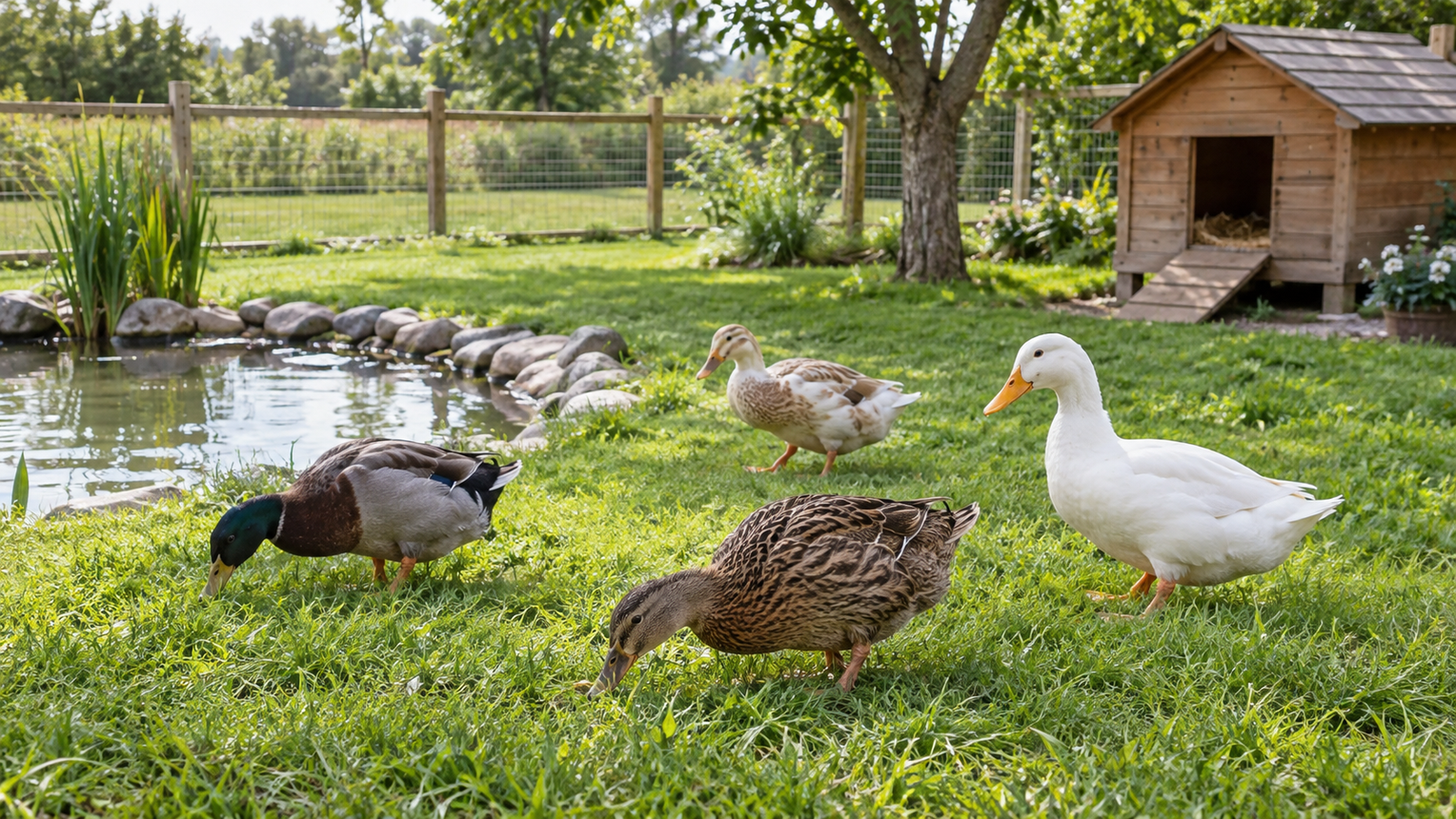

Pet ducks can live happily in a backyard, as long as they have enough space, a secure shelter, clean water and solid protection from predators. A nice garden on its own isn’t enough. Ducks need a setup built around how they naturally live, and they need daily care.
In short: keep at least two ducks, give them generous outdoor space, a dry predator-proof shelter to lock them in at night, and water deep enough to dunk their whole head. Expect mud and mess, and check local rules before you start.
How much space do ducks need?
Ducks need room to walk, forage, explore and get away from each other. When they’re crowded, the ground turns to mud and the whole area gets dirty fast. Generous space makes daily care much easier and keeps your ducks healthier.
| Area | Guideline |
|---|---|
| Night shelter | Around 4–6 square feet (0.4–0.6 m²) of floor space per duck |
| Outdoor run | At least 10–15 square feet (about 1–1.4 m²) per duck, and more wherever possible |
These are minimums. Larger breeds, bigger flocks and ducks that spend a lot of time confined to a run need more room.
Provide a secure shelter
Ducks need a dry, well-ventilated house where they can rest safely, especially at night. Unlike chickens, ducks don’t perch on roosting bars. They sleep on the floor, so a thick layer of clean bedding such as straw or wood shavings is important.
- Keep bedding clean and dry, and replace wet patches often.
- Make sure every opening is predator-proof.
- Provide good ventilation high up, without cold drafts at floor level.
- Give every duck enough room to lie down comfortably.
- Use a wide, low doorway or ramp, as ducks can’t hop up high like chickens.
Do ducks need a pond?
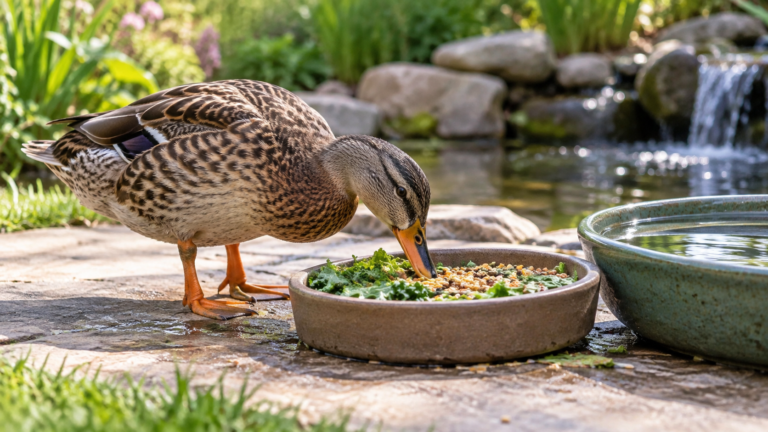
A full pond isn’t essential. What ducks do need is clean water deep enough to dunk their whole head, which they use to clean their eyes and nostrils and to help them swallow food. Always have drinking water available next to their feed.
A kiddie pool, large tub or other shallow bathing container lets them splash, bathe and preen, which keeps their feathers in good condition. Make sure they can climb in and out easily.
Ducks make water dirty very quickly, so containers need emptying, cleaning and refilling regularly, often every day in warm weather. Placing water over gravel or a well-drained area helps stop the ground around it turning to mud.
What should backyard ducks eat?
Feed a commercial waterfowl or duck feed as the main diet, with some leafy greens and chopped vegetables as extras. Ducks also love foraging for bugs and slugs in the garden.
Avoid feeding bread. It’s filling but offers little nutrition, and it’s linked to health problems in ducks. Ducklings have different needs, including extra niacin (vitamin B3) for healthy legs, so use a feed made for ducklings or ask your vet or supplier for advice.
Ducks are social animals
Ducks are flock animals and shouldn’t be kept on their own. Keep at least two, and ideally three or more, so they always have company. They spend most of their day foraging, resting and preening together.
If you keep a male duck (a drake), be careful with numbers. Too many drakes for too few females can lead to hens being overmated and injured. Many keepers stick to one drake for every four or five hens, or keep an all-female or all-male flock.
Protect them from predators
Depending on where you live, dogs, foxes, raccoons, birds of prey, snakes and other animals may target backyard ducks. Ducks are especially vulnerable at night, so shut them into a secure shelter every evening.
- Use welded hardware cloth rather than chicken wire. Chicken wire keeps birds in, but many predators can tear through it.
- Bury wire around the edges of the run or add a wire apron to stop digging predators.
- Cover the run if hawks or other birds of prey are common in your area.
- Use secure latches, as raccoons can open simple hooks.
Keep the yard clean
Ducks produce a lot of wet droppings and can churn wet ground into mud surprisingly quickly. Rotate heavily used areas if you can, give grass time to recover, replace dirty bedding regularly and keep feeding and water areas clean. A well-drained base like gravel or sand under water stations makes a big difference.
Plan before bringing ducks home
Before you get ducks, check local zoning rules and any homeowner or rental restrictions on keeping poultry. Female ducks in particular can be loud, so consider your neighbors too.
Find a vet who treats ducks or poultry before you need one, as not all vets do. Ducks can live for around a decade with good care, so this is a long-term commitment.
With enough space, company, clean water and a secure shelter, a well-planned backyard can make a great home for pet ducks.
For more on feeding, read our guide on what pet ducks eat, including the extra needs of ducklings.
Frequently asked questions
Do pet ducks need a pond?
No, but they do need water deep enough to dunk their whole head, which they use to clean their eyes and nostrils. A kiddie pool or large tub for bathing is a good alternative to a pond, as long as it’s cleaned regularly.
Can you keep just one duck?
It’s not recommended. Ducks are flock animals and can become stressed and lonely on their own. Keep at least two, and ideally three or more.
How much space do backyard ducks need?
Common guidelines are around 4–6 square feet (0.4–0.6 m²) of shelter space per duck and at least 10–15 square feet (about 1–1.4 m²) of outdoor run space per duck. More space is always better and helps keep the ground from turning muddy.
Is it okay to feed ducks bread?
No. Bread offers very little nutrition and is linked to health problems in ducks. Feed a commercial waterfowl feed with leafy greens and vegetables as extras.