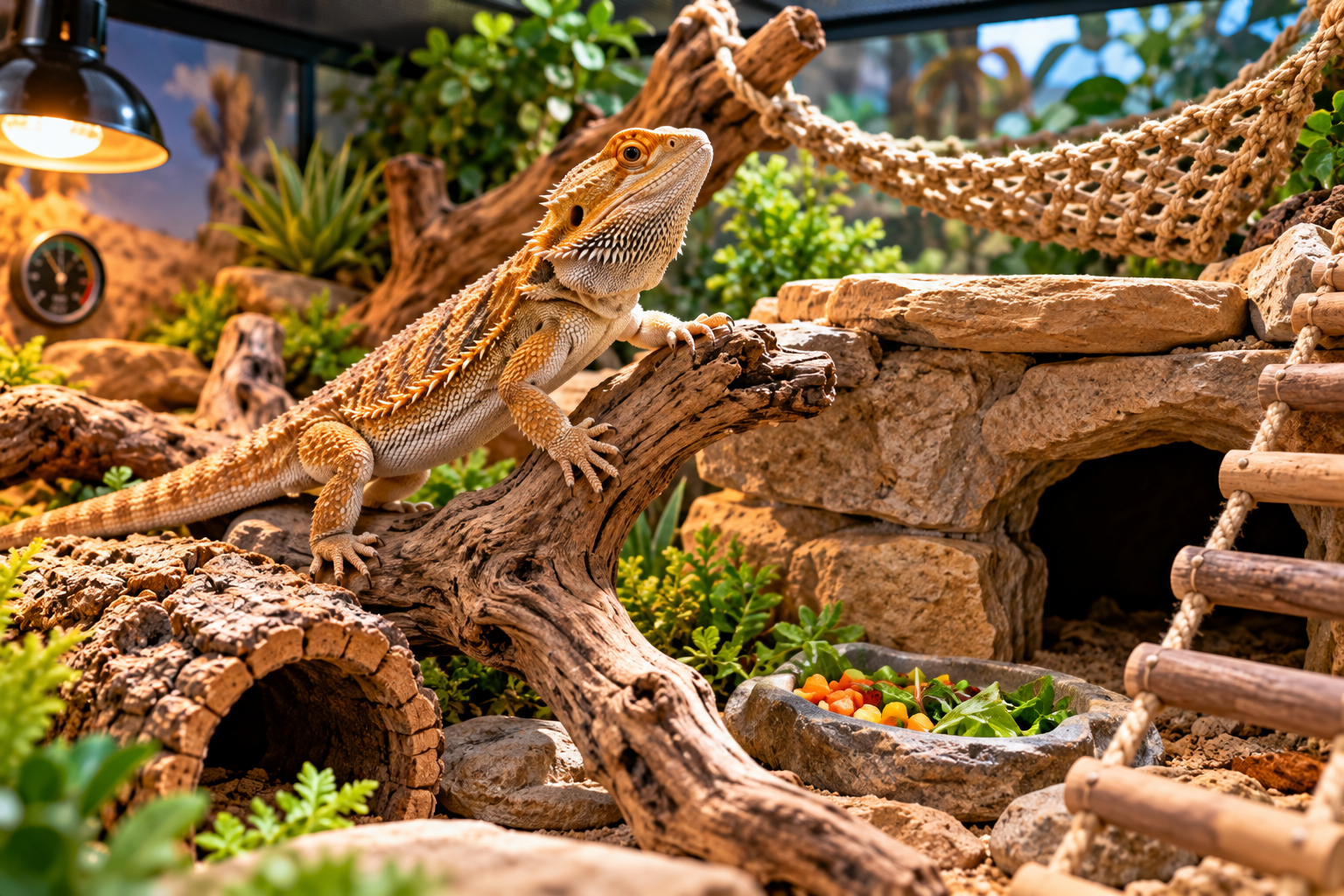

A bearded dragon needs more than a flat floor and a basking lamp. Stable branches, rocks and hides create choices about height, warmth and cover. Enrichment works only when the underlying heat and UVB setup is correct.
Build a reliable basking spot
Use a stable surface that cannot shift beneath the dragon. Measure basking and cool areas with suitable thermometers, and follow reptile-specific guidance on lamp distance. A climbing branch should never bring the animal dangerously close to heat or UVB fixtures.
Test the climbing layout
Climbing is useful when the route is sturdy and the basking areas remain accessible.
| What you notice | Try this | Check next |
|---|---|---|
| Branch shifts under gentle pressure | Secure or replace it | Stable contact points |
| Dragon cannot reach basking area | Rearrange the layout | Normal basking and movement |
Add sturdy routes
Choose branches and stones that support the dragon’s weight and allow an easy descent. Avoid sharp edges and unstable stacked rocks. Leave enough open floor space to move, turn and hunt. Provide hides at both warm and cool ends.
Offer safe exploration
Change one element at a time and watch how the dragon uses it. Supervised time in a secure area may add variety, but check temperature and remove hazards first. Outdoor access requires secure containment and weather that suits the animal.
Notice signs of trouble
Repeated glass surfing, lethargy, poor appetite or trouble moving merits a check of husbandry and veterinary advice. A toy cannot compensate for incorrect lighting, temperature, diet or a cramped vivarium.
The RSPCA’s bearded dragon care guide covers basking, hides and climbing structures: RSPCA guide.
Test every platform by hand
Press gently on branches and basking ledges before your dragon uses them. Nothing should roll, tip or block access to heat and UVB. Keep fall distances modest and remove rough materials that snag toes. Our bearded dragon tank guide covers the environmental basics.
Build a route, not a pile of objects
A basking ledge, a lower step and a clear path between them give your dragon choices without forcing a steep climb. Press on each branch and ledge from several directions. If anything shifts under your hand, it needs a more secure support.
Watch the animal use the arrangement over a few days. If a platform blocks the UVB or heat zone, or the dragon avoids it, adjust the layout. Decorations should support the enclosure’s environmental needs rather than crowd them out.
Frequently asked questions
Can I use any branch from outdoors?
Only after identifying safe wood and preparing it appropriately. Avoid unknown, treated or pesticide-exposed materials.
Should every platform be high?
No. Offer varied but safe levels with stable routes and modest fall distances.