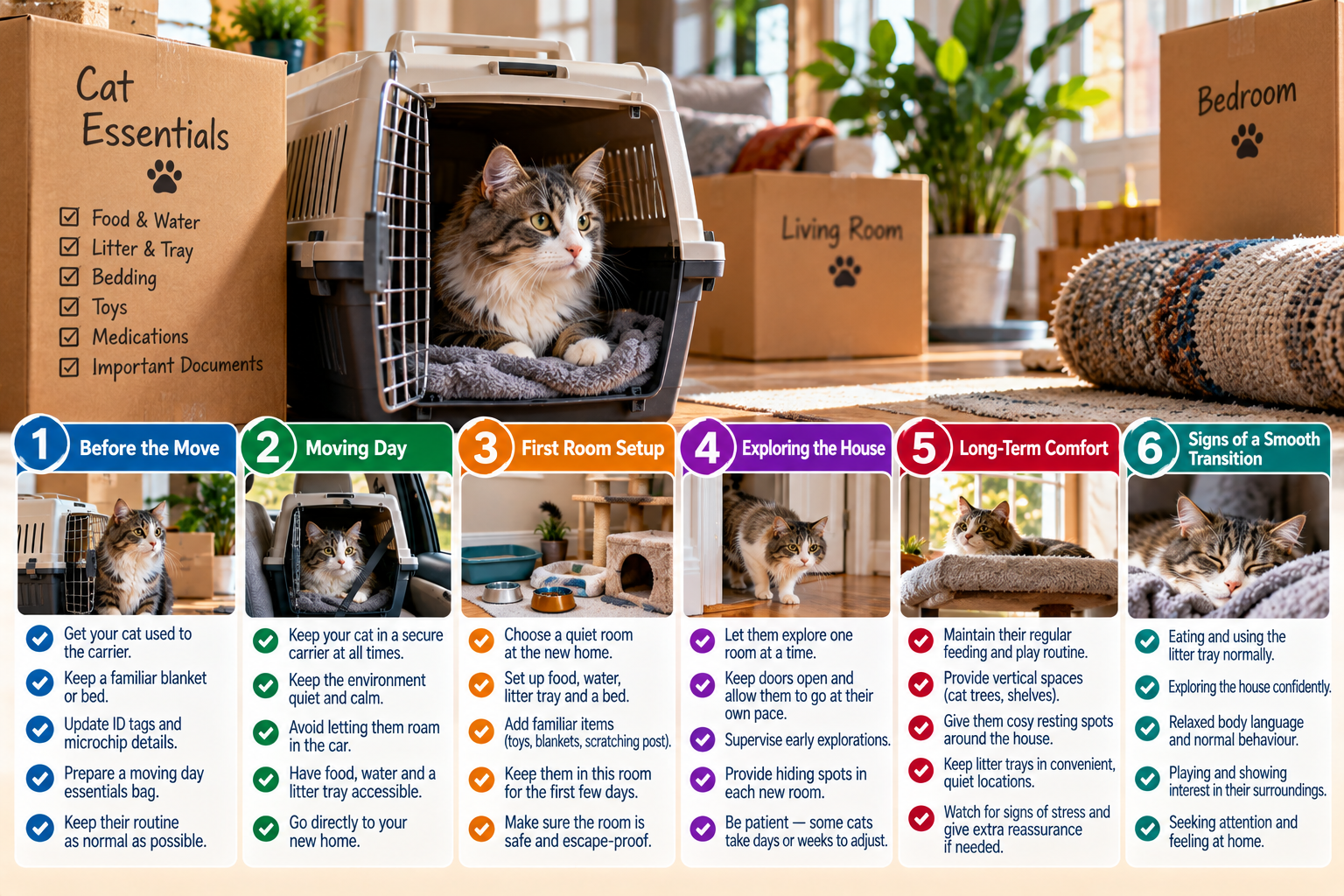

Moving day is noisy, full of open doors and unfamiliar people. For a cat, a prepared safe room at each end of the journey can make the difference between a controlled move and an escape scare.
Prepare before the boxes arrive
Keep the carrier familiar in the days before the move. Pack a small bag with food, water, litter, bowls, medication and a familiar blanket. Update identification details for the new address and make sure the carrier closes securely.
Watch the first days in the new room
A familiar room gives your cat one reliable base while the rest of the home is still unfamiliar.
| What you notice | Try this | Check next |
|---|---|---|
| Cat hides after arrival | Leave familiar resources nearby | Eating and toileting resume |
| Cat rushes toward an open door | Secure exits before access expands | Safe, supervised exploration |
Use one closed room on moving day
Place the cat in a quiet room with essentials before movers begin. Close windows and the door, and put a clear note outside so no one opens it by mistake. Bring the cat out only when it is time to travel in the closed carrier.
Set up a base at the new home
Before opening the carrier, prepare one quiet room with litter, water, food, hiding places and familiar items. Let the cat come out in its own time. Check windows, doors and small gaps, then expand access gradually as the cat settles.
Keep routines recognizable
Offer familiar food and normal meal times. Some cats hide initially; give them space while checking appetite and litter use. Consult a veterinarian if a cat stops eating, seems ill or struggles to urinate.
Blue Cross has a detailed guide to moving and traveling with cats: Blue Cross guide.
Prepare the arrival room first
Before opening the carrier, set up a litter tray, water, food and a familiar blanket in one quiet room. Keep doors and windows secure while movers come and go. Expand access gradually as your cat relaxes. Our new cat settling guide offers more ideas for the first days.
Keep the carrier part of the plan
Put the carrier in the prepared arrival room and open it only after the door is closed. Let the cat come out on its own. Familiar bedding and a covered hiding place offer somewhere to retreat while unfamiliar sounds continue elsewhere in the house.
Before expanding access, check windows, doors and any gaps behind appliances. A cat that is eating, toileting and exploring calmly may be ready for one more room; a cat still hiding needs more time.
Frequently asked questions
How long should my cat stay in one room?
Follow your cat’s comfort. Expand access gradually when they eat, use the litter tray and explore calmly.
Should I let my cat outside right away?
No. Keep the cat securely indoors while it settles and follow local guidance for a safe transition.