
Changing a cat’s food involves more than mixing two bags together. Texture, smell, temperature, and the feeding environment all matter. A cat who rejects a new pâté after eating chunks for years may need a slower introduction, while a cat who suddenly rejects every familiar food needs a health check.
Quick answer: Introduce a suitable new diet gradually while keeping your cat eating. Start with a small amount alongside or within the familiar ration, depending on acceptance, and progress slowly. Never withhold all familiar food to force the change. Contact your vet promptly if intake falls significantly.
Confirm the diet and the reason for changing
Choose a complete food suitable for your cat’s life stage and health. A medical diet needs the treating vet’s plan; mixing in another food can undermine its intended use. If your cat has recently moved home, preserving the familiar food initially may make adjustment easier.
Write down what your cat currently eats, including treats, and the planned daily amount of the new food. Wet and dry diets differ greatly in water content and calories, so equal bowl volumes are not equivalent meals. Ask your veterinary team to help translate the ration.
Separate unfamiliarity from loss of appetite
Offer the usual food in its usual clean bowl and quiet location. If that is also refused, stop treating the situation as simple fussiness. Pain, nausea, stress, and illness can reduce appetite.
Do not wait out a cat who is not eating: Contact your vet promptly for a marked reduction in intake or associated symptoms. A cat eating nothing should not be left beyond 24 hours without veterinary advice; kittens, diabetic cats, and unwell cats may need help much sooner.
Use a gradual introduction that fits your cat
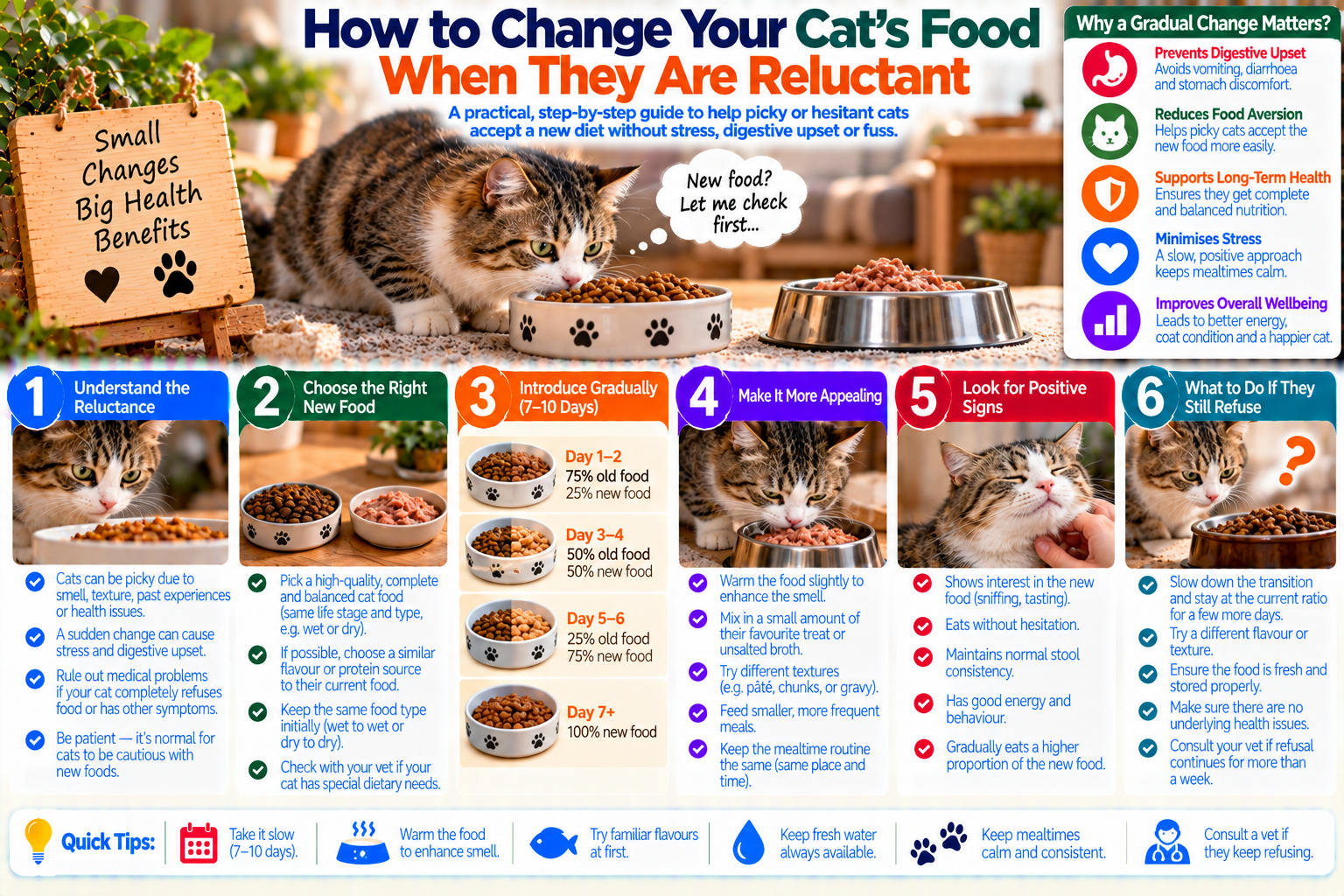
Some cats accept a little new food mixed with the old. Others reject the entire bowl if its smell changes. For those cats, a tiny sample on a separate dish can allow investigation while the familiar ration remains available. Keep total portions in mind rather than adding an unlimited second meal.
- Offer a small, measured introduction in a calm setting.
- Record actual intake, not just whether the cat approached the bowl.
- Increase the new proportion only when the current stage is accepted.
- If intake drops, return to the last successful step and contact your vet for a revised plan.
- Keep the feeding location and routine stable while changing the diet.
| Problem | Useful adjustment |
|---|---|
| Entire mixed bowl is rejected | Ask about offering a tiny separate sample instead |
| New texture is unfamiliar | Progress in smaller steps; avoid changing several features at once |
| Another cat steals the familiar food | Feed in separated, comfortable spaces and measure intake individually |
| All foods are refused | Seek veterinary advice rather than continuing the experiment |
Expect a flexible timeline
Some cats transition over a week or two; others need substantially longer. The pace should preserve nutrition and comfort. Your vet may adjust the schedule when a medical need is urgent. A printed percentage chart is a starting framework, not a reason to advance despite poor intake.
For example, keep a note of grams offered and grams left after each meal. Record treats separately. “Ate a little” can hide a substantial shortfall, especially when multiple people feed the cat.
Review tolerance after the switch
Monitor appetite, stool, vomiting, weight, and energy. Persistent vomiting, diarrhoea, or reduced intake needs assessment; do not repeatedly change diets in response without advice. Store food according to the label and discard leftovers appropriately.
See how much to feed a cat and understanding your cat’s water intake.
Frequently asked questions
Should I wait until my cat is hungry enough?
No. Cats should not be starved into accepting a new diet. Keep adequate intake and get veterinary support if the change is failing.
Can I warm wet food?
A little warming may make the aroma more appealing, but check that it is not hot and follow safe storage guidance. It is not a solution for an unwell cat refusing food.
Must every cat use the same transition schedule?
No. Preferences, health needs, and previous experience differ. Adjust the plan with your veterinary team.