
Ear cleaning is not a task every dog needs on the same schedule. Some healthy ears need little intervention; others need a plan because of recurring problems. Before you clean your dog’s ears, decide whether you are doing routine care or looking at a possible infection. The second situation needs veterinary advice.
Quick answer: Clean only when appropriate for your dog, using a veterinary-recommended ear cleaner and gentle handling. Stop if the ear is painful. Redness, strong odour, discharge, repeated scratching, or head shaking should be assessed before you put products into the ear.
Check before you reach for the bottle
Look at the visible ear flap without probing the canal. Compare both sides and notice your dog’s response to gentle touch. A dog who suddenly avoids handling may be uncomfortable even if you cannot see much.
Do not try to remove a suspected foreign object or flush an ear after sudden intense head shaking. A vet may need to examine the canal and eardrum. Loss of balance, a head tilt, or severe pain warrants prompt care. Cleaning immediately before an appointment can also remove material your vet needs to examine, so ask first.
Gather a small, sensible kit
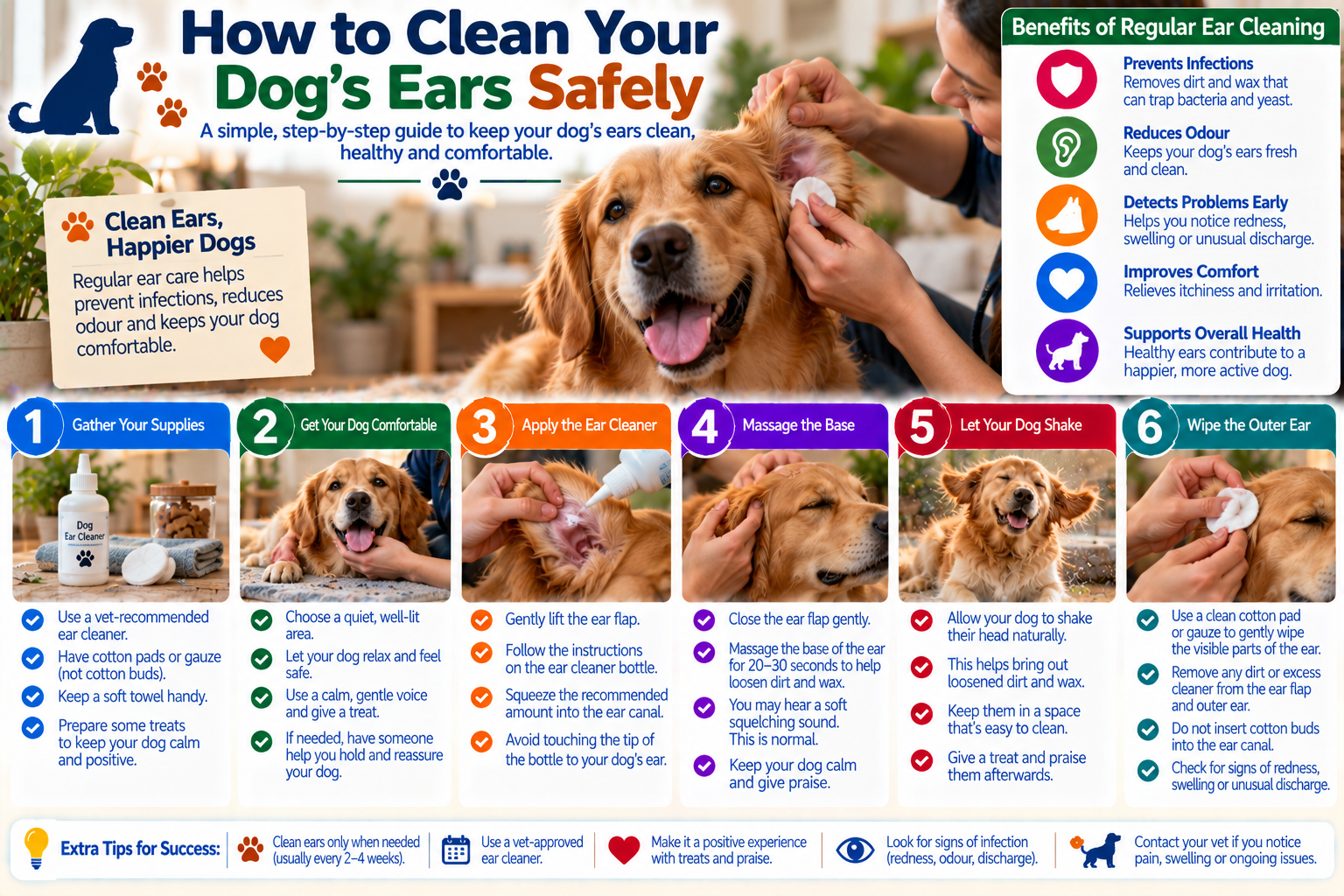
- The ear cleaner recommended for your dog and the current problem, if any.
- Soft cotton pads or gauze for the accessible outer surfaces.
- A towel, a nonslip surface, and small rewards.
- The veterinary instructions, including how cleaning relates to any prescribed ear medicine.
Avoid alcohol, hydrogen peroxide, homemade mixtures, and cotton buds inserted into the canal. A product that was suitable during an earlier episode may not be appropriate now. Check expiry dates and do not share contaminated equipment between pets.
Teach the handling before the full clean
Break the task into small parts: look at the bottle, touch the shoulder, briefly touch the ear, lift the flap, and hear the cap opening. Pair each comfortable step with a reward. Practise when the ear is healthy, not only when treatment has become urgent.
For example, today’s success might be lifting the flap for one second while your dog stays relaxed. Tomorrow may look the same. If treatment is medically necessary before handling training is complete, ask your veterinary team for a safe plan instead of pinning a struggling dog down.
Follow the method your vet demonstrates
- Position your dog comfortably and gently lift the flap if they tolerate it.
- Apply the recommended cleaner as directed, keeping the bottle tip from touching the ear.
- If instructed, gently massage the base of the ear to distribute the cleaner. Stop for pain or distress.
- Allow your dog to shake their head; keep your face away and use the towel for splashes.
- Wipe only what you can easily reach on the flap and canal entrance. Do not dig deeper for a spotless result.
Follow the specific product and veterinary directions for amount, frequency, and timing before medication. More cleaning is not automatically better. Excessive cleaning can irritate tissue and turn a manageable routine into an unpleasant experience.
| Finding | Next step |
|---|---|
| Comfortable ear with little debris | Ask whether cleaning is needed at all |
| Known routine care plan | Follow the demonstrated method and schedule |
| Redness, smell, discharge, or scratching | Contact your vet before treating at home |
| Severe pain, head tilt, or imbalance | Seek prompt veterinary assessment |
Keep a record if problems recur
Note which ear is affected, dates, products used, and any associated itching elsewhere. Recurrence may need investigation rather than repeated cleaning alone. Bring your notes and bottles to the appointment.
For other gentle care routines, see dog nail trimming and bathing frequency.
Frequently asked questions
How often should I clean my dog’s ears?
There is no universal schedule. Follow a plan based on the individual ear and your vet’s advice; healthy ears may not need routine cleaning.
Can I use cotton buds?
Do not insert them into the canal. Use soft pads on accessible surfaces and leave deeper examination and debris removal to the veterinary team.
Does brown debris mean ear mites?
Appearance alone cannot identify the cause. Wax, infection, parasites, and other problems can look similar and need examination.