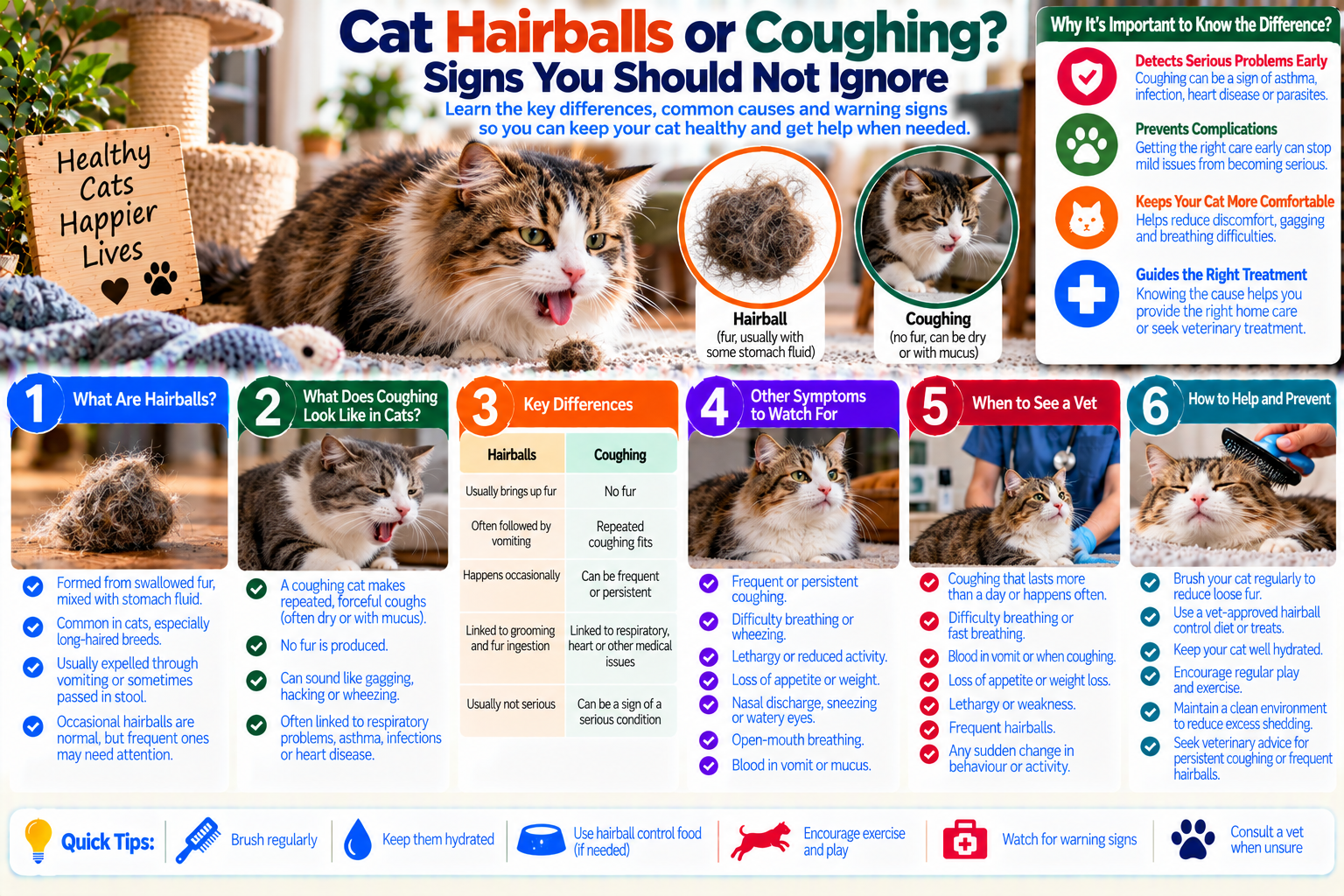

A cat crouches, stretches their neck, and makes a repeated hacking sound. It is tempting to label every episode a hairball, especially if your cat has a long coat. But coughing, retching, and vomiting are not interchangeable, and a video cannot safely establish the cause on its own.
Quick answer: Repeated “hairball” episodes deserve veterinary attention, especially when no hair appears. Coughing may involve the airways, while vomiting and retching can reflect digestive problems. Difficulty breathing, open-mouth breathing, collapse, or severe distress needs emergency care.
What a hairball actually is
Cats swallow loose hair while grooming. Much of it passes through the digestive system, but some may collect and be brought up. A hairball can look elongated because it has travelled through the oesophagus; it is not always a round ball.
Finding hair does not prove every episode is harmless. Frequent vomiting, changes in appetite, weight loss, or repeated unproductive retching should be discussed with your vet. Do not settle on a fixed “normal allowance” of hairballs and overlook a change in your individual cat.
Observe the event without delaying help
If your cat is breathing comfortably and it is safe, record a short video for the veterinary team. Note whether material came up, what it looked like, and how your cat behaved before and afterward. Describe what you saw rather than deciding it was definitely a cough or a hairball.
| Observation | Useful detail |
|---|---|
| Timing | First episode, recurrence, relation to meals or activity |
| What appeared | Hair, food, fluid, blood, or nothing |
| Between episodes | Breathing comfort, appetite, energy, litter-box habits |
| Other changes | Weight, grooming, coat condition, new products or exposures |
A note might read: “Three episodes this week; nothing produced twice; quieter afterward.” That gives the clinic more useful information than “another hairball.” Bring a medication list and mention any recent diet changes or access to string, plants, or small objects.
Know the urgent signs
Emergency: Open-mouth breathing, obvious breathing effort, blue or very pale gums, collapse, or severe distress needs urgent veterinary help. Minimise handling, keep your cat calm, and call the emergency clinic. Do not spend time filming or giving a hairball product.
Repeated vomiting, inability to keep water down, painful abdomen, marked lethargy, blood, or refusal to eat also warrants prompt advice. Kittens and medically vulnerable cats may deteriorate quickly. If string is visible from the mouth or anus, do not pull it; contact a vet.
Reduce swallowed loose hair sensibly
Regular gentle grooming can remove loose coat before it is swallowed. Choose tools suited to the coat and your cat’s tolerance. Keep sessions short and avoid pulling through mats. Skin pain, excessive grooming, bald patches, or sudden coat changes should be investigated instead of simply brushing more.
For a long-haired cat, divide the coat into manageable areas over several sessions. Track which areas have been checked, including places your cat cannot easily reach. A groomer or veterinary team may be needed for tight matting.
Avoid treating an uncertain symptom blindly
Do not give oil, laxatives, human medicines, or repeated hairball remedies without veterinary guidance. A product cannot resolve an airway problem, and delaying assessment can matter. A special diet may be appropriate for some cats, but it should fit the cat’s overall nutritional and medical needs.
Ask the vet what signs should trigger a recheck after treatment and what to record at home. Improvement should include the cat’s overall comfort and appetite, not merely fewer visible hairballs.
Read how often to brush your cat and subtle pain signs for related care.
Frequently asked questions
Can I tell coughing from a hairball by the sound?
Not reliably. Describe and, when safe, record the episode for your vet. Similar-looking movements can have different causes.
Are frequent hairballs normal for long-haired cats?
A long coat can increase swallowed hair, but frequent episodes still deserve assessment, particularly with appetite, weight, or behaviour changes.
Should I give olive oil to help?
Do not improvise with oils or laxatives. Ask your vet which approach is appropriate after the cause is assessed.