
Guinea pig nails can become long and curved, changing how the feet rest on the ground. Regular checks make small maintenance trims easier than waiting for a severely overgrown claw. The task should be planned around secure body support and a clear view, especially when nails are dark.
Quick answer: Use suitable small-pet nail clippers and remove only a tiny tip away from the quick. Support the whole body, keep the session short, and ask your vet or veterinary nurse to demonstrate first if you are unsure. Painful, twisted, or embedded nails need professional attention.
Inspect feet before choosing a trimming day
Look at all feet during routine checks. Notice nail length, curvature, redness, swelling, sores, or changes in walking. An overgrown nail and a painful foot are not necessarily the same problem, and a trim alone may not solve discomfort.
Many guinea pigs need trimming roughly every few weeks to monthly, but growth and wear differ. Use inspection to determine the schedule. Record the date and any nail that needs a recheck rather than relying on memory.
Set up for stable, gentle handling
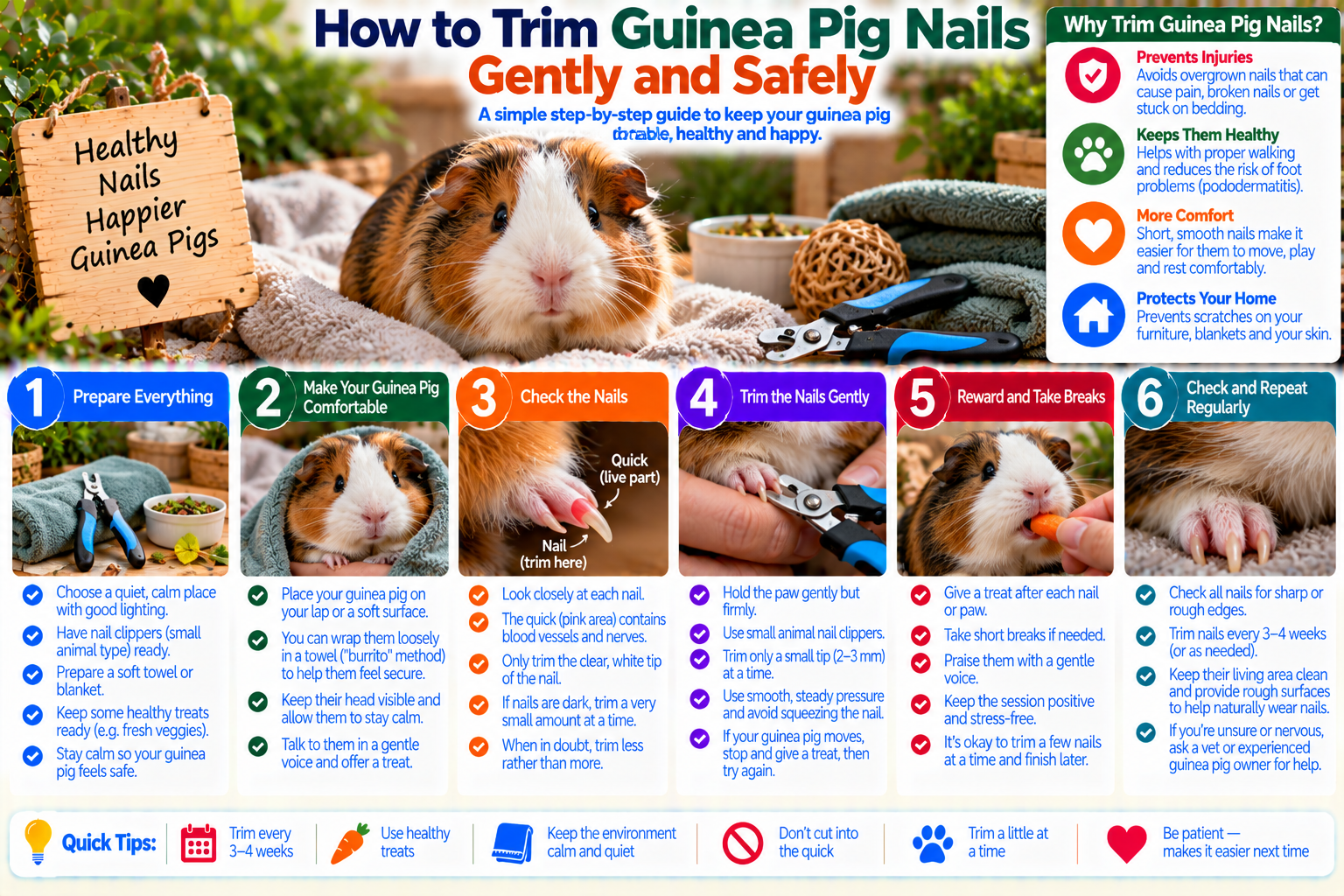
Prepare sharp, appropriately sized clippers, a towel, good light, and a pet-safe styptic product recommended by your veterinary team. Work close to a safe surface so a sudden movement cannot become a fall. A calm helper can support the body while you examine one foot.
Keep the chest and hindquarters supported without squeezing. Do not suspend the guinea pig by a leg or turn the session into prolonged restraint. If handling is difficult, a veterinary demonstration is safer than copying a position that does not work for your animal.
Find the safe cutting area
The quick contains blood vessels and nerves. It is often visible as a pink area in pale nails, but dark nails can make the boundary difficult to judge. Good lighting helps; it does not guarantee that the quick will be visible.
- Hold one foot gently and look at the nail from more than one angle.
- Identify the narrow tip and the quick if visible.
- Remove a very small amount, leaving generous space before sensitive tissue.
- Release the foot and give a brief break.
- Continue only while the guinea pig remains manageable and comfortable.
Do not make a large cut to “catch up” after missed trims. Severely overgrown claws may need a staged professional plan. A picture of an ideal nail length cannot tell you where this animal’s quick ends.
| Finding | Action |
|---|---|
| Small sharp tip and visible quick | Conservative trim if handling is comfortable |
| Dark nail with uncertain boundary | Ask for a practical demonstration |
| Severe curl, twist, or contact with the foot | Arrange professional care |
| Swelling, sores, limping, or pain | Veterinary examination rather than grooming alone |
If a nail bleeds
Stop clipping. Apply gentle pressure with clean gauze and use the recommended styptic product as directed. Contact the vet if bleeding continues, the injury is substantial, or the guinea pig is distressed. Check that the animal resumes normal eating and activity afterward.
Make future checks easier
Practise brief supported handling between trims. Touch a foot, reward calm participation with a tiny suitable part of the normal diet, then release. One successful nail is a worthwhile session; all feet do not need to be completed at once.
Keep living surfaces clean and comfortable, and monitor weight and appetite as part of general care. Reduced eating or marked lethargy needs prompt veterinary advice, even when the original concern was grooming.
For the surrounding routine, see guinea pig housing and daily feeding needs.
Frequently asked questions
Can I use a rough surface instead of trimming?
Do not rely on abrasive flooring to fix overgrown nails; it may harm feet. Provide comfortable housing and assess nails directly.
How short should the nails be?
There is no safe universal measurement. The quick and nail shape determine what can be removed; a professional demonstration is helpful.
What if my guinea pig struggles?
Stop before handling becomes unsafe. Use shorter practice sessions and arrange veterinary assistance for the trim.