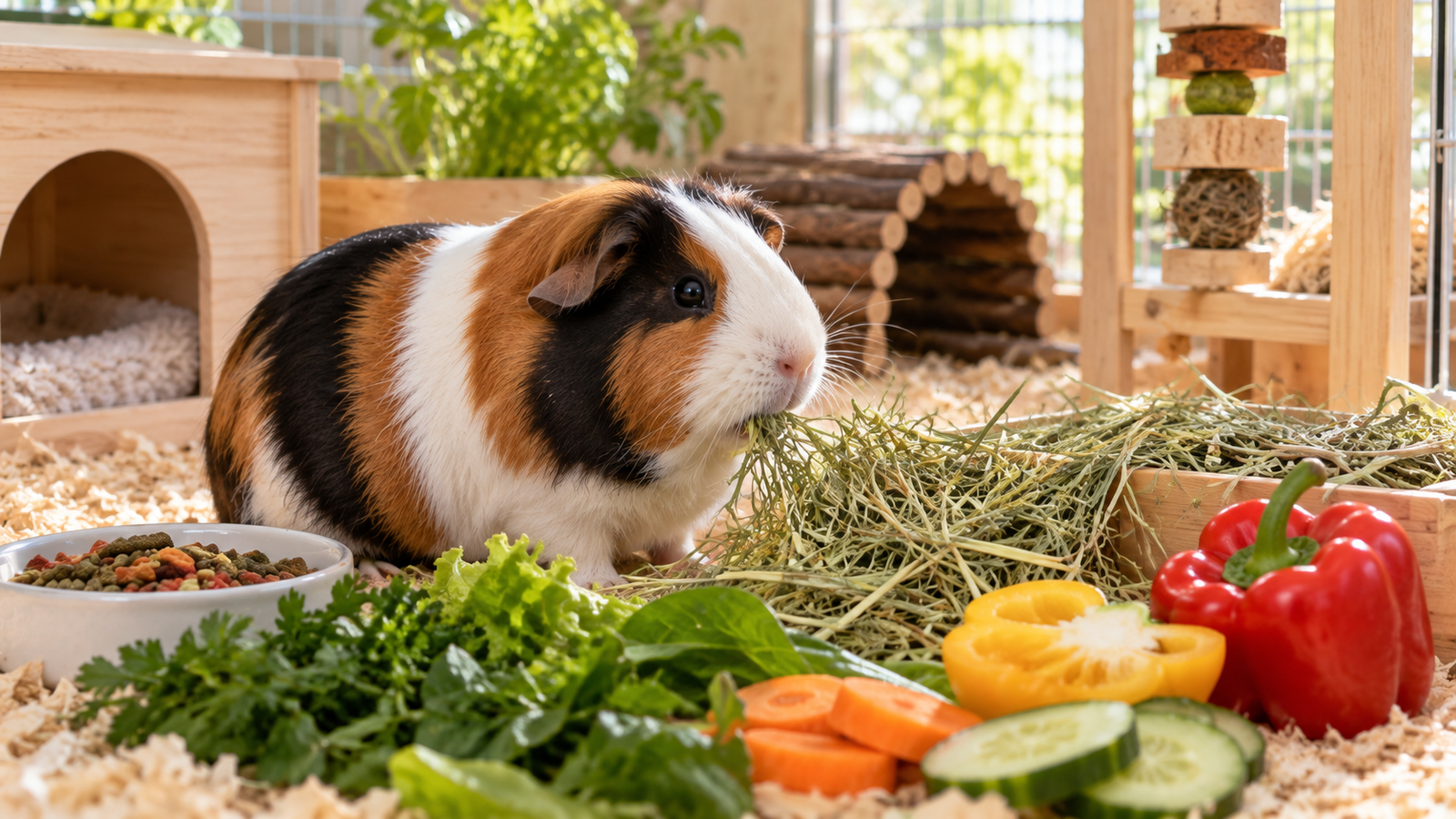

A healthy guinea pig diet is built on unlimited grass hay, fresh vegetables every day, clean water and a small, measured amount of guinea pig pellets. Getting it right matters more than with many pets, because guinea pigs can’t make their own vitamin C. Like people, they have to get it from their food every day.
In short: give adult guinea pigs unlimited grass hay, around a cup of fresh vegetables each day with plenty of vitamin C, a small portion of plain guinea pig pellets and fresh water at all times. Keep fruit as an occasional treat, and contact a vet quickly if your guinea pig stops eating.
| Food | How much |
|---|---|
| Grass hay | Unlimited, available at all times. It should make up most of the diet. |
| Fresh vegetables | Roughly 1 cup per guinea pig per day, mostly leafy greens |
| Guinea pig pellets | A small, measured portion, often around ⅛ cup per adult per day |
| Fruit | Occasional small treats only |
| Water | Fresh and available at all times |
These are commonly used guidelines. Follow the feeding guide on your pellet packaging and ask your vet if your guinea pig is young, pregnant, older or has health problems.
Hay should be the main food
Adult guinea pigs should always have fresh grass hay available, such as timothy, orchard grass or meadow hay. Hay keeps their digestive system moving, and all that chewing wears down their teeth, which never stop growing. A guinea pig that doesn’t eat enough hay is more likely to develop dental and digestive problems.
Choose hay that’s green, dry and sweet-smelling, and top it up at least once a day. Young guinea pigs, and pregnant or nursing sows, are often given alfalfa hay because it’s higher in protein and calcium. For most healthy adults, alfalfa is too rich in calcium to be the main hay.
Why vitamin C matters so much
Guinea pigs lack the enzyme needed to make vitamin C, so without enough in their diet they can develop scurvy. Early signs include a rough coat, weight loss, reluctance to move, swollen or painful joints and bleeding gums. Many vets suggest roughly 10–30 mg of vitamin C per kilogram of body weight per day for adults, with more needed during pregnancy or illness.
The best way to provide it is through fresh vegetables every day and a good-quality pellet with stabilized vitamin C. Adding vitamin C drops to drinking water isn’t usually recommended, as it breaks down quickly and can put some guinea pigs off drinking.
Offer fresh vegetables every day
Give a varied mix of guinea pig-safe vegetables daily, including some that are rich in vitamin C:
- Bell peppers, especially red and yellow, which are high in vitamin C
- Romaine lettuce and other dark leaf lettuces
- Coriander (cilantro)
- Cucumber, in small amounts
- Carrot tops
- Small amounts of other safe leafy greens
Some greens, like kale, spinach and parsley, are high in calcium or oxalates. They’re fine now and then, but feeding them in large amounts every day may contribute to bladder stones. Introduce new vegetables one at a time, and wash all produce before serving.
Choose quality pellets
Use plain pellets made specifically for guinea pigs, with added vitamin C, and measure the daily portion rather than keeping the bowl topped up. Too many pellets can lead to weight gain and less hay eaten. Avoid colorful muesli-style mixes with seeds, nuts or sugary pieces, as guinea pigs tend to pick out the tasty bits.
Don’t feed rabbit pellets. They don’t contain the vitamin C guinea pigs need.
Fruit is an occasional treat
Small pieces of safe fruit, such as apple (without seeds), strawberries, blueberries or orange, can be offered a couple of times a week. Fruit is high in natural sugar, so keep portions tiny.
Foods to avoid
- Iceberg lettuce, which has very little nutritional value
- Potatoes and potato peelings
- Onions, garlic, leeks and chives
- Avocado
- Rhubarb
- Chocolate, sweets and other sugary snacks
- Bread, crackers and cereals
- Dairy products and meat
If you’re not sure whether a food is safe, don’t offer it until you’ve checked with your vet.
Fresh water is essential
Provide clean drinking water at all times, from a bottle, a heavy bowl or both. Check it every day, refill with fresh water and clean the bottle spout regularly, as it can clog without you noticing.
Watch for changes in eating
Healthy guinea pigs eat and pass droppings throughout the day. Keep an eye on their appetite, droppings and weight. Weighing them once a week on a kitchen scale is an easy way to spot problems early.
Urgent: a guinea pig that stops eating, or produces far fewer droppings, needs to see a vet quickly, ideally the same day. Their digestive system can slow down dangerously fast, so don’t wait to see if it improves.
Keep the diet simple
For most adult guinea pigs, unlimited grass hay, a daily mix of fresh vegetables, a measured amount of guinea pig pellets and clean water is all they need. Keep treats small, make changes gradually and pay attention to appetite every day.
Guinea pigs also need company, as our guide on whether guinea pigs need a friend explains. Rabbit owners can compare with our guide on what rabbits eat every day, as the two diets differ.
Frequently asked questions
What do guinea pigs eat every day?
Adult guinea pigs need unlimited grass hay, around a cup of fresh vegetables per guinea pig, a small measured portion of guinea pig pellets and fresh water at all times. Hay should make up most of their diet.
Why do guinea pigs need vitamin C?
Guinea pigs can’t make their own vitamin C, so they must get it from their food every day. Without enough, they can develop scurvy, which causes a rough coat, weight loss, sore joints and bleeding gums.
Can guinea pigs eat rabbit food?
No. Rabbit pellets don’t contain the vitamin C guinea pigs need. Always use pellets made specifically for guinea pigs.
What should I do if my guinea pig stops eating?
Contact a vet quickly, ideally the same day. A guinea pig that stops eating or produces far fewer droppings can become seriously ill very fast.