
The dog you meet at the shelter and the dog living in your home a month later can seem like two different animals. Adopting a rescue dog means taking in an animal who has just lost everything familiar, and the first few weeks are usually a mix of sleeping, watching, testing and slowly relaxing.
Knowing what’s normal during that settling period makes it far easier to stay patient, and to spot the few things that do need a vet or a trainer.
Quick answer: expect your new rescue dog to be tired, unsure and perhaps not quite themselves for the first few days, with their real personality appearing over the following weeks. Keep life quiet and predictable, give them a safe retreat, book a vet check soon after adoption and treat house training as if you are starting fresh. Many dogs take around three months to feel fully at home, and some take longer.
Get these sorted before your dog arrives
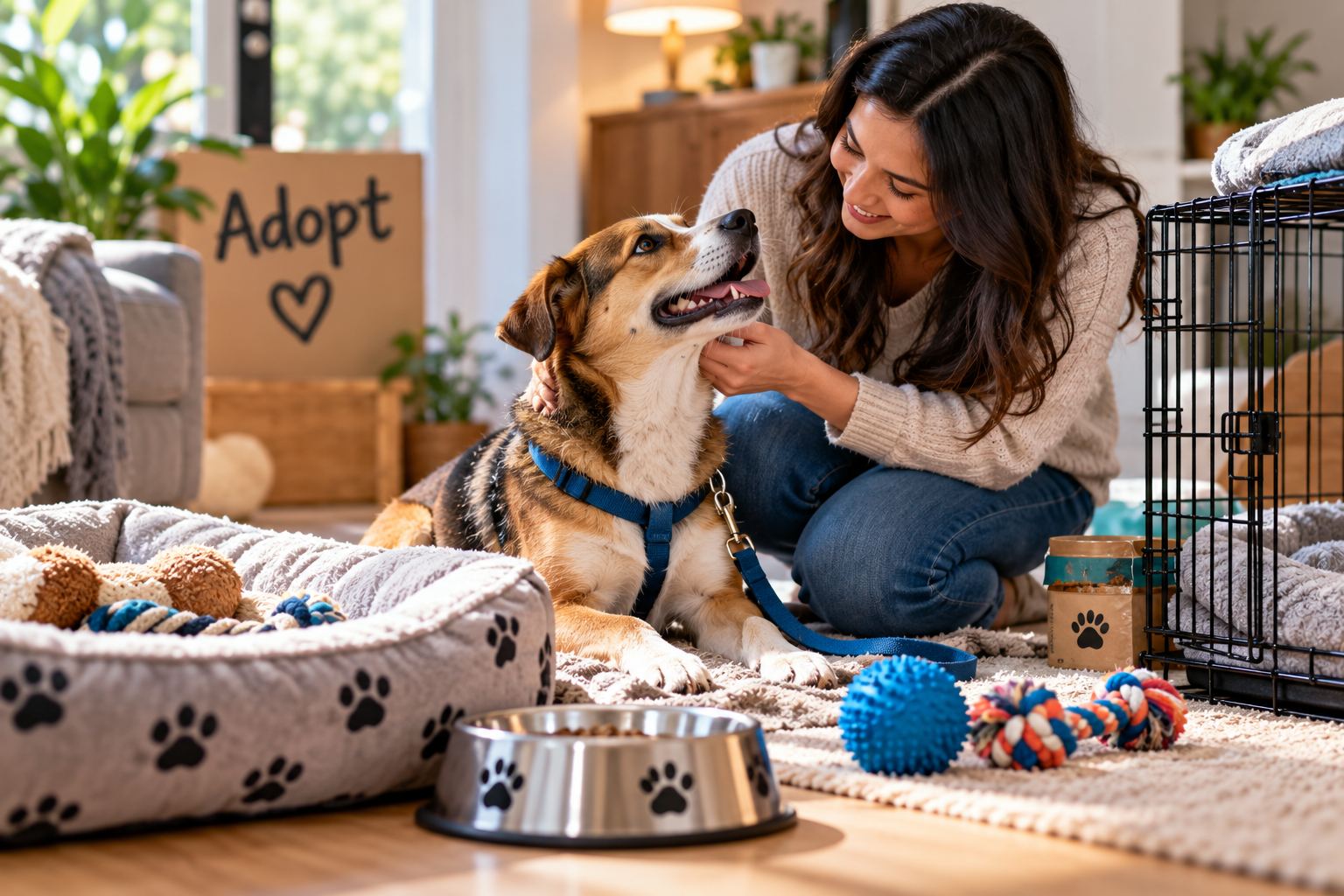
The first day goes more smoothly if the practical jobs are already done:
- A quiet resting spot away from the front door and the busiest room, with a bed, water and a couple of chews. A crate with the door open can work if your dog is used to one.
- Baby gates to close off rooms you don’t want your dog in yet.
- A well-fitting collar or harness with an ID tag, plus the microchip registered in your name.
- A checked yard: gaps under fences, loose boards and gates that don’t latch.
- The same food the shelter used, so you aren’t changing diet and home at once. Switch gradually later if you want to.
- Agreed house rules. Decide together whether the dog is allowed on the sofa, who walks when and what words you’ll use for cues. Mixed messages are confusing for a dog who is already on edge.
The first few days: keep the world small
A shelter is loud and unpredictable, and the move itself is a big upheaval. Many newly adopted dogs spend a lot of the first days asleep. Others pace, pant, stick to you like glue or hide behind furniture. All of these are common reactions to stress, not a verdict on how the adoption will go.
This quiet start is often called decompression. In practice it means giving your dog time to take everything in without adding more to process:
- Skip the welcome party. Hold off on visitors, busy parks and trips to meet relatives.
- Let your dog approach people in their own time. Sit on the floor and ignore them if they seem shy; many dogs come over sooner when nobody is reaching for them.
- Keep walks short and in quiet places. Longer outings can come later.
- Leave the resting spot alone. Children in particular need to know that a dog on its bed is off limits.
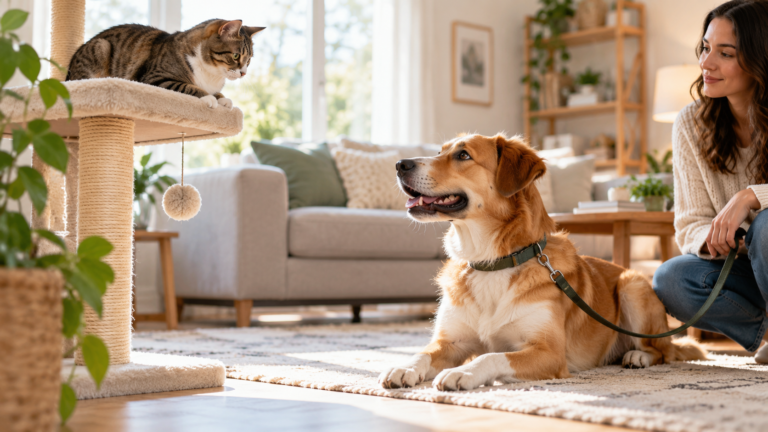
- Wait before introducing other pets face to face, and keep early meetings short and supervised.
A missed meal or two in the first couple of days is common in stressed dogs. Offer food in a quiet place and take the bowl away after a while rather than hovering.
The 3-3-3 idea, and why it’s only a rough guide
Shelters often describe adjustment as three days, three weeks and three months. The first few days are about coping with the shock of the move. Around the three-week mark, many dogs start to relax, learn the routine and show more of their personality, which can include some behavior you didn’t see at the shelter. By about three months, a lot of dogs feel settled and bonded.
Treat those numbers as a loose picture, not a schedule. A confident young dog may seem at home within days, while a fearful dog or one with a hard past may need many months. The pattern that matters is gradual progress, even if it’s uneven.
Build a predictable routine
Dogs relax when they can predict what happens next. Try to feed, walk and settle your dog for the night at roughly the same times each day from the start. Routine also makes house training easier, because meals and toilet breaks fall into a pattern.
Start short practice sessions of being left alone early, too. If you adopt during a week off work, your dog may learn that you are always there, then struggle when normal life resumes. A few minutes behind a closed door, building up gradually, is a gentle start. Once your dog has settled, you can work toward sensible limits on how long a dog should be left alone.
Expect to go back to basics with house training
A rescue dog may have lived outdoors, in a kennel or in a home with different habits, so being described as house trained doesn’t always carry over to a new house. Stress also makes accidents more likely.
Treat the first weeks as if your dog knows nothing: take them out first thing in the morning, after meals, after naps and play, and before bed. Go to the same spot and reward them calmly as soon as they finish. If there’s an accident indoors, clean it with an enzyme cleaner and don’t scold. Punishment usually teaches a dog to hide when they need to go, which makes the problem harder to fix.
Book a vet visit early
Choose a local vet and book a checkup soon after adoption, even if your dog seems healthy. Bring any paperwork from the shelter covering vaccines, parasite treatment, spay or neuter surgery and known health issues. The first visit is a chance to confirm your dog’s weight and body condition, update preventive care and ask about any behavior that worries you.
Important: contact your vet if an adult dog hasn’t eaten for around three days, or sooner if they also have vomiting, diarrhea or seem lethargic. For a puppy, call within 24 hours of not eating. Go straight to a vet for repeated vomiting, blood in the stool, trouble breathing or collapse.
When settling in needs outside help
Some wobbles are normal, but ask your shelter, your vet or a qualified, reward-based trainer or behaviorist for help if your dog:
- Growls, snaps or bites, including around food, toys or resting places
- Panics when left alone, destroying doors or injuring themselves
- Stays so fearful after several weeks that they won’t eat, go outside or leave their hiding spot
- Tries hard to escape through doors, gates or fences
Many rescues offer support after adoption, so it’s worth asking early rather than waiting for a problem to become a habit.
Frequently asked questions
How long does it take a rescue dog to settle in?
It varies a lot. Many dogs start to relax within a few weeks and feel at home by around three months, but shy or anxious dogs can take much longer. Look for steady progress rather than a deadline.
Is the 3-3-3 rule accurate for every dog?
No. It’s a helpful rough picture of three days, three weeks and three months, but individual dogs adjust faster or slower depending on their age, personality and history.
Why is my new rescue dog not eating?
Stress commonly dulls appetite during the first couple of days. Offer meals in a quiet place and keep the same food the shelter used. Call your vet if an adult dog hasn’t eaten for around three days, or sooner if there’s vomiting, diarrhea or lethargy.
My rescue dog was house trained but keeps having accidents. Is that normal?
Yes, it’s common. A new home and stress can undo old habits. Go back to frequent, rewarded trips outside, and ask your vet to rule out a medical cause if accidents continue.