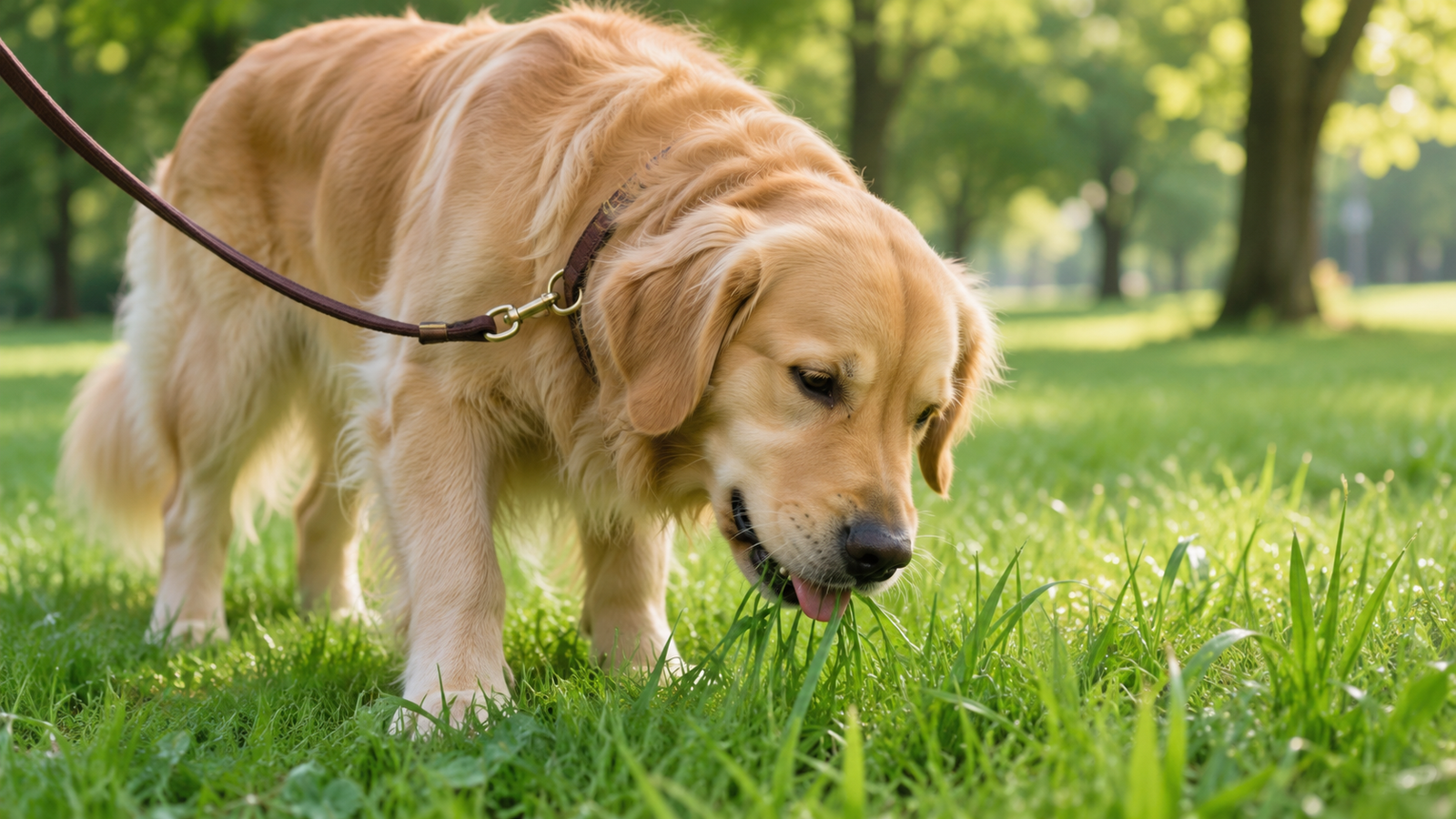

Plenty of dogs nibble grass on walks, and many owners worry it means their dog is sick or missing something in its diet. Usually, it doesn’t. Research suggests grass eating is a very common, normal habit in healthy dogs, and most dogs that graze don’t seem unwell beforehand or vomit afterward. There are a few situations where it is worth paying attention, though, and some grass is risky to eat.
The short version: Eating grass is common and usually harmless. Dogs may do it out of instinct, boredom or simply because they like it, and only a minority vomit afterward. Keep your dog off grass treated with weedkillers or pesticides, keep worming up to date, and see a vet if grass eating suddenly increases or comes with vomiting, diarrhea, weight loss, poor appetite or lethargy.
Is it normal for dogs to eat grass?
Yes. The best-known research comes from a team at the UC Davis School of Veterinary Medicine, who surveyed more than 1,500 dog owners about plant eating. About 68% said their dogs ate plants daily or weekly, and grass was by far the most common choice. Only around 8% of owners said their dogs often looked ill before eating plants, and about 22% said their dogs regularly vomited afterward.
Younger dogs ate plants more often than older ones and were even less likely to seem ill beforehand. The researchers concluded that grass eating is a normal behavior in dogs, not usually a sign of illness, and that vomiting after it seems to be more of a side effect than the goal.
Why do dogs eat grass?
Nobody knows for certain, and different dogs may graze for different reasons. The most likely explanations are:
- Instinct. Wild relatives of dogs are known to eat plant material. One theory from the UC Davis team is that it is an inherited habit that may once have helped clear intestinal parasites, though this hasn’t been proven.
- They like it. Many dogs seem to enjoy the taste or texture of fresh, new grass, especially in spring or after rain.
- Boredom. Dogs left in a yard with nothing to do may graze to pass the time.
- An empty stomach. Some dogs eat grass and then bring up yellow bile, often first thing in the morning. The AKC’s chief veterinary officer notes that bile usually points to an empty stomach, and a small meal or snack earlier in the day can help.
- Fiber. It is sometimes suggested dogs are seeking fiber. The UC Davis survey found no link between grass eating and low-fiber diets, but if you are curious, ask your vet whether a higher-fiber food suits your dog.
When grass eating can be a problem
The grass itself is rarely the issue. What’s on it or in it can be.
Chemicals. Lawns, parks and verges may be treated with weedkillers, pesticides or fertilizers. Avoid letting your dog graze in areas you know have been sprayed, and keep your own lawn treatments pet-safe. If your dog has eaten treated grass and seems unwell, call your vet.
Parasites. Grass can be contaminated with feces from other animals, which may carry worm eggs. Regular worming, as advised by your vet, keeps this risk low. See our guide to worms in dogs.
Toxic plants. A dog that likes to graze may also chew garden plants or houseplants, some of which are poisonous. Our list of foods toxic to dogs covers common household dangers, and your vet or a pet poison line can advise on a specific plant.
Long, tough grass and seeds. Long blades can occasionally cause gagging, and sharp grass seeds can get stuck in the mouth, nose, ears or paws. Seeds in summer are worth checking for after walks.
When to see a vet
Grass eating on its own in a dog that is otherwise bright and well rarely needs a vet visit. Book a check if:
- Your dog suddenly starts eating a lot more grass than usual, or frantically
- It vomits often, or the vomiting continues after grass eating stops
- There is diarrhea, blood in the stool or vomit, or black, tarry stool
- Your dog is losing weight, eating less, lethargic, or licking its lips a lot (which can be a sign of nausea)
- It is also eating other non-food items such as soil, stones or fabric
In these cases, the grass eating may be a symptom of a stomach, gut or other health problem rather than a harmless habit. Our guides on dog vomiting and signs your dog is sick explain what else to look for.
Urgent: contact a vet straight away if your dog keeps trying to vomit without bringing anything up, has a swollen belly, vomits blood, or may have eaten a toxic plant or chemically treated grass.
How to reduce grass eating
There is usually no need to stop it completely. If you’d like your dog to graze less, these steps help:
- Stop it eating treated grass. Keep your dog on a lead in areas that may have been sprayed, and use a “leave it” cue. Our guide to teaching your dog to leave it walks you through this.
- Add more activity. More walks, play and brain games such as our indoor scent games can reduce boredom grazing.
- Check mealtimes. If your dog grazes and brings up bile on an empty stomach, ask your vet about splitting food into more meals. Our guide on how often to feed a dog can help.
- Offer a safe alternative. Some owners grow a small pot of untreated wheatgrass or cat grass for their dog to nibble at home.
Frequently asked questions
Do dogs eat grass to make themselves sick?
Some may, but most don’t. In the UC Davis survey, only about a fifth of dogs regularly vomited after eating grass, and few looked unwell beforehand. Vomiting seems to be an occasional side effect rather than the main reason dogs graze.
Does eating grass mean my dog has worms?
Not necessarily. Grass eating is common in healthy, wormed dogs. However, grass can carry worm eggs from other animals, so keep your dog’s worming up to date and see your vet if you notice weight loss, diarrhea or worms in the stool.
Why does my dog eat grass and then throw up yellow foam?
Yellow foam is usually bile, which often appears when a dog’s stomach has been empty for a while, such as first thing in the morning. A small meal earlier or later in the day may help. If it happens often or your dog seems unwell, see your vet.
Should I stop my puppy eating grass?
Puppies often eat grass more than adult dogs, and it is usually harmless. The main concerns are treated grass, toxic plants and swallowing other objects, so supervise closely, keep worming on schedule and teach a “leave it” cue early.