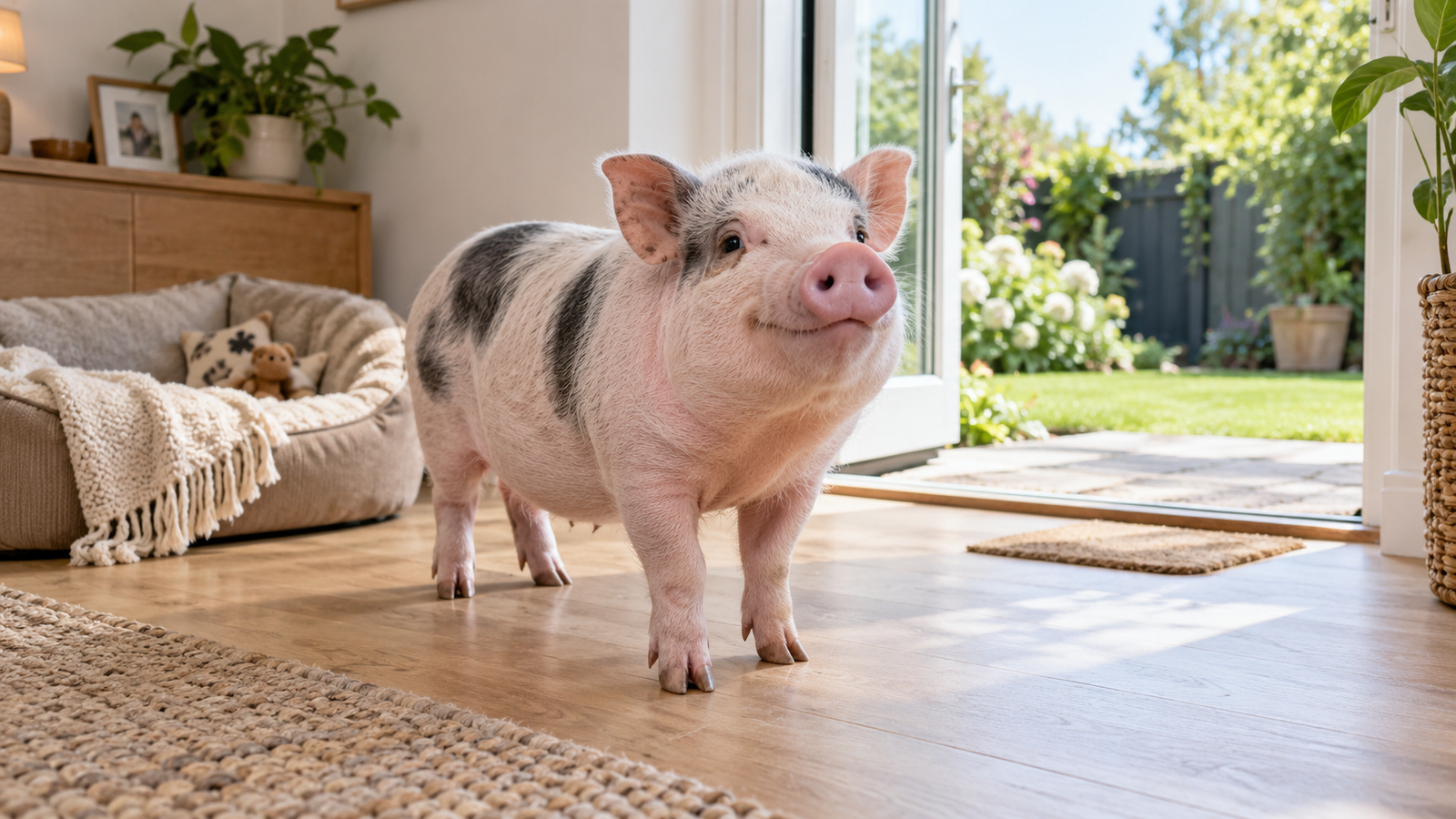

Miniature pigs can live indoors, but they’re far from low-maintenance. They’re clever, strong and endlessly curious, and they need space, routine, things to do and consistent care. A home that works for a pig is one built around normal pig behavior, not one that expects a pig to act like a dog or cat.
In short: an indoor pig needs room to move, safe outdoor access for rooting, daily enrichment, a pig-proofed house and an owner ready for a commitment of well over a decade. Plan for the size of an adult pig, not the piglet you bring home.
Do miniature pigs make good indoor pets?
They can settle into indoor life well, as long as their physical and behavioral needs are met. Pigs tend to do best in homes with plenty of room to move around and safe, secure access to an outdoor area where they can root, graze and explore.
Pigs are also social animals. They bond closely with their people, and a pig left alone for long stretches every day is more likely to become bored, stressed or destructive.
They need more space than most people expect
“Miniature” doesn’t mean small. There’s no officially recognized miniature or “teacup” pig breed, and pigs sold under those labels can grow much bigger than new owners are told. Many adult mini pigs weigh somewhere around 100–200 lb (45–90 kg), and some grow larger. Pigs also keep growing for several years before they reach their full adult size.
Your pig will need a comfortable, draft-free place to sleep and non-slip flooring. Pigs struggle to keep their footing on smooth tile and hardwood, so rugs or rubber mats in the areas they use most make a real difference. They also need enough room to wander without being shut in one space all day.
Pigs need enrichment every day
Rooting, foraging and investigating come naturally to pigs. When they don’t have an outlet for those instincts, boredom quickly turns into chewed furniture, overturned bins and dug-up carpets.
- Give them somewhere safe to root, like a patch of garden or a rooting box filled with balls or blankets.
- Use food puzzles and scatter feeding to keep them foraging, with supervision where needed.
- Rotate toys and enrichment items so they stay interesting.
- Make time for daily exercise and outdoor exploration.
Can indoor pigs be house trained?
Yes. Pigs are naturally clean animals and most can learn a reliable toilet routine. A designated spot outside or a large, low-sided indoor litter box can both work. Consistency is what matters most: take your pig to the same spot at regular times, especially while it’s young, and reward it when it gets things right.
Pig-proofing your home
Pigs are strong and persistent, especially when food is involved, and many learn to open cupboards and even fridges. Before your pig arrives, secure:
- Food cupboards and the fridge, using child-proof latches if needed
- Rubbish and recycling bins
- Electrical cables
- Cleaning products and other household chemicals
- Medications and anything fragile at snout height
The long-term commitment
Pigs commonly live 12 to 18 years, so owning one is a long-term decision. Before bringing a pig home, think carefully about the points below.
| Consideration | Why it matters |
|---|---|
| Adult size | Your home and outdoor space need to suit a fully grown pig, not a piglet. |
| Lifespan | You’re committing to care for your pig for well over a decade. |
| Local rules | Many areas treat pigs as livestock, so zoning laws, permits or housing rules may restrict keeping one at home. |
| Veterinary care | Many vets don’t treat pigs. Find one experienced with pigs before you bring one home. |
| Daily time | Pigs need companionship, exercise and enrichment every day. |
Indoor living can work with the right setup
A miniature pig can live happily indoors when the home gives it enough space, enrichment, exercise and clear routines. The key is preparing for the needs of an adult pig, not just the small piglet that first comes through the door.
Considering another unusual pet? Our guide on whether hedgehogs make good pets explains what they need before you commit.
Frequently asked questions
How big do miniature pigs get?
Much bigger than the name suggests. There is no officially recognized miniature or teacup pig breed, and many adult mini pigs weigh around 100–200 lb (45–90 kg), with some growing larger. They can take several years to reach full size.
Can a miniature pig be litter trained?
Yes. Pigs are naturally clean, and most can learn to use a designated outdoor spot or a large, low-sided indoor litter box with consistent routines and positive reinforcement.
How long do miniature pigs live?
Pigs commonly live between 12 and 18 years with good care, so owning one is a long-term commitment.
Is it legal to keep a pig in my house?
It depends on where you live. Many local authorities classify pigs as livestock, which can restrict keeping them in residential areas. Check your local zoning rules, permit requirements and any housing or tenancy agreements before getting a pig.