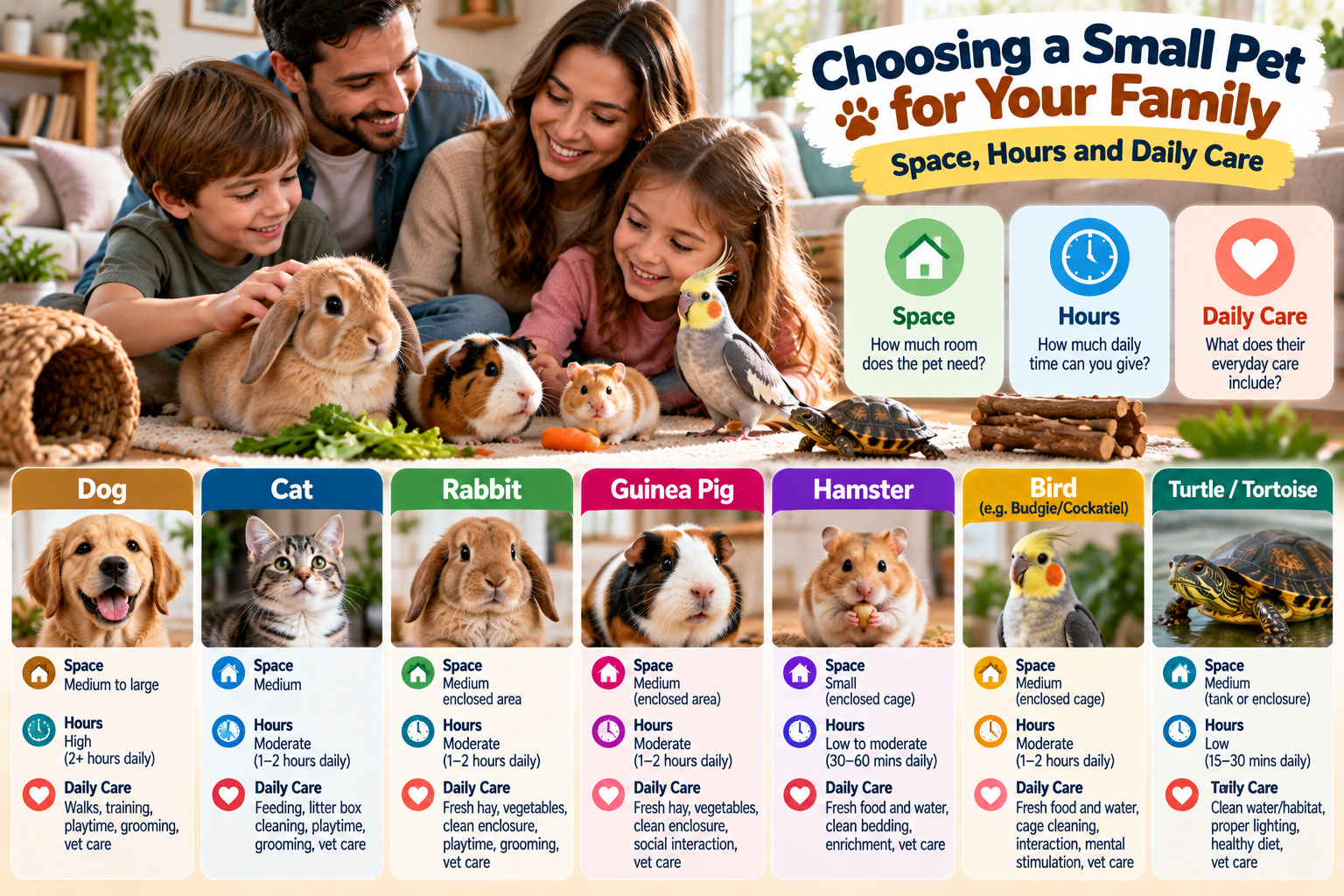

A hamster sleeping through the afternoon, a pair of guinea pigs calling for food, and a rabbit that needs room to sprint all fall under the label “small pet.” Their care barely resembles one another. Before choosing an animal for your family, picture an ordinary Tuesday: who is home, where will the enclosure go, and who will clean it when the novelty has worn off?
Start with the space you can give every day
Measure a permanent area, including floor space for movement and a place to keep supplies. A rabbit needs a large living area and daily opportunity to run; a guinea pig needs room to move alongside a compatible companion; a hamster needs deep bedding to burrow. The small cages displayed beside animals in shops are not a reliable guide to their full needs. If the only available spot is noisy, hot, or exposed to direct sun, reconsider the placement before bringing an animal home.
Check your family’s daily fit
Picture an ordinary school or work day, then compare it with the animal’s active hours and daily needs.
| What you notice | Try this | Check next |
|---|---|---|
| Family wants daytime interaction | Check the species’ active hours | A realistic daily routine |
| Space seems limited | Research the full enclosure and exercise needs | Room for long-term care |
Match activity hours to your household
Hamsters are often most active when a young child is asleep. Waking one repeatedly for daytime handling can be stressful. Guinea pigs are more likely to be seen moving and communicating during family hours, but they still need undisturbed places to hide. Think about who will notice changes in appetite, behavior, and droppings at the time the animal is normally active.
Plan for social needs, not just one animal
Rabbits and guinea pigs have important companionship needs, usually best met by an appropriately matched member of their own species. That changes the amount of space and the ongoing cost. Social housing is species-specific: do not assume any two small mammals can share a cage. A reputable rescue can explain suitable pairings and help with introductions. If you are choosing between rabbits and guinea pigs, our rabbit or guinea pig comparison walks through the practical differences.
Look beyond the purchase price
Budget for a suitable habitat, quality food, bedding, cleaning supplies, transport carrier, routine veterinary care, and unexpected illness. Ask a local clinic whether it regularly treats the species you are considering. A low adoption fee does not make specialized veterinary care inexpensive. Also check the likely lifespan: the commitment may extend well beyond a child’s current interests.
Give children a role, and adults the responsibility
Children can help refill hay, prepare food, or observe an animal’s behavior, with supervision. An adult must remain responsible for feeding, cleaning, safe handling, and veterinary decisions. Animals should be able to retreat without being chased or lifted. If a family wants a pet primarily for cuddling, spend time learning how that species actually responds to handling before choosing it.
A useful next step is to visit a rescue and ask to see the full setup for an adult animal, not just a baby. Blue Cross has a species-by-species guide to choosing a small pet. Bring your room measurements and questions; a good match should still make sense after you have seen the daily work.
Frequently asked questions
Is a small pet automatically easy to care for?
No. Many need generous space, species-specific diets, companionship and regular veterinary care.
Should I buy the enclosure first?
Research the species and its full adult needs before purchasing supplies. A rescue or knowledgeable veterinarian can help.