
Rabbits and guinea pigs often get lumped together as “small pets,” and they do share a few basics: both eat mostly hay, both are prey animals, and both are happiest with a companion. Look closer, though, and choosing between a rabbit or guinea pig means choosing between very different commitments. A rabbit is closer to a cat or dog in lifespan and space needs, while a guinea pig fits more easily into a normal home but has its own quirks, from a strict vitamin C requirement to a surprisingly loud voice.
Quick answer: guinea pigs usually suit households with less room and a shorter commitment in mind, and many learn to accept gentle handling more readily than rabbits do. Rabbits need far more space, live longer and often dislike being picked up, but reward owners who enjoy watching them run, explore and interact on their own terms. Whichever you choose, plan for at least two of the same species, and never house rabbits and guinea pigs together.
The main differences side by side
| Factor | Rabbits | Guinea pigs |
|---|---|---|
| Typical lifespan | Around 8–12 years | Usually around 5–7 years, sometimes longer |
| Space for a pair | Large: room to run, jump and stand up tall | Moderate: a roomy enclosure plus floor time |
| Company | Another rabbit, usually a neutered pair | At least one other guinea pig |
| Diet | Mostly hay, plus leafy greens and a small amount of pellets | Mostly hay, plus vegetables and pellets, with vitamin C every day |
| Being picked up | Often disliked | Can be scary at first, but often accepted with calm practice |
| Noise | Mostly quiet | Chatty, with loud squeals at feeding time |
Space: the biggest practical difference
The Rabbit Welfare Association recommends that a pair of rabbits has a total area of at least 10 x 6.5 feet (3 x 2 m) with a height of at least 3.3 feet (1 m), available all day rather than only during supervised playtime. A hutch on its own falls well short, so many owners use a rabbit-proofed room, a large pen or a secure run attached to a shelter. If your space can’t fit that, guinea pigs are the more realistic choice.
Guinea pigs need less room but more than most pet store cages provide. US humane organizations describe about 7.5 square feet (roughly 0.7 m²) as the bare minimum, and recommend 10.5 square feet (around 1 m²) or more for a pair. Floor area matters far more than height, since guinea pigs rarely jump or climb.
Why one on its own isn’t enough
Both species are social and get lonely without their own kind. Rabbits are usually kept in bonded pairs, and a neutered male with a neutered female is a common and stable pairing. Guinea pigs live in close family groups in the wild, and pairs or small groups of the same sex, or a neutered male with females, work well in homes.
Why rabbits and guinea pigs shouldn’t share a home
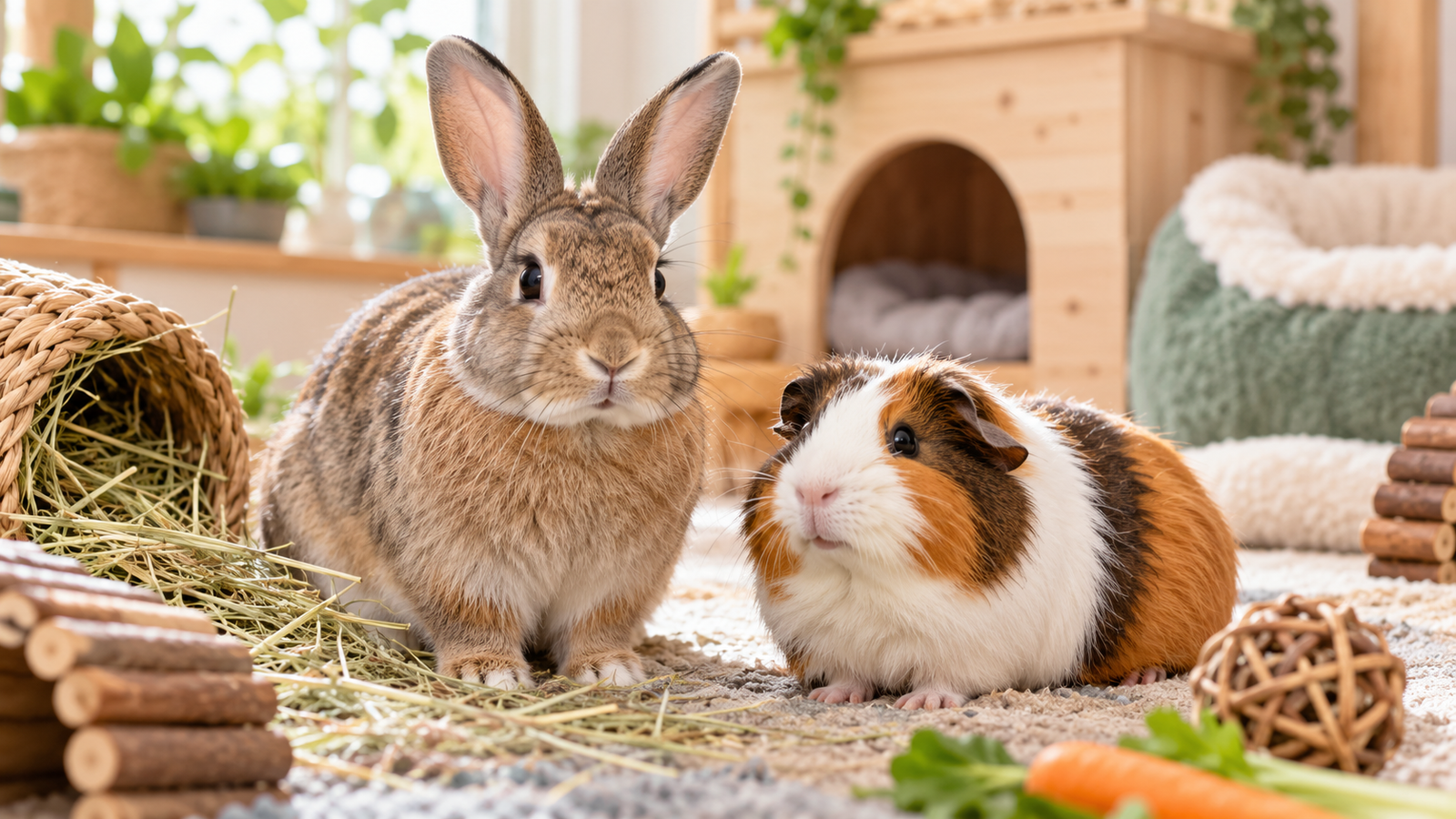
A rabbit and a guinea pig sharing a hutch was once a common sight. Welfare charities now advise against it, for good reasons.
The most serious risk is physical. A rabbit is usually much bigger and has powerful hind legs, so a single startled kick, or a rabbit trying to mount its smaller housemate, can leave a guinea pig with broken bones or a spinal injury. Rabbits may also chase or bully a guinea pig that has nowhere to escape.
Health is the second concern. Rabbits can carry the bacterium Bordetella bronchiseptica while looking perfectly well, but in guinea pigs it is a well-known cause of respiratory disease. Feeding gets harder too, since rabbit food doesn’t cover a guinea pig’s vitamin C needs and the rabbit will happily eat the guinea pig’s share.
Finally, neither animal gets the companionship it’s missing. They signal fear, contentment and interest in completely different ways, so a lone rabbit living with a guinea pig is still, in the ways that matter to it, living alone.
Feeding: similar base, one big difference
Day to day, the menus overlap a lot. Both need constant access to good-quality hay, which keeps their continuously growing teeth worn down and their digestion moving. Both get fresh leafy greens and a measured portion of pellets made for their own species.
The key difference is vitamin C. Guinea pigs can’t make it themselves and can only store it briefly, so they need a reliable daily supply from vitamin C-rich vegetables such as bell peppers and leafy greens, along with fresh guinea pig pellets. The vitamin C in pellets breaks down over time, so check the date on the bag. A guinea pig short of vitamin C can develop a rough coat, sore or swollen joints, reluctance to move and a poor appetite, which needs a vet visit. Rabbits make their own vitamin C, so this isn’t a concern for them.
Handling and everyday temperament
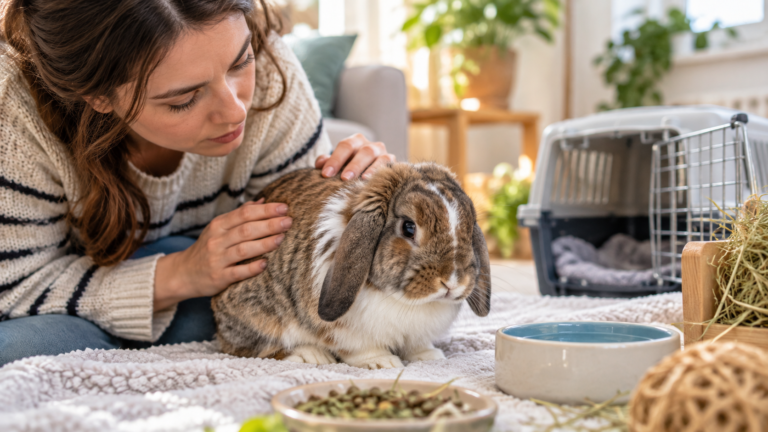
Both animals are prey species, and being lifted off the ground can feel like being caught by a predator. Rabbits in particular often struggle when held. A frightened rabbit can kick hard enough to injure its own back, so many rabbits are happiest when you sit on the floor and let them come to you. Once settled, many rabbits are curious and playful.
Guinea pigs can find lifting frightening too, but many come to accept it if you scoop them with one hand under the chest and the other supporting the rear, and keep them close to your body or on your lap. Many are skittish at first but relax into lap time with patient, regular handling.
Noise and daily rhythm
Rabbits are mostly quiet. Expect the odd thump of a back foot when alarmed, and plenty of chewing if furniture and cables aren’t protected. They’re often most lively around dawn and dusk.
Guinea pigs are much more vocal. They chatter, purr and squeak, and many greet the rustle of a vegetable bag with loud, repeated whistling squeals. They’re active in short bursts day and night, worth knowing if the enclosure is near a bedroom.
Ongoing costs to plan for
Neither pet is cheap once you add up housing, hay, fresh food, bedding and years of vet care. Rabbits generally cost more overall because they need more space and live longer, and they usually need neutering, plus vaccinations your vet recommends for your area, such as protection against rabbit hemorrhagic disease where available. Many clinics treat both as exotic pets, so find an experienced vet before you bring them home, and budget for dental problems, which are common in both.
Are they good pets for children?
Both are often sold as easy starter pets, but neither is a good fit for a household where a young child is expected to be the main carer. Rabbits usually do better with older, calm children who are happy to sit on the floor and interact without lifting them. Guinea pigs are often more tolerant of gentle handling, which makes them a slightly easier match for families, but they still need a child to sit down and hold them over a lap rather than carry them around. Either way, an adult should take responsibility for feeding, cleaning, health checks and vet visits for the animals’ whole lives.
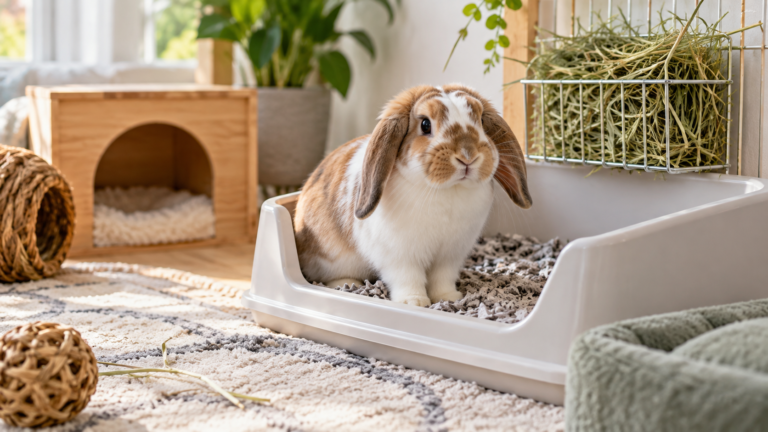
Leaning toward rabbits? Start with how to set up a comfortable rabbit home, since housing is where most rabbit plans fall apart. If guinea pigs sound like the better fit, why guinea pigs need a friend explains how to choose a compatible pair.
Frequently asked questions
Is a rabbit or a guinea pig easier to look after?
Guinea pigs are usually easier to house because they need less space, and they live for fewer years. They still need daily fresh food with vitamin C, regular cleaning and a companion. Rabbits need much more room and a longer commitment, but neither is truly low maintenance.
Can a rabbit and a guinea pig live together?
It isn’t recommended. Rabbits can injure guinea pigs, may bully them, can pass on bacteria that give guinea pigs breathing infections, and don’t communicate in the same way. Each should live with its own kind.
Can I keep just one rabbit or one guinea pig?
Both species are social and can become lonely on their own. Welfare organizations recommend keeping at least two of the same species, such as a neutered pair of rabbits or a compatible pair of guinea pigs.
Do rabbits need vitamin C like guinea pigs?
No. Rabbits make their own vitamin C. Guinea pigs can’t, so they need vitamin C-rich vegetables and fresh guinea pig pellets every day.