
Puppy teeth are needle-sharp, and most new owners spend the first few weeks with scratched hands, chewed sleeves and ankles under attack. It can feel alarming, but play biting is a normal part of growing up. Puppies explore, play and soothe sore gums with their mouths.
You can’t stop a puppy biting overnight, and you shouldn’t try to stop them using their mouth altogether. What you can do is teach them to be gentle with people, give them better things to chew and avoid accidentally turning your hands into toys.
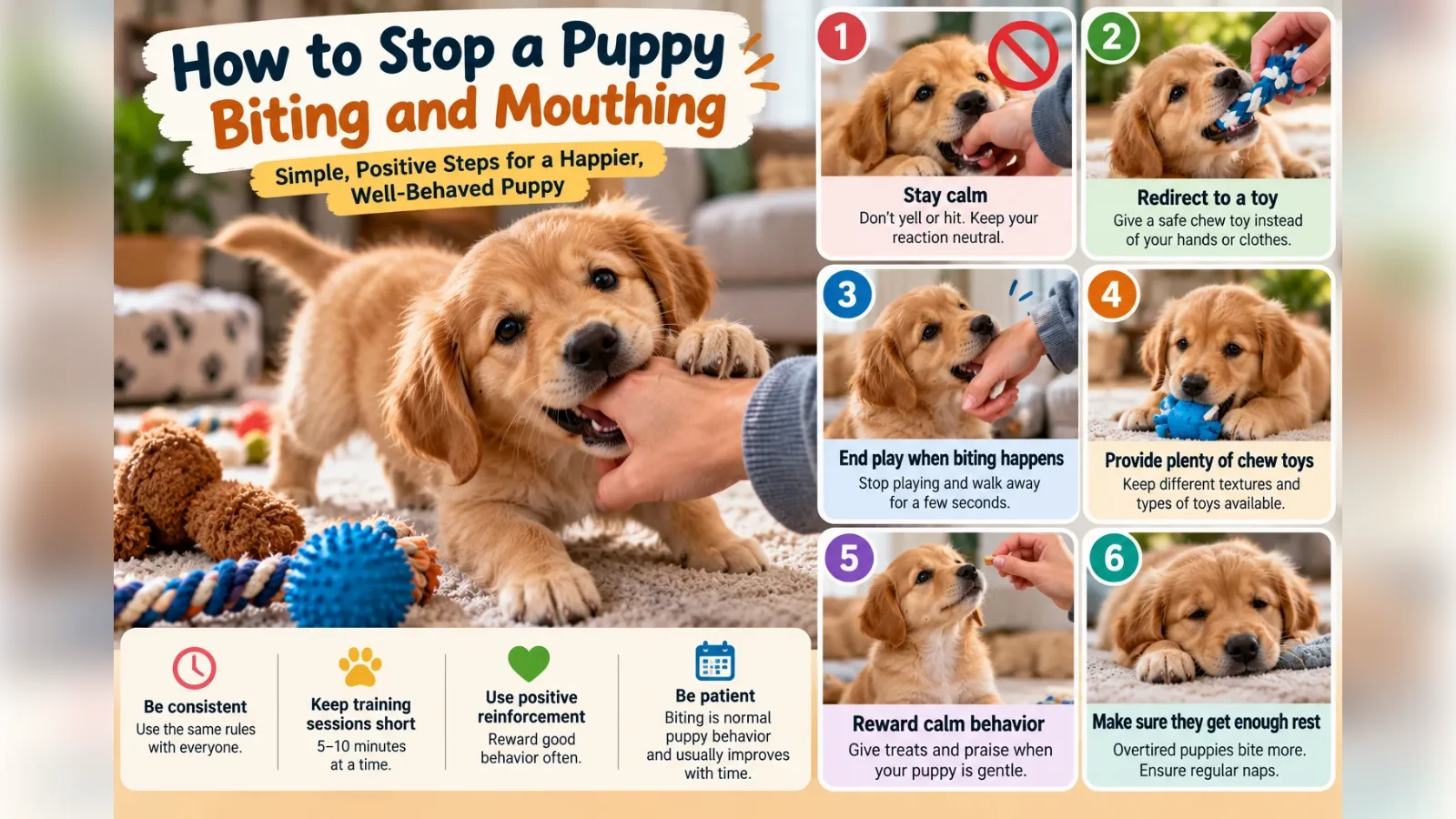
Key points: puppy biting and mouthing is normal, and most puppies grow out of it as they mature. Redirect onto toys, stop play the moment teeth touch skin, make sure your puppy gets enough sleep, and never hit or shout. Always supervise puppies with children, and get help if biting seems fearful, stiff or is getting worse.
Why puppies bite and mouth
Puppies learn about the world through their mouths the way babies use their hands. With their littermates, they wrestle, chase and nip. When one bites too hard, the other usually yelps and stops playing, and the biter learns to soften their mouth. This is called bite inhibition, and it’s one of the most useful things a puppy can learn, because a dog who has learned to control the force of their mouth is less likely to cause serious injury if they ever do bite as an adult.
When a puppy comes home, people become the new playmates. Your puppy isn’t being naughty or trying to dominate you. They’re playing the only way they know.
Teething makes it worse
Puppies usually have their full set of baby teeth by around 6 weeks old. Adult teeth start pushing through at roughly 12 to 16 weeks, and most dogs have their adult set by about 6 or 7 months, though this varies with size and breed. Sore gums during this stage make chewing feel good, so expect extra mouthing and more interest in furniture, shoes and cables.
Tired puppies bite more
Overtired puppies often become “bitey,” much like cranky toddlers. Puppies need far more sleep than most people expect: Dogs Trust puts it at around 18 to 20 hours a day. If your puppy has a wild, nippy spell in the evening, a quiet rest in a calm spot is often a better fix than more play.
How to stop a puppy biting you
The aim is to make biting people boring and chewing toys rewarding. Everyone in the house should respond the same way, every time.
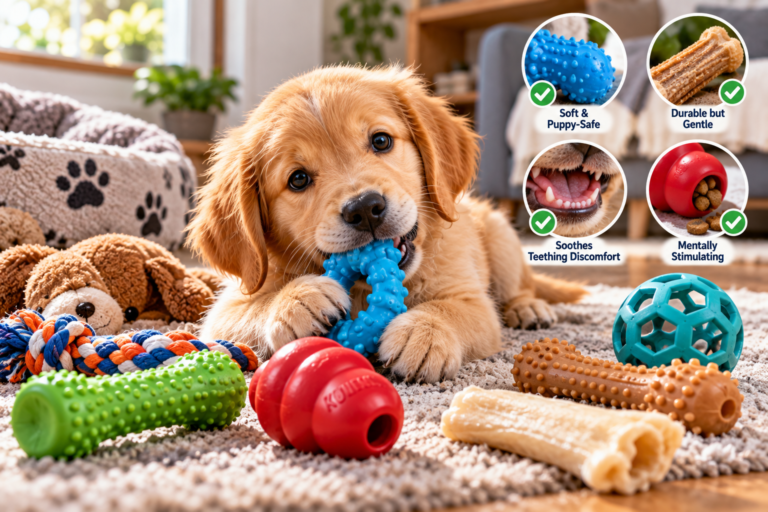
- Have toys everywhere. Keep soft tug toys and safe chews within reach in every room. When your puppy goes for your hands or feet, offer the toy instead. Tug toys that are long enough keep your fingers away from teeth.
- Stop the game when teeth touch skin. Go still, let your hand go limp and stop talking. Pulling your hand away quickly makes it more exciting to chase.
- Turn away or step out. If your puppy keeps biting, fold your arms and turn away. If that doesn’t work, calmly step over a baby gate or out of the room for a short time, around 10 to 30 seconds, then come back and play gently again.
- Reward calm moments. Praise and play when your puppy chooses a toy or licks rather than bites. Puppies repeat what pays off.
- Watch for patterns. If biting always happens at the same time of day or during the same games, plan a nap, a chew or a calmer activity before it starts.
Some older advice suggests yelping loudly like a hurt puppy when you’re bitten. It works for some puppies, but it winds others up even more. If a squeal makes your puppy more excited, drop it and stick with going still and stepping away.
A short break should be a calm pause, not a punishment. Avoid using the crate as a time-out spot, since you want your puppy to see it as a safe, relaxing place.
What not to do
- Don’t hit, tap the nose or hold the mouth shut. Physical punishment can make puppies bite harder and can teach them to fear hands.
- Don’t shout or push your puppy down. It increases frustration and fear, both of which can lead to more biting.
- Don’t play hand games. Wrestling, wiggling fingers in front of your puppy’s face or letting them chew on you teaches that hands are toys. It may be cute at 10 weeks, but not in a 60-pound (27 kg) adult dog.
Puppies and children
Children are often the main target of puppy biting. They move quickly, squeal and wave their hands, which is exactly what makes play exciting for a puppy. It isn’t fair to expect a child to manage a biting puppy alone.
- Always supervise puppies and children together, and use baby gates to give both a break.
- Teach children to stand still, fold their arms and look away if the puppy starts nipping, then walk away calmly.
- Ask children not to run and shriek around the puppy, and to play with toys rather than hands.
- Let your puppy rest undisturbed when they take themselves off to their bed.
Signs it’s not just play
Playful mouthing usually comes with a loose, wiggly body. Aggressive or fearful biting looks different. Get advice if you notice any of these:
- A stiff or frozen body just before biting
- Lips pulled back to show teeth, growling or snapping when you approach, handle or touch their food or toys
- Bites that are much harder and more painful than usual play
- Biting that seems to come from fear, such as when cornered, picked up or touched in a particular place
- Mouthing that hasn’t improved by around 7 months, or that stopped and then suddenly came back
Biting that suddenly starts or returns can be a sign of pain or illness, so a vet check is the right first step. After that, a qualified reward-based trainer, a certified behaviorist or a veterinary behaviorist can help you work out what’s going on. Frustration and fear-based biting isn’t something a puppy simply grows out of.
Puppies also learn a lot about gentle play from other well-mannered dogs. A well-run puppy class gives them supervised time with other pups, and safe socialization in the first few months helps them grow into an adult who is relaxed around people and dogs.
Once the adult teeth are in, it’s a good time to start brushing your dog’s teeth as part of the routine.
Frequently asked questions
At what age do puppies stop biting?
Most puppies bite much less once their adult teeth are in, at around 6 to 7 months, especially if they’ve been taught gentle play. If mouthing hasn’t improved by about 7 months, get advice from a qualified trainer or behaviorist.
Why does my puppy bite more in the evening?
Evening biting often happens when a puppy is overtired or overstimulated. Try giving your puppy a chew and a quiet place to settle and sleep before the wild spell usually starts.
Should I yelp when my puppy bites me?
It helps some puppies but makes others more excited. If yelping winds your puppy up, go still instead, then turn away or leave the room briefly if the biting continues.
Is it normal for a puppy to growl while playing?
Play growling is common and usually comes with a loose, bouncy body. A stiff body, a hard stare, lips pulled back or growling when handled or near food are different, and worth discussing with your vet or a behaviorist.