
Very few dogs enjoy having a toothbrush pushed into their mouth on day one. Almost any dog, though, can learn to accept it if you break the job into tiny pieces and move on only when your dog is relaxed. Learning how to brush your dog’s teeth is less about technique and more about pacing.
It is also one of the most useful habits you can build. Dental disease is extremely common in dogs, and it tends to develop quietly, long before you notice bad breath or a dog chewing on one side.
The short version: brush daily if you can, and at least several times a week, using a soft brush and toothpaste made for dogs. Never use human toothpaste, which can contain xylitol and fluoride. Build up over a few weeks in short, pleasant sessions. Chews can help but don’t replace brushing, and a dog with sore teeth needs a vet exam before you start.
What brushing actually prevents
Every time your dog eats, a sticky film of bacteria called plaque coats the teeth. Brushing wipes it away easily. Leave it for a few days and minerals in saliva start hardening it into tartar, the hard yellow-brown crust you may see near the back teeth. A toothbrush can’t shift tartar once it has set.
The real damage happens where you can’t see it. Bacteria at and below the gumline inflame the gums (gingivitis) and, over time, destroy the tissue and bone holding teeth in place. That’s periodontal disease, and according to the AVMA most dogs have early signs of it by about three years old. It can be painful, it can lead to tooth loss, and the infection doesn’t always stay in the mouth.
Look in the mouth before you start
Brushing is for keeping a healthy mouth healthy. If your dog’s mouth already hurts, a toothbrush will only teach them that you are the person who causes pain. Lift the lips and take a look in good light. Book a vet check first if you notice:
- Breath that smells rotten rather than just “doggy”
- Red, swollen or bleeding gums
- Heavy brown tartar, loose teeth or a broken or discolored tooth
- Dropping food, chewing on one side or suddenly preferring soft food
- Pawing at the face, drooling more than usual or flinching when you touch the muzzle
- Any lump or swelling in the mouth or under the eye
Your vet may recommend a professional cleaning first, then brushing afterward to keep the teeth clean.
What you need (and what to leave in the bathroom)
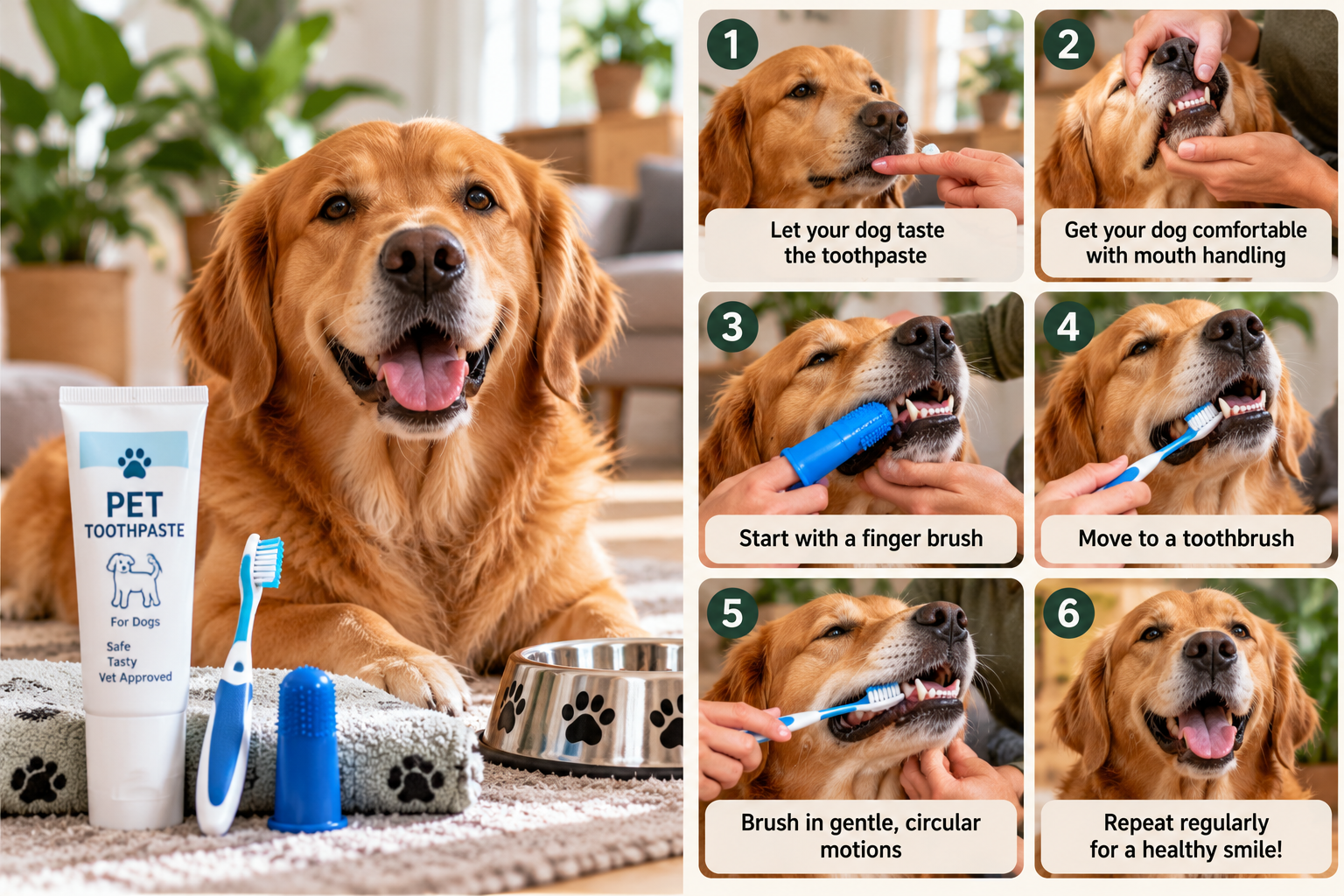
You need a soft toothbrush sized for your dog’s mouth, or a rubber finger brush for small dogs and beginners, plus a toothpaste made for dogs. Pet toothpastes are designed to be swallowed and come in flavors like poultry or beef, which helps a lot with cooperation.
Important: never use your own toothpaste on your dog. Dogs can’t spit, so they swallow it, and many human toothpastes contain fluoride and some contain xylitol, a sweetener that is highly toxic to dogs. Skip baking soda and salt mixtures too.
A step-by-step plan to get your dog used to brushing
Pick a calm moment, such as after a walk, and keep each session to a minute or two. Stay at each stage for a few days, or longer if your dog is unsure. If your dog pulls away, go back a step next time rather than holding them still.
- Touch the muzzle. Gently handle your dog’s face and lips for a few seconds, then give a treat or praise. Repeat until your dog stays loose and relaxed.
- Offer the toothpaste as a treat. Let your dog lick a little dog toothpaste off your finger. Most dogs quickly decide this part is fine.
- Rub the teeth with a finger. Lift the upper lip and slide a pasted finger along the outside of a few front teeth and gums. Stop while your dog is still happy.
- Introduce the brush. Let your dog sniff and lick paste from the brush. Then touch it briefly to one or two canine teeth.
- Brush a few teeth, then more. Use small circles or short strokes along the gumline, with the bristles angled toward the gums. Add a few more teeth each session until you can work around the whole outer surface.
The outside surfaces facing the cheeks are where most plaque builds up and where you’ll do the most good. Many dogs never tolerate brushing on the inside of the teeth, and that’s usually acceptable. Once your dog is comfortable, a thorough brush of the outer surfaces takes about a minute.
Mistakes that slow things down
- Trying to do the whole mouth in the first week
- Pinning your dog down, which makes the next session harder
- Scrubbing hard enough to make the gums sore
- Brushing only when the breath gets bad, instead of making it a routine
How often to brush
Daily brushing is the goal, because plaque starts to harden so quickly. If that isn’t realistic, the AVMA says a few sessions each week still do real good. A consistent three or four times a week beats an ambitious daily plan you abandon after two weeks. Tying it to something you already do every day, like the evening meal, makes it easier to keep up.
Dental chews, toys and other extras
Dental chews, diets and water additives can reduce plaque or tartar a little, but none of them clean the gumline the way a brush does. If you use them, look for products carrying the Veterinary Oral Health Council (VOHC) seal, which means the manufacturer has submitted evidence that the product works.
Be cautious with very hard items. Antlers, hooves and bones are a common cause of broken teeth, and bones can also splinter. A rule of thumb used by veterinary dentists is the thumbnail test: if you can’t press a dent into it with your fingernail, it’s too hard for your dog’s teeth. Pick chews sized for your dog and supervise chewing.
Professional cleanings under anesthesia
Even with good home care, most dogs need a professional dental cleaning at some point. Your vet will advise how often based on regular checkups. A proper cleaning is done under general anesthesia, so the vet can take dental X-rays, check each tooth and clean below the gumline, where periodontal disease does its damage.
You may see “anesthesia-free” cleanings offered. AAHA and the American Veterinary Dental College don’t recommend them: scraping the visible tartar off makes teeth look better but leaves disease under the gums untreated, and it can be stressful for the dog. If anesthesia worries you, ask your vet what pre-anesthetic checks and monitoring they use.
If you’re building a home grooming routine anyway, tooth brushing pairs well with bath time. Here’s how often most dogs actually need a bath.
Frequently asked questions
Can I use human toothpaste on my dog?
No. Dogs swallow toothpaste instead of spitting it out, and human toothpastes can contain fluoride and sometimes xylitol, which is highly toxic to dogs. Always use a toothpaste made for dogs.
How often should I brush my dog’s teeth?
Daily is ideal. If you can’t manage that, brushing several times a week still helps. Consistency matters more than perfection.
Is it too late to start brushing an older dog’s teeth?
No, older dogs can learn too. Have your vet check the mouth first, though, because an adult dog is more likely to have tartar or sore teeth that need treatment before brushing will be comfortable.
Do dental chews replace brushing?
No. Some chews can reduce plaque or tartar, especially those with the VOHC seal, but they don’t clean along the gumline as well as a toothbrush. Use them as an extra, not a substitute.
Are anesthesia-free dental cleanings a good idea?
Veterinary dental organizations don’t recommend them. They remove visible tartar but can’t treat disease below the gumline, which is where most of the damage happens.