
Your leopard gecko went pale, disappeared into its hide and came out looking bright again. But a few days later you notice thin white rings around a couple of toes, or a papery cap still clinging to the tip of the tail. That leftover skin is called stuck or retained shed, and it’s one of the most common leopard gecko shedding problems.
A small patch is usually easy to fix, and the cause is usually in the enclosure. The part to take seriously is the toes and tail, where old skin can tighten as it dries.
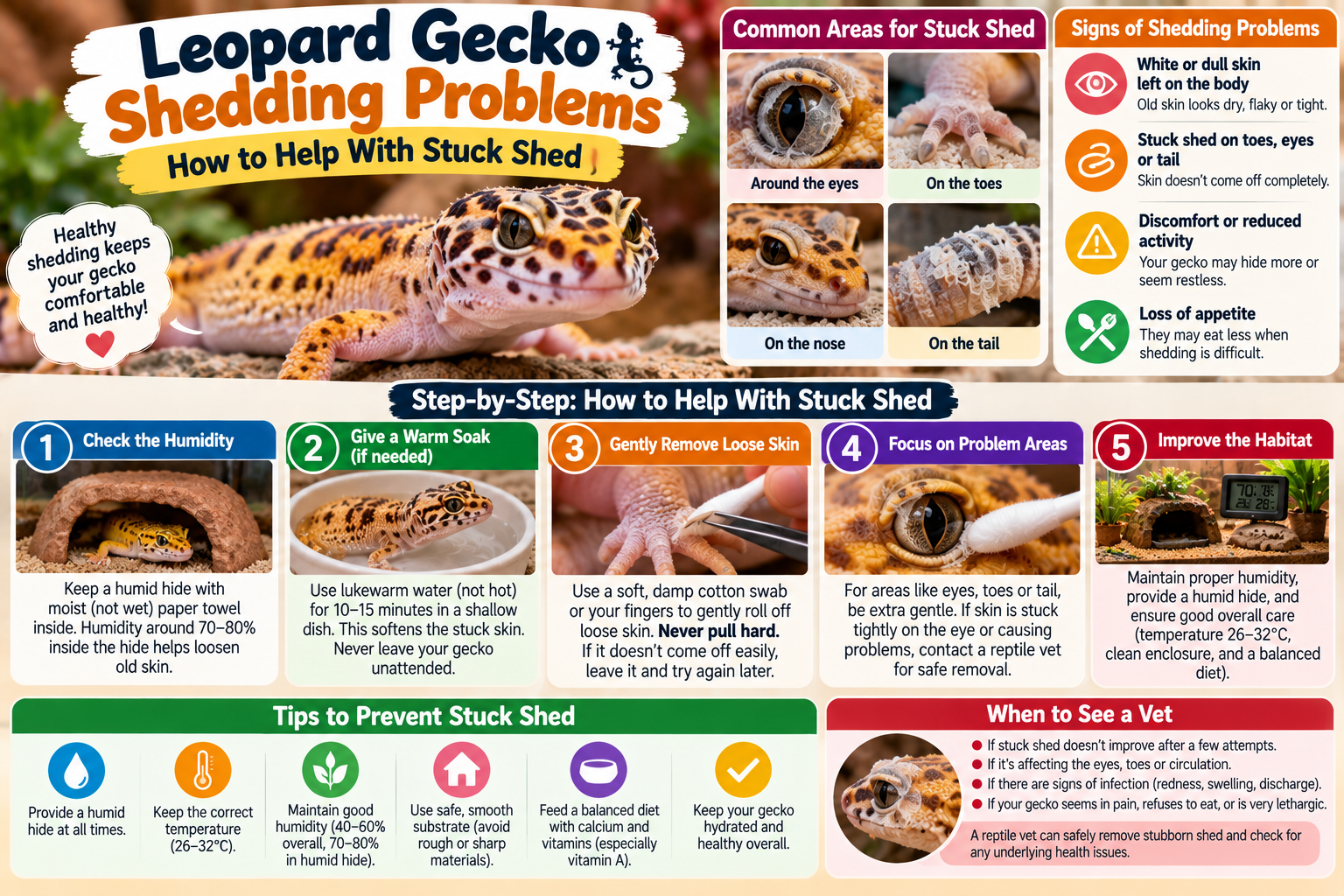
At a glance: healthy leopard geckos shed in pieces, and usually eat the old skin. Stuck shed tends to collect on toes, the tail tip and around the eyes. Check that your gecko has a humid hide with damp substrate, then loosen small patches with a short soak in lukewarm water. Never pull dry skin off. Anything involving the eyes, a toe that looks dark or swollen, or shed that won’t budge after a week needs a reptile vet.
What a normal shed looks like
Leopard geckos shed their whole outer layer of skin throughout life. Young, fast-growing geckos shed more often than adults, and most adults shed roughly every four to eight weeks. The timing varies with age, growth and health, so a regular rhythm for your own gecko matters more than a fixed number.
The first sign is a change in color. As the old layer separates, your gecko looks dull, washed out, pale gray or almost white. It may eat less, spend more time in the humid hide or seem restless. Then it pulls the skin off in patches, often using its mouth, and usually eats it. So if your gecko looks pale one evening and bright the next morning with no skin in sight, that’s normal.
Where stuck shed hides
After every shed, give your gecko a quick look in good light. Retained skin shows up as dull, white or grayish flakes that don’t match the fresh skin beside it. Check these spots in particular:
- Toes. Look at each digit from above and below, including the tips. Rings of old skin here are the most common problem.
- Tail tip. A narrow cap or band can stay on the last part of the tail.
- Around the eyes. Leopard geckos have movable eyelids, and shed can collect on the lids or around the edges.
- Head, limbs and the underside. Loose patches here are rarely dangerous but show the shed didn’t go smoothly.
Why stuck shed on toes and tails matters
Old skin shrinks as it dries. On the body that just looks untidy, but around a small toe or the tail tip it can form a tight band. If a gecko sheds badly several times in a row, layers can build up on top of each other and squeeze harder each time.
That band can cut off blood supply to the tissue beyond it. The toe or tail tip may swell, then turn dark, and eventually die and fall off. A vet may need to remove dead tissue, and infection can follow. Checking after every shed and dealing with small patches early is the best way to avoid it.
Why sheds get stuck
Most cases trace back to husbandry, so work through these before anything else:
- No humid hide, or a dry one. Leopard geckos come from dry areas, but they rely on a humid burrow to loosen old skin. The rest of the enclosure should be dry; the hide is where moisture belongs.
- Dehydration. A gecko that isn’t drinking enough, or has no clean water bowl, is more likely to shed poorly.
- Temperatures that are too low. A cool enclosure slows everything down, including skin renewal.
- Nothing rough to rub against. Rocks, cork bark and hides give a gecko something to catch the old skin on.
- Nutrition. Vitamin A deficiency is linked to repeated shedding problems and eye trouble in leopard geckos, usually alongside a poor diet or missing supplements.
- Illness or parasites. Mites, skin infections, injuries and general illness can all disrupt a shed.
Fix the setup first
If your gecko has stuck shed, the humid hide is the first thing to check, even if the patch is tiny. A good one is an enclosed hide with a single entrance, big enough for your gecko to turn around, filled with a damp substrate such as sphagnum moss or damp paper towel. It should feel moist to the touch, not dripping. Place it on or near the warm side so the moisture stays warm.
Re-dampen it every few days, or whenever it dries out, and replace the moss before it smells musty or grows mold. Keep the wider enclosure fairly dry and check it with a hygrometer; general guidance puts it below about 50% humidity. Make sure a shallow bowl of fresh water is always available.
Helping with a small patch of stuck shed
For a few flakes on the body or a light ring on one or two toes, gentle help at home is reasonable:
- Fill a small container with a shallow layer of lukewarm water, no deeper than your gecko’s chin when it stands.
- Let your gecko sit in it, supervised the whole time, for no more than about 20 minutes. A damp, warm paper towel in a ventilated tub is an alternative for geckos that hate water.
- Afterward, gently roll a damp cotton swab along the toe from base to tip. Loosened skin should slide away with no resistance.
- If it doesn’t come off easily, stop. Put your gecko back, make sure the humid hide is damp, and try again the next day.
Never pick or pull at skin that is still dry or firmly attached. You can tear the healthy skin underneath or pull off the tip of a toe.
Important: leave the eyes to a vet. Don’t soak, rub or try to lift skin near your gecko’s eyes. A gecko that squints, keeps an eye closed, has swollen or crusty lids or seems to struggle to see needs a reptile vet, because debris trapped under the eyelids can lead to ulcers and infection.
When to book a reptile vet
See a vet with reptile experience if you notice:
- a toe or tail tip that is swollen, dark, red or looks pinched
- any shed problem involving the eyes
- stuck shed that is still there after about a week of good humidity and gentle soaks
- bad sheds that keep happening even though the setup has been fixed
- poor appetite, weight loss, lethargy or tiny moving specks (possible mites)
Take photos of the enclosure, the humid hide and the thermometer readings, plus a list of what you feed and which supplements you use. Repeated shedding problems often point to a husbandry or diet issue, and the vet will want the full picture.
Most shedding trouble comes back to the enclosure, so if you want to double-check humidity, heat and hides, our guide on setting up a leopard gecko tank walks through the whole setup.
Frequently asked questions
How often do leopard geckos shed?
Young leopard geckos shed more often because they’re growing quickly. Most adults shed roughly every four to eight weeks, although age, health and growth all affect the timing.
Is it normal for a leopard gecko to eat its shed?
Yes. Leopard geckos usually pull their old skin off with their mouths and eat it, so you often won’t find any shed in the enclosure.
Can I pull stuck shed off my leopard gecko?
No, not while it is dry or firmly attached. Pulling can damage the skin underneath or injure a toe. Soften it first with a short lukewarm soak and a damp humid hide, then roll it off gently only if it comes away easily.
What should I do if my leopard gecko has stuck shed on its eyes?
Contact a reptile vet rather than trying to remove it yourself. The eyes are easy to injure, and problems there can involve debris under the eyelids that needs proper treatment.