
A good leopard gecko enclosure gives your gecko warmth, places to hide, safe flooring and enough room to wander. Get those basics right from day one and everyday care becomes much simpler, and your gecko settles in faster.
In short: use a secure enclosure with plenty of floor space, set up a warm side and a cool side, add at least three hides, and have everything running and stable before your gecko comes home.
Choosing the right enclosure
Pick a secure, well-ventilated enclosure that’s big enough for your gecko to move freely between warm and cool areas. Leopard geckos spend nearly all their time on the ground, so floor space matters far more than height.
For one adult, a floor area of at least 36 × 18 inches (about 90 × 45 cm) is a widely used minimum, and a larger enclosure gives you more room for a proper temperature gradient and enrichment. Leopard geckos are best kept on their own, one per enclosure.
Setting up a warm side and a cool side
The enclosure shouldn’t be the same temperature all over. Put the heat source at one end so it creates a gradient, letting your gecko move to a warmer or cooler spot whenever it needs to.
| Area | Target range |
|---|---|
| Basking surface (warm side) | 90–95°F (32–35°C) |
| Cool side | 70–77°F (21–25°C) |
| Night-time | A drop to around 65–70°F (18–21°C) is normal |
These are common care-guide ranges. If your gecko seems unwell or your setup is unusual, check with a reptile vet.
Plug every heat source into a thermostat so it can’t overheat the enclosure. Measure temperatures with a digital thermometer or an infrared temperature gun rather than a stick-on dial gauge, which is often inaccurate.
Providing enough hides
Every leopard gecko enclosure should have at least:
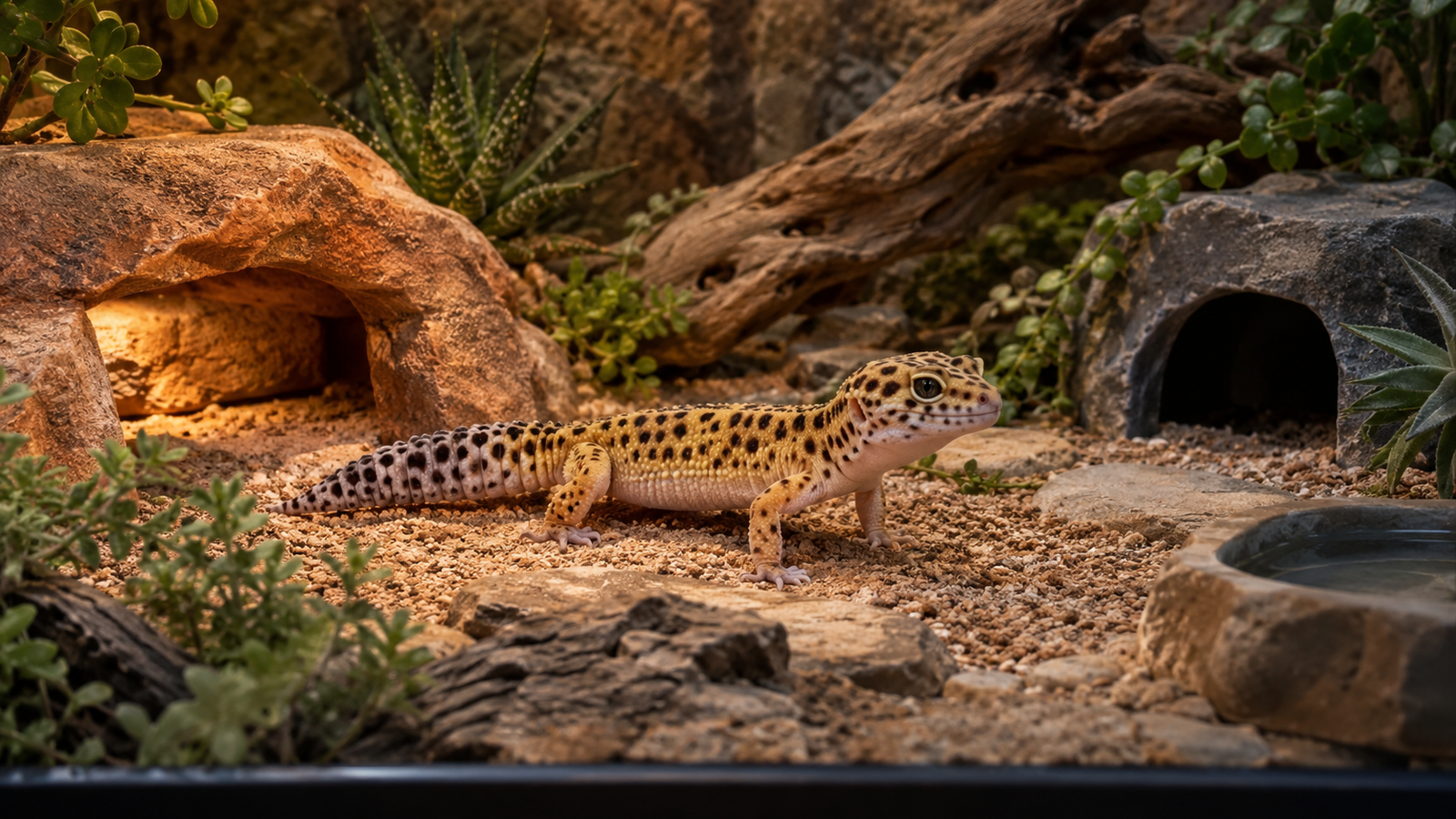
- A warm hide on the heated side
- A cool hide on the opposite side
- A humid hide, lined with damp moss or paper towel, to help with shedding
Spread the hides out so your gecko can get to the temperature or humidity it wants without having to cross open ground. A gecko that always has cover nearby feels far more secure.
Choosing a safe substrate
If you’re new to leopard geckos, a solid substrate such as paper towel, reptile-safe tile or a textured liner is the easiest place to start. It’s simple to clean and lets you keep an eye on droppings and feeding.
Steer clear of calcium sand, crushed walnut shell and similar loose products sold for reptiles. Some experienced keepers use a natural soil and sand mix instead, but it takes more knowledge to maintain well, so it’s better left until you’re comfortable with the basics.
Adding water and enrichment
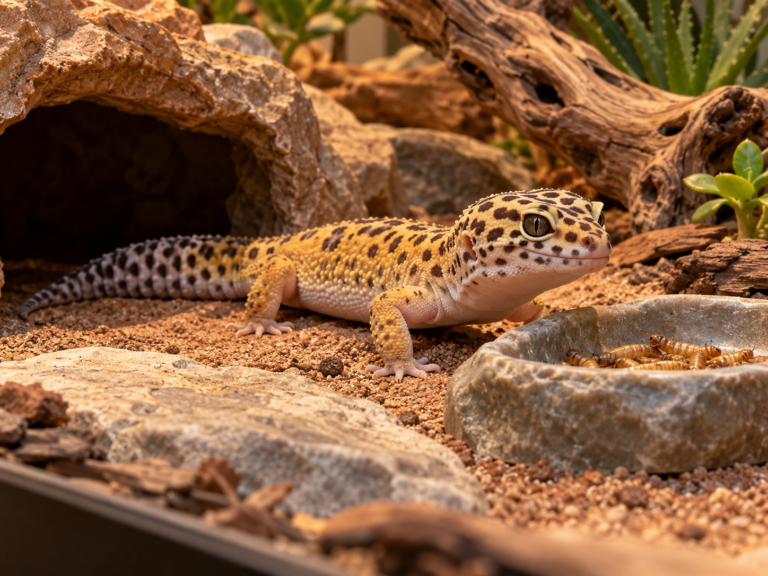
Keep fresh water in a shallow, sturdy dish that won’t tip over. Beyond that, rocks, cork bark, low climbing spots and secure decor all give your gecko more to explore and make the enclosure look more natural. Make sure anything heavy is stable so it can’t shift and trap your gecko.
Keeping the habitat clean
Remove droppings and anything spoiled as soon as you spot them. Wash the water dish regularly, and do a deeper clean of the enclosure when it needs it. Avoid harsh chemicals that can leave residue behind; a reptile-safe disinfectant, rinsed off and fully dried, is the safer choice.
Testing the setup before your gecko arrives
Run the enclosure for a few days before bringing your gecko home. Check that the heating, thermostat and temperatures are holding steady and that the hides are in place. It’s much easier to adjust an empty enclosure than to fix problems once your gecko has moved in.
A simple, secure and well-monitored setup usually works better than a complicated one. Get the temperature, shelter, cleanliness and safety right first, and add extras later.
Once the tank is running, our guides on how often to feed a leopard gecko and what to do if your leopard gecko stops eating cover the next steps.
Frequently asked questions
How big should a leopard gecko enclosure be?
For one adult leopard gecko, a floor area of at least 36 × 18 inches (about 90 × 45 cm) is a common minimum. Bigger is better, as long as you can still maintain a proper warm-to-cool temperature gradient.
How many hides does a leopard gecko need?
At least three: a warm hide, a cool hide and a humid hide for shedding. Extra hides are fine and help your gecko feel secure anywhere in the enclosure.
What is the safest substrate for a beginner?
Solid options such as paper towel, reptile-safe tile or a textured liner are easiest for beginners because they are simple to clean and make it easy to monitor your gecko’s health. Avoid calcium sand and crushed walnut shell.