
To teach your dog to leave it, reward them for turning away from something they want, then add the cue once that response is becoming predictable. Practise with harmless items at home before asking for the same response on a walk. The aim is a dog who can disengage willingly, without a tug on the lead or a confrontation over food.
This skill is useful around dropped snacks, discarded packaging and other everyday temptations. It is still a trained response, not a guarantee: keep dangerous items out of reach while your dog is learning and after they become good at it.
“Leave it” and “drop it” solve different problems
Use “leave it” before your dog picks something up. “Drop it” asks them to release something already in their mouth. Keeping the two cues separate makes your request clearer.
If your dog already has an item, offer a safe trade rather than chasing them. Do not practise taking things from a dog who freezes, growls or snaps around possessions. Ask your vet for a referral to a qualified behaviour professional, and keep children away from these situations.
Set up an easy first lesson
Choose a quiet room, a small amount of ordinary dog food as the practice temptation, and a separate reward your dog likes more. Both foods must be suitable for their diet. Set aside part of their daily food allowance for training rather than adding unlimited extras.
Begin when your dog is comfortable and able to concentrate. A puppy who needs the toilet, a tired dog or a dog already excited by visitors is unlikely to give you their best attention. Put other pets in a comfortable separate space so nobody competes for the food.
Reward a small decision to turn away
- Hold the ordinary food in a closed hand, without pushing it towards your dog.
- Wait for a small pause in investigating: a head turn or movement away is enough.
- Say a brief marker such as “yes,” then give the better reward from your other hand.
- Reset between attempts. If your dog paws hard, bites at your hand or becomes frustrated, stop and make the setup easier rather than waiting them out.
You are rewarding disengagement, not requiring a sit or prolonged eye contact. Keep early sessions short enough that your dog remains interested. A few comfortable successes are a useful stopping point.
Add the words, then change the setup
When your dog reliably turns away, say “leave it” just before offering the closed hand. Mark and reward the response. Next, practise with the food visible in an open palm, ready to close it calmly if needed. Move to a harmless item on the floor only when the earlier version is easy.
Change one difficulty at a time: the item, its movement, your distance or the location. Do not move from quiet indoor practice straight to a crowded pavement with food on the ground. Dogs Trust and the RSPCA both recommend gradual progression and returning to an easier stage when the dog struggles.
Take the skill outside without setting a trap
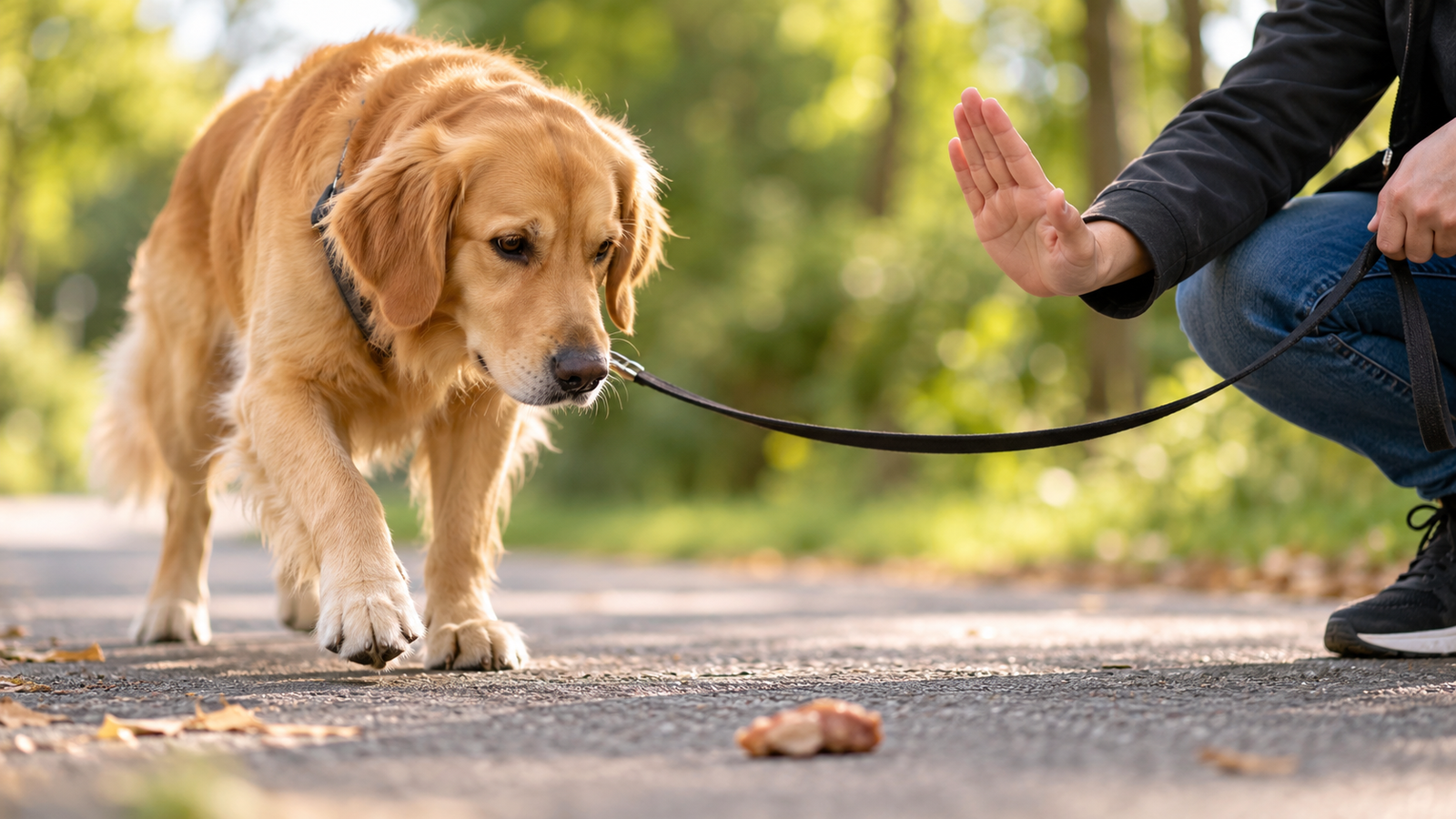
Start in a quiet area using a lead and well-fitting equipment. Keep enough distance from the practice item that your dog can notice it without reaching it. Cue once, reward turning towards you, then move away together. Never scatter unsafe food to test the lesson.
For example, if your dog can leave an ordinary biscuit in the kitchen but cannot pass a takeaway bag outside, increase the distance and reduce distractions. The outdoor task is harder; repeating the words louder does not explain it better. Our guide to walking without pulling can help with the separate lead-handling skill.
When progress stalls
- Your dog only responds after several cues: return to an easier setup and use the cue once.
- They take the reward and rush back: reward away from the item, then leave the area rather than repeating beside it.
- They ignore the reward: check the environment and their comfort, not just the food. Fear and overexcitement can interrupt learning.
- Different people get different results: agree on one cue and the same reward timing.
Keep a short note of the item, location and response. “Turned away from a toy in the hallway” is more useful than “good at leave it.” It shows exactly what to practise next.
If your dog swallows something potentially poisonous or dangerous, contact a vet promptly. Do not use further training attempts or home remedies to delay help. See foods that are toxic to dogs for common hazards.
Sources and further reading
- Dogs Trust: How to train your dog to leave it
- RSPCA: Teaching your dog to leave something alone
- Blue Cross: Dog and puppy training
General education from the Petwise Editorial Team. For individual health or behaviour concerns, seek veterinary advice. Read our Pet Health Disclaimer.