
The most useful changes for an older cat are about cutting out jumps and long trips: food, water, a low-entry litter box and a warm bed on the floor where your cat spends most of its time, plus stable steps up to the windowsill or sofa it still loves. None of it needs to be expensive. What matters is watching how your cat actually moves around and smoothing out the hard parts, while also getting stiffness or behavior changes checked by a vet.
Quick answer: put everything your senior cat needs on one level, swap a high-sided litter box for a low-entry one, add steps or ramps to favorite high spots, and offer warm, padded beds that need no big jump. Treat new stiffness, missed litter box trips or reluctance to jump as possible pain, not just old age, and book a vet visit.
Start by watching your cat
Many cats show signs of aging somewhere between 7 and 10 years old, and most do by about 12. Arthritis is very common in older cats, yet easy to miss: in one study PDSA cites, 90% of cats over 12 showed signs of it on X-rays. Cats rarely limp or cry. Instead they quietly stop doing the things that hurt.
Spend a day or two noticing where your cat goes and how it gets there. Look for:
- Pausing before a jump, or taking a route in stages (chair, then table, then windowsill).
- No longer using a favorite high perch, the cat flap or the stairs.
- Peeing or pooping just outside the litter box, or going less often.
- Matted or scruffy fur on the back, hips and base of the tail, where a stiff cat can no longer reach to groom.
- Overgrown claws, because a sore cat uses its scratching post less.
- Grumpiness when stroked or picked up, or sleeping much more.
These are clues about where your home needs to change. They are also reasons to see your vet, which is covered below.
Put the essentials on one level
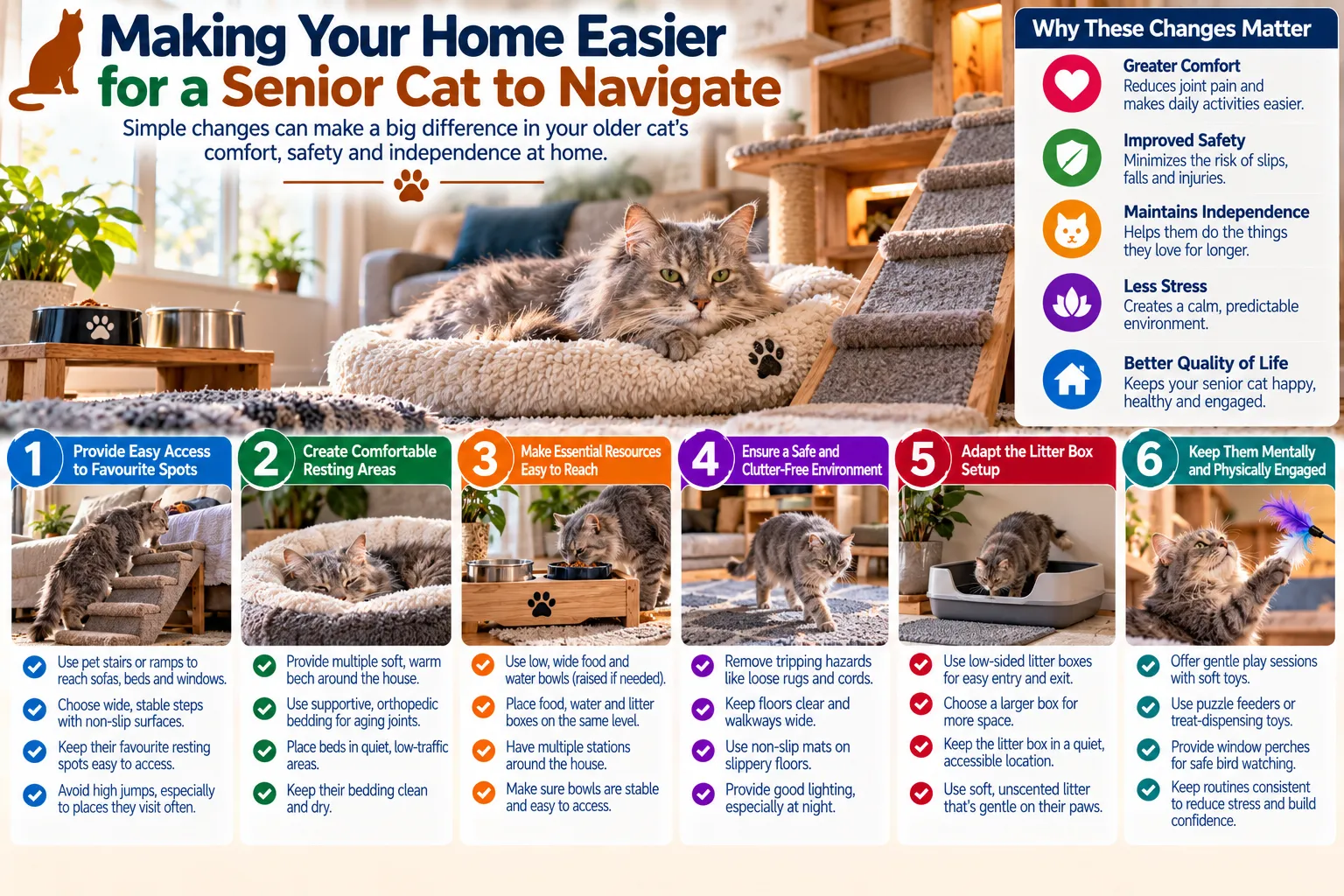
A senior cat should not need to climb stairs or make a jump to reach food, water, a litter box or a bed. In a multi-story home, set up a full “base camp” on the floor your cat prefers, and keep a second set elsewhere if it still roams. Leave familiar items in their usual spots where you can, and add new ones nearby rather than moving everything at once. Older cats cope less well with sudden change.
Some cats with stiff necks or front legs find it easier to eat and drink from slightly raised bowls, so they do not have to bend so far down. A small, stable platform under the bowls is enough to test whether your cat prefers it.
Make the litter box easy to use
The litter box is often the first thing to become difficult. Stepping over a tall edge or squatting in a cramped covered box can be painful for a cat with sore hips or knees. A few practical fixes:
- Low entry. Use a box with low sides, or cut a U-shaped entrance into one side of a large storage tub, leaving the other sides high enough to hold litter.
- Room to turn. Bigger is better. A stiff cat needs space to turn and squat comfortably.
- No hood. Hoods and top-entry designs make a sore cat crouch or climb.
- Close by. Place a box near where your cat sleeps, so it never has to rush or take the stairs.
- Familiar litter. Keep using the litter your cat knows. If you do switch, for example to something softer underfoot, change over gradually.
Help with high places
Many older cats still want to sit on the windowsill, the sofa or your bed, and taking those places away can be its own loss. Rather than blocking them off, make the climb easier. Pet steps, a ramp, a sturdy footstool or a low piece of furniture placed as a halfway point all work. Whatever you use must be completely stable and should have a carpeted or non-slip surface. A step that wobbles once may never be used again.
Slippery floors are another hidden problem. Hardwood, tile and laminate can make an older cat’s back legs slide out. Rugs or non-slip runners along its main routes, and next to its food bowls and litter box, give it something to grip.
Warm, easy-to-reach beds
Offer several comfortable beds in places your cat already likes, ideally at floor level or reachable by steps. Thick, supportive bedding such as memory foam is kinder on bony joints than a thin blanket. Warmth helps too. A heated pet bed or a pet-safe heat pad can ease stiffness, but make sure it is designed for animals, keep cables out of reach, and leave part of the bed unheated so your cat can move away if it gets too warm.
Grooming and claw care
Older cats often struggle to groom their backs and hindquarters. Gentle, short brushing sessions help with mats and loose fur, and many cats come to enjoy them. Check claws weekly, because they can grow long and thick, and an overgrown claw can curl round into a paw pad. Our guide to trimming a cat’s nails walks through how to do it calmly, or your vet clinic can do it for you.
When to see the vet
Home changes make life easier, but they do not treat the cause. Reluctance to jump, litter box changes and grooming problems often point to pain, and arthritis pain in cats can usually be managed well once it is diagnosed. Our guide to signs your cat is in pain covers the subtler clues to mention at the appointment.
Senior cats are generally best seen every 6 to 12 months even when they seem well, because problems such as kidney disease, an overactive thyroid and dental disease are common at this age and are easier to manage when caught early. Our overview of common health problems in senior cats explains what your vet may check for.
Some changes in older cats are about the brain rather than the joints. Wandering, loud crying at night, seeming lost in familiar rooms or withdrawing from the family can all be signs of age-related cognitive changes, though other illnesses can look similar. See our article on cats meowing at night if that sounds familiar.
Important: see a vet promptly if your senior cat stops eating, loses weight, drinks or pees much more than usual, has trouble breathing, collapses or starts avoiding the litter box altogether. Don’t assume any of these is just age.
Frequently asked questions
At what age is a cat considered senior?
There is no single cutoff. Many cats start showing age-related changes between about 7 and 10 years old, and most have some by around 12. Your vet can help you judge your own cat.
Do old cats need a different litter box?
Many do. A large, open box with at least one low side is much easier for a stiff cat to step into than a tall or hooded box. Keep the old one in place for a while as you introduce the new one.
Are heating pads safe for senior cats?
Pads designed for pets can be, as long as the cable is protected and your cat can move off the warm area. Avoid human heating pads and electric blankets, which can get too hot for an animal that lies on them for hours.
Why has my older cat stopped using the scratching post?
Stretching up to scratch can be uncomfortable for a cat with stiff joints. Try a horizontal scratcher on the floor, check its claws more often, and mention the change to your vet as a possible sign of arthritis.