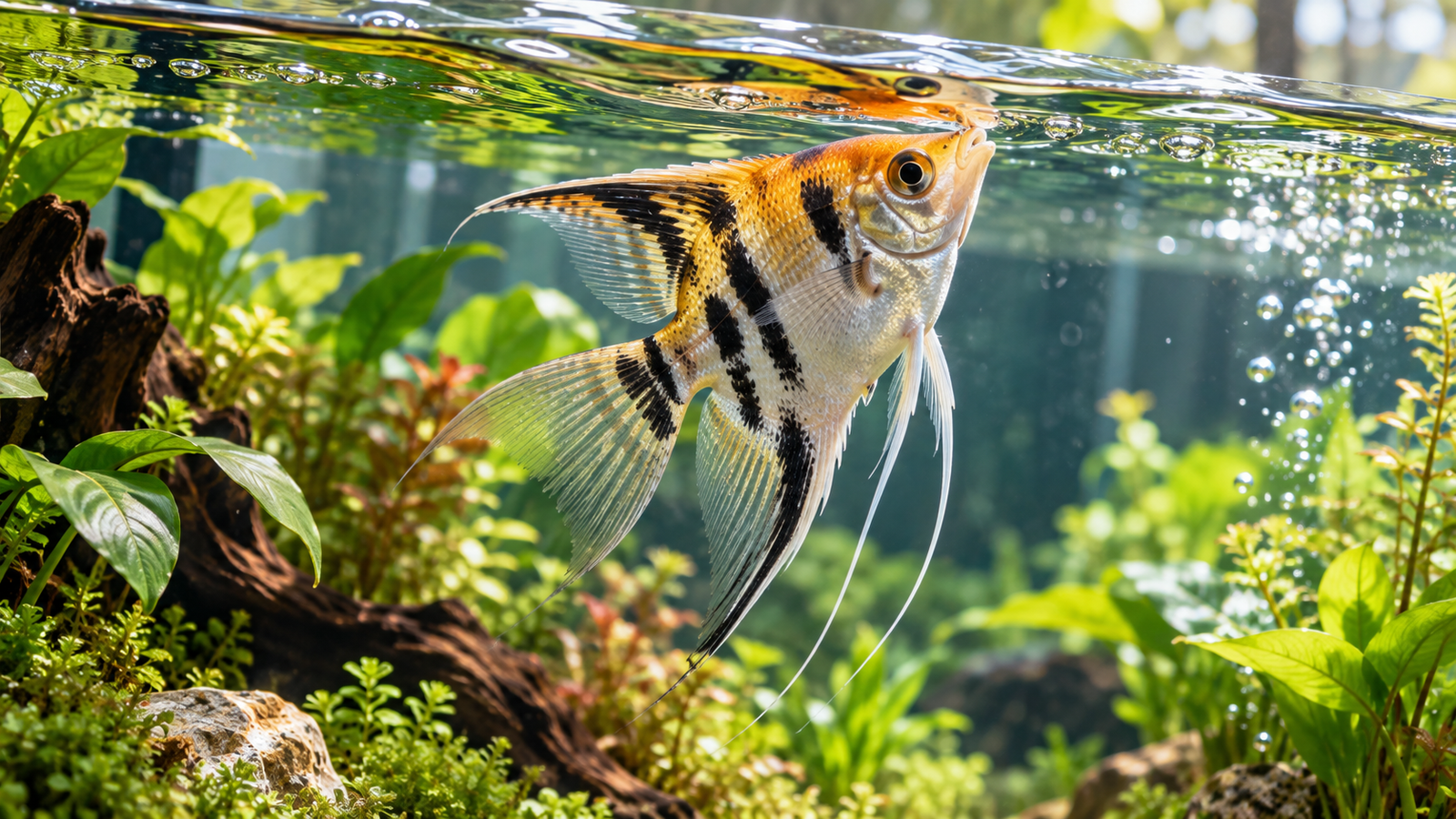

Fish gasping at the surface is one of the clearest signs that something in the aquarium needs attention, often quickly. Low oxygen, poor water quality, overcrowding, water that’s too warm or illness can all make it hard for fish to breathe normally. The good news is that the most common causes can be checked and improved at home straight away.
In short: increase surface movement right away, test the water for ammonia and nitrite, and check the temperature. If ammonia or nitrite is present, do a partial water change with dechlorinated, temperature-matched water. If gasping continues after that, or your fish show other symptoms, get advice from a fish vet.
Is it actually a problem? Some fish breathe air as a normal part of life. Bettas, gouramis and other labyrinth fish regularly swim up to take a gulp of air, and that’s perfectly healthy. Gasping is a concern when fish that normally breathe underwater hang at the surface with rapid gill movement, or when several fish do it at once.
What to do right now
- Increase surface movement. Point the filter outflow at the surface, lower the water level slightly so the outflow splashes, or add an air stone. Moving water at the surface is what brings oxygen into the tank.
- Test the water for ammonia, nitrite and nitrate.
- Check the temperature with a thermometer.
- If ammonia or nitrite is present, do a partial water change of around 25–50% with water treated with a conditioner and matched to the tank’s temperature.
- Skip feeding for a day while you sort out water quality, as uneaten food adds to the problem.
Common causes of gasping at the surface
| Possible cause | Clues to look for |
|---|---|
| Low oxygen | Still water surface, filter slowed or stopped, several fish gasping at once |
| Poor water quality | Ammonia or nitrite on the test, cloudy water, red or inflamed gills |
| Water too warm | Heater stuck on, hot weather, tank in direct sunlight |
| Overcrowding | Many fish for the tank size, waste building up quickly |
| Untreated tap water | Gasping started soon after a water change without conditioner |
| Gill disease or parasites | Gasping continues even when water tests are good, fish flashing against objects |
Check oxygen levels first
Fish may crowd near the surface when there isn’t enough dissolved oxygen in the water, because that’s where oxygen levels are highest. Make sure the filter is running properly and hasn’t clogged or slowed, and that it creates gentle movement across the surface.
Oxygen can also drop at night in heavily planted tanks, because plants use oxygen in the dark. If your fish gasp mainly in the early morning, that may be why, and extra surface movement or an air stone at night can help.
Test the water
Ammonia and nitrite damage and irritate the gills, which makes it harder for fish to take in oxygen even when there’s plenty in the water. Test for ammonia, nitrite and nitrate, especially if the gasping started suddenly.
In an established aquarium, ammonia and nitrite should both read 0 ppm. Any reading above zero means the water needs attention. A liquid test kit is generally more accurate than test strips.
Watch the water temperature
Warmer water holds less oxygen than cooler water, and fish also need more oxygen when they’re warm. Check that the temperature is right for the species you keep, and that the heater isn’t stuck on. In hot weather, keep the tank out of direct sunlight and add extra surface movement.
If the water is too warm, cool it down gradually rather than suddenly, for example by turning off the tank lights and doing a small water change with slightly cooler conditioned water. Sudden temperature swings add more stress.
Look for overcrowding
Too many fish in too small a tank means more waste and more demand for oxygen. If your tank is overcrowded, better filtration and more frequent water changes can help in the short term, but a bigger tank or fewer fish is the long-term fix.
Other signs to watch for
- Rapid gill movement
- Red, swollen or pale gills
- Loss of appetite
- Clamped fins
- Unusual or erratic swimming
- Rubbing or flicking against objects
- Visible spots, swelling or cloudy patches
When to seek help
If gasping continues after you’ve improved oxygen and water quality, or if your fish show other symptoms, contact a vet experienced with fish. Gill parasites and infections need proper diagnosis, and some medications reduce oxygen levels in the water, so avoid adding treatments before you know what’s wrong.
Start with the environment
Clean water, the right temperature, good filtration and plenty of surface movement are the first things to check whenever fish start breathing unusually. Most cases improve quickly once these are sorted.
Regular maintenance prevents most of these problems. See our guides on how often to change betta fish water and setting up a goldfish tank properly.
Frequently asked questions
Why are my fish gasping at the top of the tank?
The most common causes are low oxygen, ammonia or nitrite in the water, water that’s too warm and overcrowding. Increase surface movement, test the water and check the temperature straight away.
How do I add oxygen to my fish tank quickly?
Increase movement at the water surface by pointing the filter outflow upward, lowering the water level slightly so it splashes, or adding an air stone. A partial water change with dechlorinated, temperature-matched water also helps.
Is it normal for a betta to go to the surface?
Yes. Bettas and other labyrinth fish, such as gouramis, breathe air from the surface as part of their normal behavior. It’s only a concern if the betta also seems lethargic, stops eating or shows other signs of illness.
Can a water change cause fish to gasp?
Yes, if the new water wasn’t treated with a conditioner or was a very different temperature. Chlorine and chloramine in tap water can damage gills. Always use a conditioner that neutralizes both and match the temperature.