
An itchy cat is an unhappy cat. Skin allergies are a common reason cats scratch, overgroom, lose fur or develop crusty little bumps. The three main types are flea allergy, food allergy and environmental allergy, and many cats have more than one. Allergies can’t usually be cured, but once the cause is found, most cats can be kept comfortable.
Quick answer: Cat skin allergies usually show up as itching, overgrooming, bald patches, small scabs (often on the head, neck or back) or sores on the lips. Flea allergy is the most common cause, so strict flea control comes first. Food allergy is diagnosed with a strict elimination diet of at least 8 weeks, and environmental allergies are managed long term. See your vet to rule out parasites and infections and to plan treatment.
Signs of skin allergies in cats
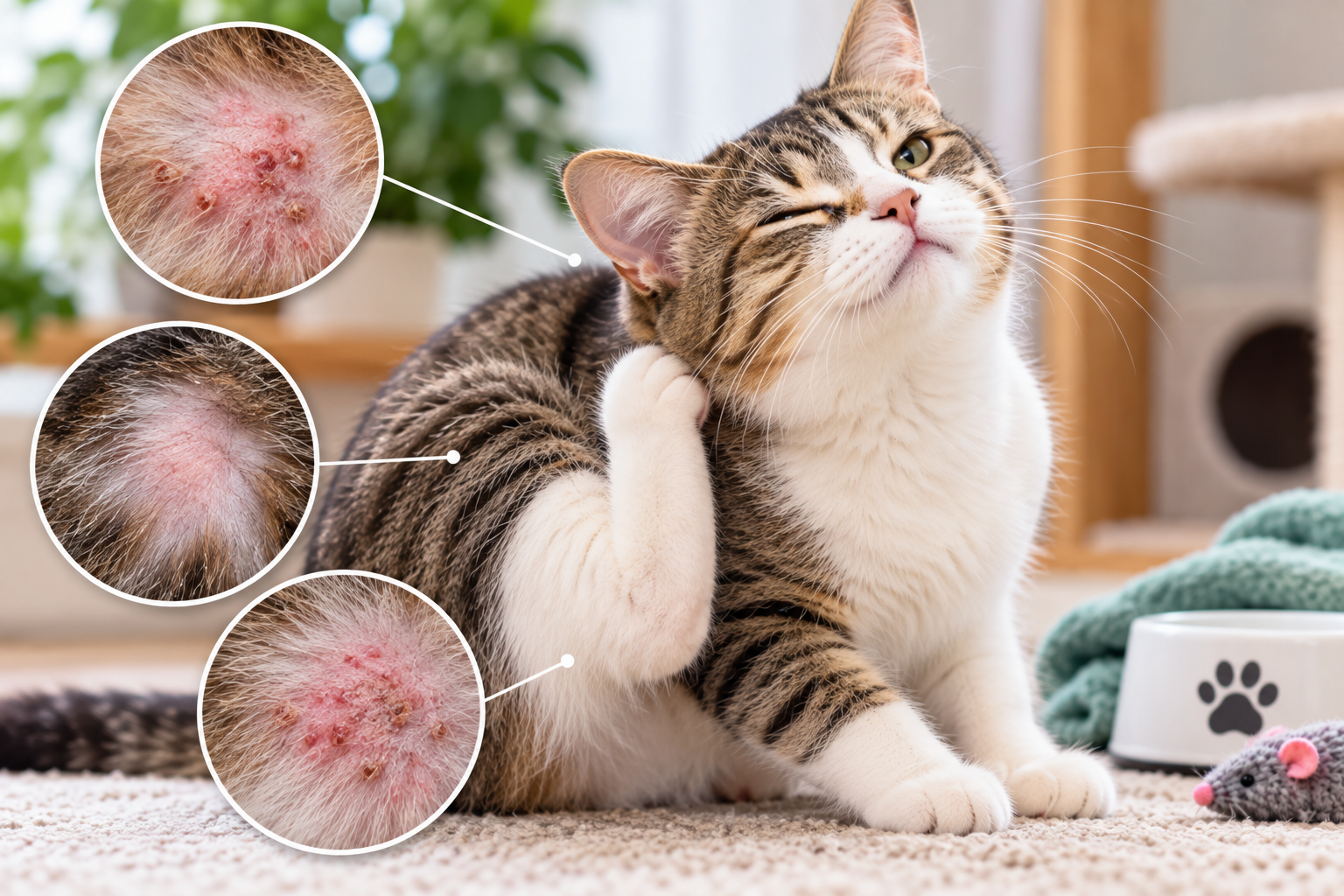
- Scratching, especially around the face, ears, head and neck
- Overgrooming or licking that leaves thin fur or bald patches, often on the belly, inner legs, flanks or tail
- Small, crusty, gritty bumps along the back and neck (called miliary dermatitis)
- Red, raw or weepy patches or open sores
- Raised sores or ulcers on the lips, chin or skin
- Ear itching, head shaking or ear inflammation; see cat ear problems
Some cats groom secretly, so you may only notice fur in their vomit, thinning coat or hairballs. A cat that suddenly has a “buzz cut” belly may be overgrooming from itch, not shedding.
The main types of allergy
| Type | What triggers it | Clues |
|---|---|---|
| Flea allergy | Flea saliva; one or two bites can set it off | Scabs along the back, rump and neck; often worse in warmer months |
| Food allergy | Usually a protein in the diet, such as fish, beef, chicken or dairy | Itching all year that doesn’t change with the seasons; sometimes vomiting or diarrhea |
| Environmental allergy | Pollens, dust mites, molds and other airborne allergens | Often seasonal at first; face, head and belly commonly affected |
| Contact allergy | Something touching the skin, such as some cleaning products or fabrics | Less common; affected areas are those touching the trigger |
Flea allergy
Flea allergy is the most common allergic skin disease in cats. Allergic cats react strongly to flea saliva, so even a few bites can cause intense itching, and you may never see a flea because the cat grooms them off. That’s why vets usually start with strict flea control for every pet in the home, every month, even if you think your cat doesn’t have fleas. See fleas and ticks on cats.
Food allergy
Food allergy is usually a reaction to a protein the cat has eaten for some time, so a cat can develop it to a food it has eaten happily for years. A review in the Journal of Feline Medicine and Surgery notes that the itching tends to be year-round and often affects the head and neck. Some cats also have gut signs such as vomiting or diarrhea.
Environmental allergy
Environmental allergy, sometimes called atopic skin syndrome, is caused by things in the air such as pollens, dust mites and molds. It often starts seasonally and can become year-round. It’s diagnosed by ruling out other causes, and allergy testing is used mainly to plan treatment.
How vets find the cause
- Rule out parasites. Fleas, mites and other parasites are checked and treated first, often with a strict flea control trial.
- Treat infections. Itchy skin often develops bacterial or yeast infections, which make itching worse and need treating before the cause can be judged.
- Try an elimination diet. If itching continues, your vet may recommend a strict diet trial with a new protein your cat has never eaten, or a hydrolyzed prescription diet. The review above recommends a minimum of 8 weeks, with no other food, treats or flavored medicines. If the itch improves and then comes back when the old food is reintroduced, food allergy is confirmed.
- Consider environmental allergy. If fleas and food are ruled out, environmental allergy is likely. Your vet may suggest allergy testing or referral to a veterinary dermatologist.
Blood tests sold for food allergies are not considered reliable for diagnosing food allergy in cats. The diet trial remains the best test.
Treatment and management
- Flea control all year round for all pets
- A long-term diet without the trigger ingredient, if food allergy is confirmed
- Itch-relief medicines prescribed by your vet, which may include short courses of steroids or other anti-itch treatments
- Treating skin and ear infections when they appear
- Immunotherapy (allergy shots or drops) for some cats with environmental allergies, based on testing
- Skin support, such as diets or supplements your vet recommends
Never use human creams, antihistamines or essential oils without your vet’s advice. Some are toxic to cats, and cats lick off anything put on their skin. Regular, gentle brushing lets you spot skin changes early.
When to see a vet
Book a visit if your cat is scratching or grooming more than usual for more than a few days, has bald patches, scabs or sores, or seems restless and uncomfortable. Go sooner if there are open wounds, swelling, a bad smell, or your cat stops eating.
Urgent: sudden facial swelling, hives, vomiting or breathing trouble after an insect sting, new medicine or vaccine can be a severe allergic reaction. Contact a vet straight away.
Skin problems can also be linked to other conditions in kittens and older cats; see common health problems in kittens and common health problems in senior cats. For general warning signs, see signs your cat is sick, and for emergencies, cat first aid basics.
Frequently asked questions
What is the most common skin allergy in cats?
Flea allergy is the most common. Allergic cats react to flea saliva, so even a few bites can cause intense itching. That’s why year-round flea control for every pet in the home is usually the first step.
How long does a food elimination trial take for a cat?
At least 8 weeks, and sometimes longer. During the trial your cat must eat only the prescribed diet, with no treats, other food or flavored medicines, or the results won’t be reliable.
Can a cat suddenly become allergic to its food?
Yes. Food allergies often develop to a protein a cat has eaten for a long time, so a cat can react to a food it has eaten for years without trouble.
Can I give my cat an antihistamine for itching?
Only with your vet’s advice. Some human medicines contain ingredients that are dangerous for cats, and antihistamines alone often don’t control allergic itch well. Your vet can recommend safe, effective options.