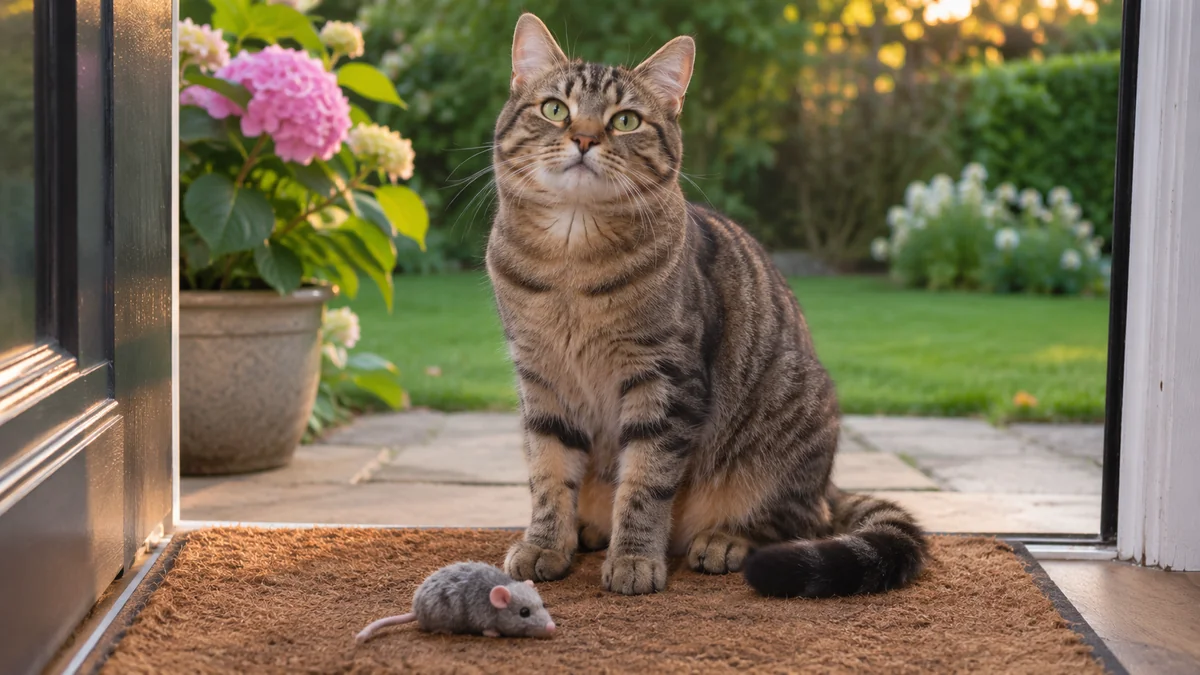

Opening the door to a mouse or bird on the mat is one of the less charming parts of living with a cat that goes outdoors. It is easy to read it as a gift or a lesson for you, but the real reason is simpler. Cats are natural hunters, and bringing prey back to a safe place is part of that instinct. You can’t switch the instinct off, but you can respond sensibly, protect your cat’s health and cut down how much wildlife it catches.
Key points: Cats hunt even when well fed, and they bring prey home because it feels like a safe place to eat or keep it, not to please you. Never punish your cat. Remove prey with gloves, help live animals escape, and keep flea and worm treatments up to date. Daily play, keeping your cat in from dusk until after dawn, and a good complete diet can all reduce hunting.
Why cats bring prey home
Hunting is deeply wired into cats. Domestication hasn’t removed it: a moving mouse or fluttering bird still triggers the stalk, pounce and catch sequence, even in a cat that has just eaten. PDSA notes that cats often hunt after a meal, especially when small prey moves nearby. Kittens learn and practice the skills through play and by watching their mother.
As for why the catch ends up in your kitchen, the most likely explanation is that home is your cat’s core territory. Cats Protection explains that cats carry prey back to a safe spot where they can eat it undisturbed or keep it away from other predators. Your home simply counts as that safe spot. Some people also suggest that cats see their humans as part of their social group, but the “gift” idea is more our interpretation than the cat’s.
Cats sometimes bat live prey about before killing it. That can look like cruel play, but PDSA explains it is mainly a way of tiring the prey and reducing the risk of being bitten or scratched.
How to respond when your cat brings in prey
Don’t punish your cat. It won’t link the scolding to the hunting and may become stressed or nervous around you. Calmly move your cat to another room while you deal with the animal.
If the animal is dead, pick it up wearing gloves or with a bag over your hand, double-bag it and put it in the household trash. Wash your hands and clean the area afterward.
If the animal is alive, shut your cat in another room, then gently guide or carry the animal outside to cover. Keep your cat indoors for a while so the animal can get away.
If the animal is injured, contact a local wildlife rescue, animal welfare charity or vet for advice. Cat bites and scratches carry bacteria that can be dangerous for small wild animals even when the wounds look minor.
Health risks for your cat
Cats that hunt and eat prey are more exposed to parasites and infections. Rodents and birds can carry worms, and prey animals can bring fleas into the house. Keep your cat’s flea and worm treatments up to date as your vet recommends, and watch for vomiting, diarrhea or weight loss. Our guides to worms in cats and fleas and ticks on cats cover what to look for.
Wash your hands after handling prey or cleaning up, and wear gloves when you can.
How to reduce hunting
Stopping hunting completely isn’t realistic for a cat that goes outdoors, and trying too hard can affect its wellbeing. You can reduce it, though:
- Play every day. Short, regular play sessions that mimic hunting give your cat an outlet for the instinct. Research mentioned by PDSA found that daily play with owners reduced the amount of prey cats brought home. Use wand toys that move like birds or mice, let your cat catch the toy sometimes, and keep sessions short and spread through the day. Our guide on how to play with a cat using a wand toy shows how.
- Keep your cat in from dusk until after dawn. Cats Protection recommends this, as many small animals are most active at these times.
- Feed a good-quality complete diet. Cats Protection and PDSA both note that higher-protein diets may reduce hunting. Ask your vet if you’re thinking of changing food, and see how to change cat food for doing it gradually.
- Keep bird feeders out of reach. Place feeders where cats can’t hide nearby or jump to them.
- Add indoor enrichment. Climbing spaces, puzzle feeders and hiding games help satisfy a busy cat. Our indoor cat enrichment guide has ideas.
What about bells on collars? PDSA cautions that bells are often not very effective and can cause problems. If you choose a collar, use a quick-release safety collar that opens if it gets caught.
Some cats direct their hunting energy at people’s feet when they don’t get enough play. If your cat stalks your ankles indoors, our guide on why cats attack ankles may help.
Frequently asked questions
Is my cat bringing me a gift?
Probably not in the way we imagine. The likeliest reason is that your home is your cat’s safe territory, so it brings prey there to eat or keep it. It is natural behavior, not a present or a sign your cat thinks you can’t hunt.
Why does my cat hunt if it is well fed?
Hunting isn’t driven only by hunger. The sight and sound of moving prey triggers the instinct, so even well-fed cats hunt. Hungry cats may be more motivated, which is why a complete, good-quality diet is still worthwhile.
Should I punish my cat for bringing in dead animals?
No. Your cat won’t understand why it is being punished, and it can damage your relationship and cause stress. Calmly remove the animal and focus on daily play and keeping your cat in at dusk and dawn.
Can my cat get sick from eating mice or birds?
Yes, hunting cats are more likely to pick up worms, fleas and some infections from prey. Keep parasite treatments up to date and see your vet if your cat has vomiting, diarrhea or weight loss.