
How often you should feed your dog depends mainly on its age, size, activity level and health. Puppies usually need several smaller meals a day, while most healthy adult dogs do well on two regular meals. A steady routine also makes it much easier to keep an eye on appetite, digestion and weight.
In short: feed young puppies three to four meals a day, drop to three meals from about three months and two meals from about six months. Most adult and senior dogs do well on two meals a day at roughly the same times. Measure portions, count treats and adjust based on your dog’s body condition.
Dog feeding schedule by age
A dog’s feeding routine changes as it grows. Younger dogs need food more often because they’re growing fast and have small stomachs.
| Dog’s age | Typical meals per day |
|---|---|
| 6–12 weeks | 3–4 meals |
| 3–6 months | 3 meals |
| 6–12 months | 2 meals |
| Adult dogs | Usually 2 meals |
| Senior dogs | Usually 2 meals, depending on individual needs |
These are general guidelines, not strict rules. Breed, size, activity level, health and the type of food all affect the best schedule for your dog.
How often should puppies eat?
Puppies need more frequent meals than adult dogs. Their growing bodies need a steady supply of energy, and their small stomachs can’t comfortably hold a full day’s food in one or two sittings. Splitting the daily amount into several smaller meals keeps their energy steady through the day. As your puppy grows, you can gradually cut down the number of meals.
Feed a food made for puppies. Large and giant breed puppies do best on a large breed puppy formula, which helps control their growth rate, and they often stay on puppy food longer than small breeds before switching to adult food.
Very young, toy breed or medically vulnerable puppies may need to eat more often, as small puppies can develop low blood sugar if they go too long without food. Follow your vet’s advice if your puppy has any health concerns.
How often should adult dogs eat?
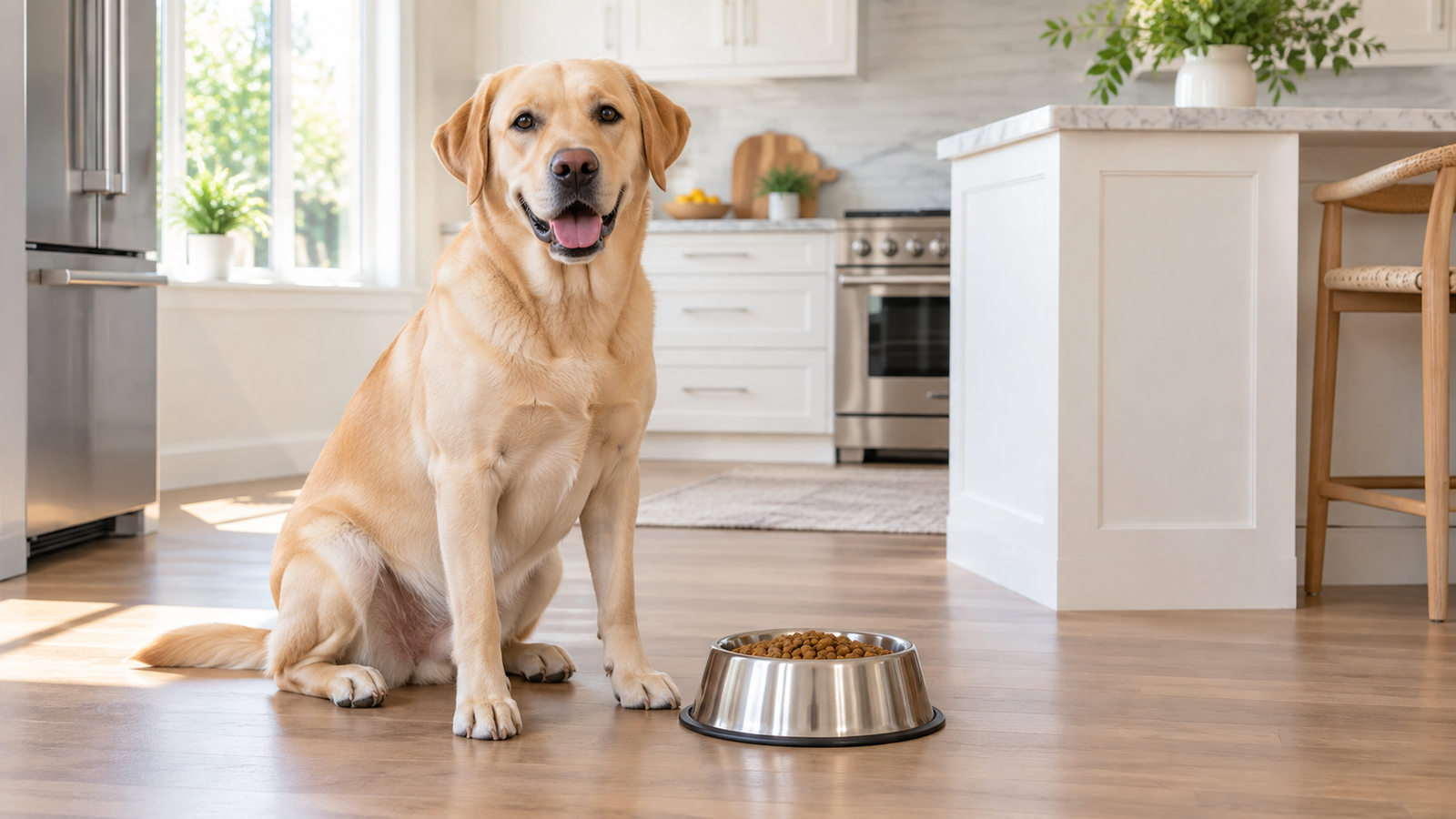
For most healthy adult dogs, two meals a day works well. A morning and an evening meal give a predictable routine without leaving a long gap between meals.
Some dogs do well on a different schedule, but consistency matters more than the exact time on the clock. Try to feed your dog at roughly the same times every day.
If you have a large, deep-chested breed, such as a Great Dane, German Shepherd or Standard Poodle, two or more smaller meals a day is especially sensible. Many vets also advise avoiding hard exercise for about an hour before and after meals, which may help lower the risk of bloat, a life-threatening emergency in these breeds.
What about senior dogs?
Many senior dogs keep eating twice a day. However, aging can affect activity level, digestion, weight, appetite and nutritional needs.
If an older dog starts gaining or losing weight, eating less, drinking more than usual or having digestive changes, talk to your vet about the feeding routine rather than simply changing the amount of food. These changes can be early signs of a health problem.
How much food should you give?
How often you feed and how much you feed are two different things. The right amount depends on the calorie content of the food and on your dog’s weight, age, activity level and body condition.
Start with the feeding guide on your dog’s food, then adjust based on your dog’s body condition, activity level and your vet’s advice. Remember that the guide gives a daily total, so divide it between meals.
- Measure meals with a kitchen scale or a proper measuring cup rather than guessing.
- Count treats as part of the daily total. Many vets suggest keeping treats to no more than about 10% of daily calories.
- Check your dog’s weight and body condition regularly.
- Make diet changes gradually over about a week, unless your vet advises otherwise.
Should dogs have food available all day?
Leaving food out all day, often called free feeding, can work for some dogs, but it makes portion control much harder and can lead to weight gain. It also makes changes in appetite harder to notice, and a change in appetite is sometimes an early sign of illness.
Scheduled meals make it easier to manage how much your dog eats, spot changes quickly and keep a predictable daily routine. Fresh water, on the other hand, should always be available.
Signs the feeding routine may need adjusting
A good feeding routine supports a healthy body condition, normal digestion and steady energy. Review your dog’s routine if you notice:
- Unexplained weight gain or weight loss
- Regularly leaving meals unfinished
- Constant hunger despite suitable portions
- Repeated vomiting or digestive upset
- A big change in activity level
Talk to your vet about any lasting changes in appetite, weight, digestion or drinking. If your dog suddenly refuses food and also seems unwell, don’t wait to see if it improves.
Keep the routine simple
For most dogs, a good feeding routine doesn’t need to be complicated. Feed the right amount of a complete, suitable food at consistent times, keep fresh water available and keep an eye on your dog’s weight and body condition over time.
Puppies usually need more frequent meals, while two meals a day is a practical starting point for most healthy adult and senior dogs. The best schedule ultimately depends on your dog’s age, size, activity level and health.
If you’re adjusting portions, our guide on how to tell if your dog is overweight can help you check your dog’s body condition.
Frequently asked questions
How many times a day should I feed my dog?
Most healthy adult dogs do well on two meals a day. Puppies need more frequent meals, usually three to four a day when very young, then three meals from about three months and two meals from about six months.
Is it okay to feed my dog once a day?
Some adult dogs manage on one meal a day, but two meals is the most common recommendation, as it spreads food intake more evenly. Puppies, toy breeds and large deep-chested breeds usually need more than one meal. Check with your vet before switching to once a day.
When should a puppy go from three meals to two?
Many puppies move from three meals to two at around six months old. Small breeds may need more frequent meals for a little longer, so follow your vet’s advice for your puppy.
Should I leave food out for my dog all day?
It’s usually better not to. Free feeding makes portion control harder, can lead to weight gain and makes changes in appetite harder to spot. Scheduled meals, with fresh water always available, work better for most dogs.