
Keeping your dog at a healthy weight can make a real difference to how comfortably it moves, how much it enjoys exercise and how well it ages. Weight usually creeps on slowly, so it’s easy to miss. That’s why it helps to look at your dog’s body shape, not just the number on the scale.
In short: a dog at a healthy weight has ribs you can feel easily without seeing them, a visible waist from above and a belly that tucks up from the side. If those are hard to find, talk to your vet before changing how much your dog eats.
Check your dog’s ribs
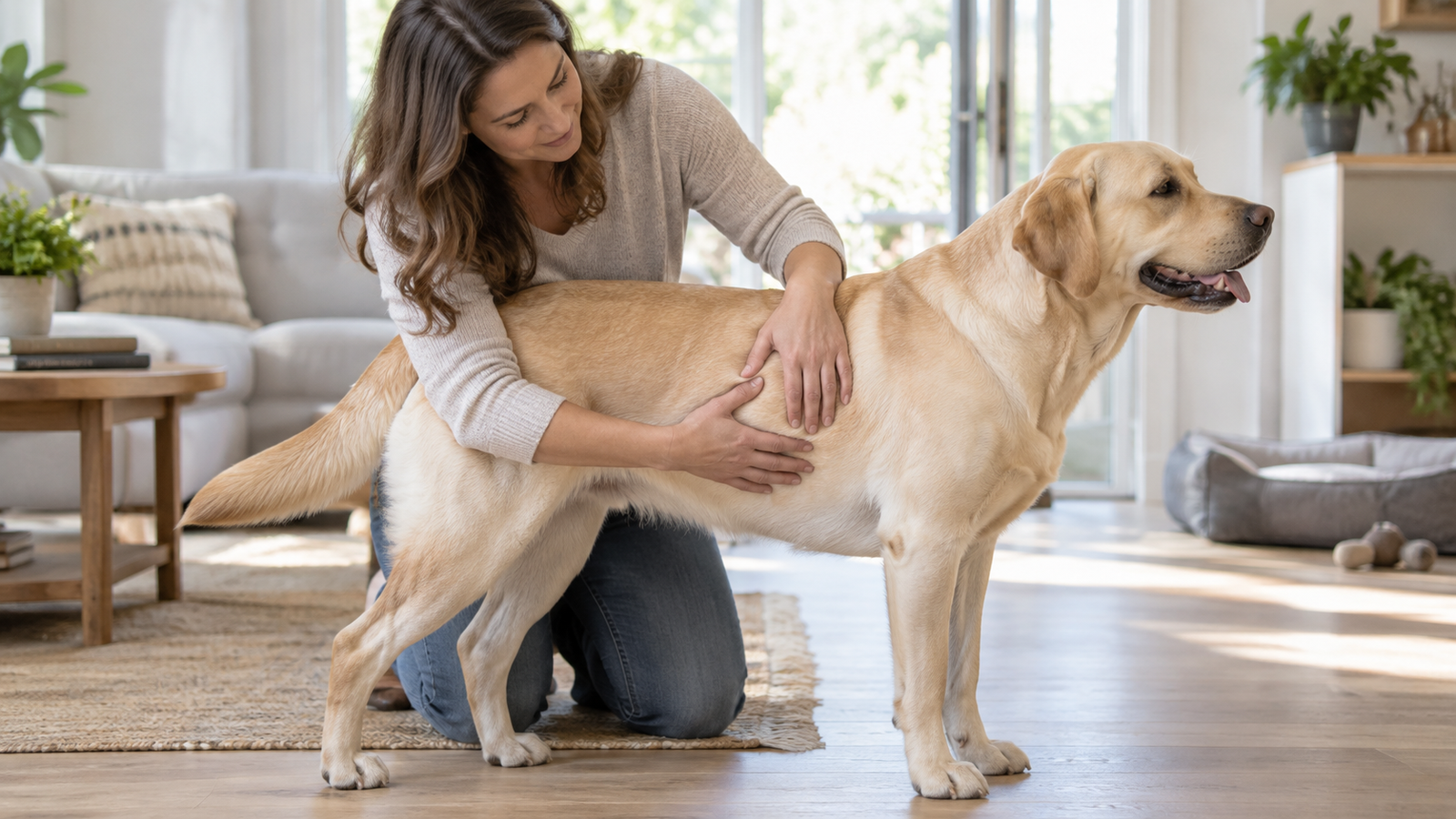
Run your hands along your dog’s sides. You should be able to feel the ribs with gentle pressure, without having to push through a thick layer of fat. A common comparison is the feel of the back of your hand. In most healthy adult dogs, the ribs shouldn’t be sharply visible either.
Some breeds, like greyhounds and whippets, naturally look leaner, and it’s normal to see a little more of their ribs.
Look for a visible waist
Stand over your dog and look down. Most dogs at a healthy weight have a noticeable narrowing behind the ribs. If the body looks rounded or the waist has disappeared altogether, your dog may be carrying extra weight.
Check the side profile
Now look from the side. The belly should rise slightly from the chest toward the back legs, often called an abdominal tuck. A belly that hangs level with the chest, or sags below it, is a common sign of excess weight.
If your dog’s belly swells suddenly or looks bloated rather than gradually filling out, contact a vet promptly. That isn’t normal weight gain.
| Check | Healthy weight | Possibly overweight |
|---|---|---|
| Ribs | Easy to feel with light pressure, not prominent | Hard to feel under a layer of fat |
| Waist (from above) | Clearly visible behind the ribs | Barely visible or missing |
| Belly (from the side) | Tucks up toward the back legs | Level with the chest or sagging |
Vets often score this more precisely using a body condition score (BCS), usually on a 9-point scale where 4 or 5 is considered ideal. Your vet can show you where your dog sits on that scale.
Everyday signs to watch for
Extra weight tends to show up in how a dog moves and behaves day to day. You might notice:
- Less interest in walks or play
- Getting tired or out of breath more quickly
- Trouble jumping into the car or climbing stairs
- A waist that’s harder to see than it used to be
- A slow, steady increase on the scale
Don’t cut food suddenly
If your dog looks overweight, resist the urge to slash its meals overnight. Look at everything it eats first, including treats, chews and table scraps, which add up faster than most people realize. Many vets suggest keeping treats to no more than 10% of a dog’s daily calories.
Measure meals with a kitchen scale or a proper measuring cup rather than guessing, and make any portion changes gradually. A safe rate of weight loss depends on the individual dog, which is where your vet comes in.
When to talk to your vet
A vet can assess your dog’s body condition, check for medical conditions that can cause weight gain, such as an underactive thyroid, and help you set a realistic target weight with a feeding and exercise plan to match.
Regular weigh-ins, measured meals and the right amount of daily activity make it much easier to keep your dog in good shape for years to come.
If you’re reviewing your dog’s meals, our guide on how often you should feed a dog explains feeding schedules by age.
Frequently asked questions
How can I tell if my dog is overweight at home?
Check three things: whether you can feel the ribs easily with light pressure, whether there’s a visible waist when you look down from above, and whether the belly tucks up toward the back legs when viewed from the side. If the ribs are hard to feel and the waist or tuck is missing, your dog may be overweight.
What is a healthy body condition score for a dog?
On the 9-point body condition scale that many vets use, a score of 4 or 5 is generally considered ideal. Higher scores indicate a dog is carrying excess weight.
Should I put my overweight dog on a diet straight away?
It’s best to speak to your vet first. They can rule out health problems that affect weight and recommend a safe target weight, portion size and rate of weight loss. Sudden, drastic cuts to food aren’t recommended.