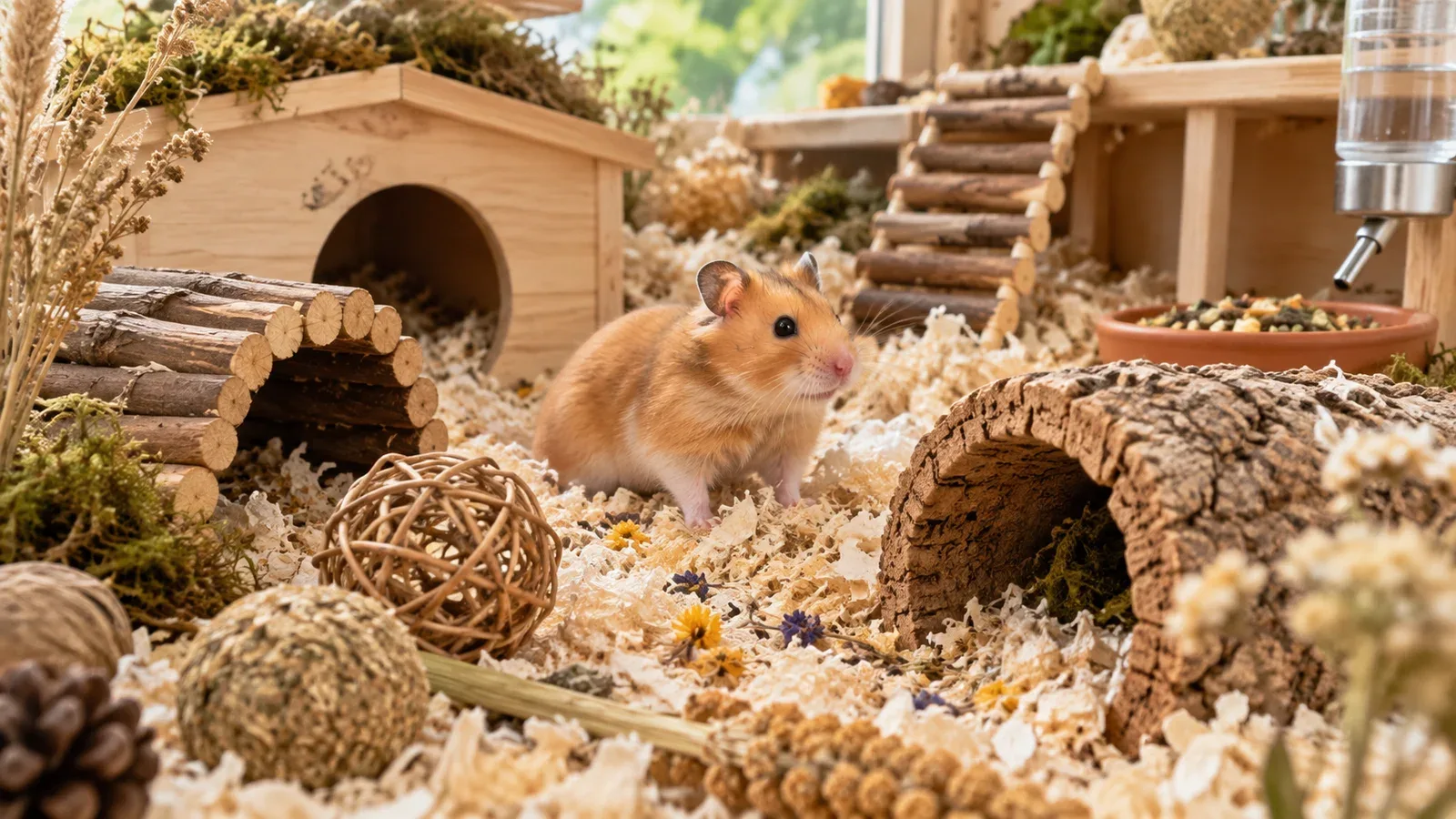

Keeping a hamster cage clean is a balancing act. You want to get rid of waste, damp bedding and old food, but you don’t want to wipe out every familiar smell your hamster relies on. Hamsters find their way around largely by scent, so a cage that’s stripped bare and scrubbed too often can feel like a strange place to them.
At a glance: spot clean a little every day, wash food and water containers regularly, and only do a deeper clean when the bedding actually needs it. When you do, keep some clean old bedding and mix it back in.
How often should you clean a hamster cage?
Take a quick look inside the enclosure every day and remove anything that’s obviously dirty. A fuller clean is needed from time to time, but there’s no fixed schedule that suits every cage. How often you need one depends on the size of the enclosure, how deep the bedding is, how many toilet spots your hamster uses and how much it hoards.
A large enclosure with deep bedding usually stays fresh much longer than a small one, because waste is spread out and easier to remove in small amounts.
| How often | What to do |
|---|---|
| Every day | Remove wet or soiled bedding, take out fresh food that’s starting to spoil, and top up with clean water. |
| Regularly | Wash the food bowl and water bottle or dish, and clean out the toilet corner or sand bath. |
| When needed | Wipe down wheels, hides and toys that look dirty, and replace larger sections of bedding once they’re soiled or damp. |
What to clean every day
- Scoop out bedding that’s wet or heavily soiled.
- Remove fresh vegetables or other perishable food before it spoils.
- Check the water and refill it with fresh, clean water.
- Clear droppings from the spots your hamster uses most.
A couple of minutes a day keeps smells down and means you rarely have to tear the whole enclosure apart.
Many hamsters pick one corner as a toilet. If yours does, putting a shallow dish of sand there (chinchilla bathing sand, not dust) can make daily cleanup much quicker.
When to do a deeper clean
It’s time for a bigger clean when the bedding looks dirty across a wide area, feels damp, or has a sharp ammonia smell. Even then, you don’t have to replace everything. Focus on the parts of the cage that actually need it.
If some of the old bedding is still clean and dry, set it aside and mix it back in with the fresh bedding. That familiar scent helps the enclosure still feel like home.
For the base and accessories, warm water with a little mild, unscented soap works well. Rinse everything thoroughly and let it dry completely before putting bedding back in. Avoid bleach and strongly scented cleaners, as their fumes and residue can irritate a hamster’s airways.
How to clean the nest without upsetting your hamster
Hamsters build nests and stash food in hidden corners, and they don’t take kindly to having them destroyed. If the nest is clean and dry, leave it alone.
If it contains spoiled food, wet bedding or a lot of waste, take out only what needs to go and leave the rest in place. Try to do this while your hamster is awake rather than disturbing it mid-sleep.
Cleaning food bowls, water bottles and accessories
Food dishes and water containers should be checked often and washed regularly. With water bottles, pay attention to the spout, since it can get blocked or build up grime without being obvious.
Wheels, hides and other accessories can be cleaned as they get dirty. There’s no need to pull everything out and wash it all at once.
Signs your hamster’s cage needs cleaning
- A strong or unusual smell
- Damp or clumped bedding
- Droppings building up in one area
- Mold, or stored food that has gone bad
- Dirty food bowls or water containers
Keeping the cage clean without too much disruption
The aim isn’t to make the enclosure smell brand new every few days. A good routine keeps it hygienic while leaving familiar bedding, tunnels and scents in place as long as they’re still clean.
Daily checks, quick spot cleaning and a deeper clean only when it’s needed will keep your hamster’s home comfortable without turning its world upside down.
A calm, clean home also makes handling easier. If your hamster nips, our guide on why hamsters bite explains the common causes.
If you’re upgrading the enclosure, our guide on choosing a hamster cage and wheel covers floor space, bedding depth and wheel size.
Frequently asked questions
Should I replace all the bedding when I clean the cage?
Usually not. Replace the bedding that’s soiled or damp, and keep some of the clean old bedding to mix in with the new. Swapping out everything at once removes familiar scents, which can stress your hamster.
What can I use to clean a hamster cage safely?
Warm water and a small amount of mild, unscented soap is enough for most cleaning. Rinse well and let everything dry fully. Avoid bleach and strongly perfumed cleaning products.
Why does my hamster’s cage smell so quickly?
A fast-returning smell usually comes from urine soaking into bedding in a toilet corner, spoiled hoarded food, or a cage that’s too small for the bedding to absorb waste. Daily spot cleaning of the toilet area and removing old fresh food normally helps.