
Clean an established freshwater aquarium filter by removing trapped debris while preserving the filter media that supports beneficial bacteria. Use aquarium water removed during maintenance to rinse reusable biological media, follow the instructions for your filter, and avoid replacing all mature media at once. The goal is restored water flow, not a sterile filter.
A filter can look dirty and still be doing important work. On the other hand, leaving it clogged indefinitely reduces its usefulness. The right maintenance decision depends on its design, the media inside and what is happening to flow and water quality.
Know what you are cleaning
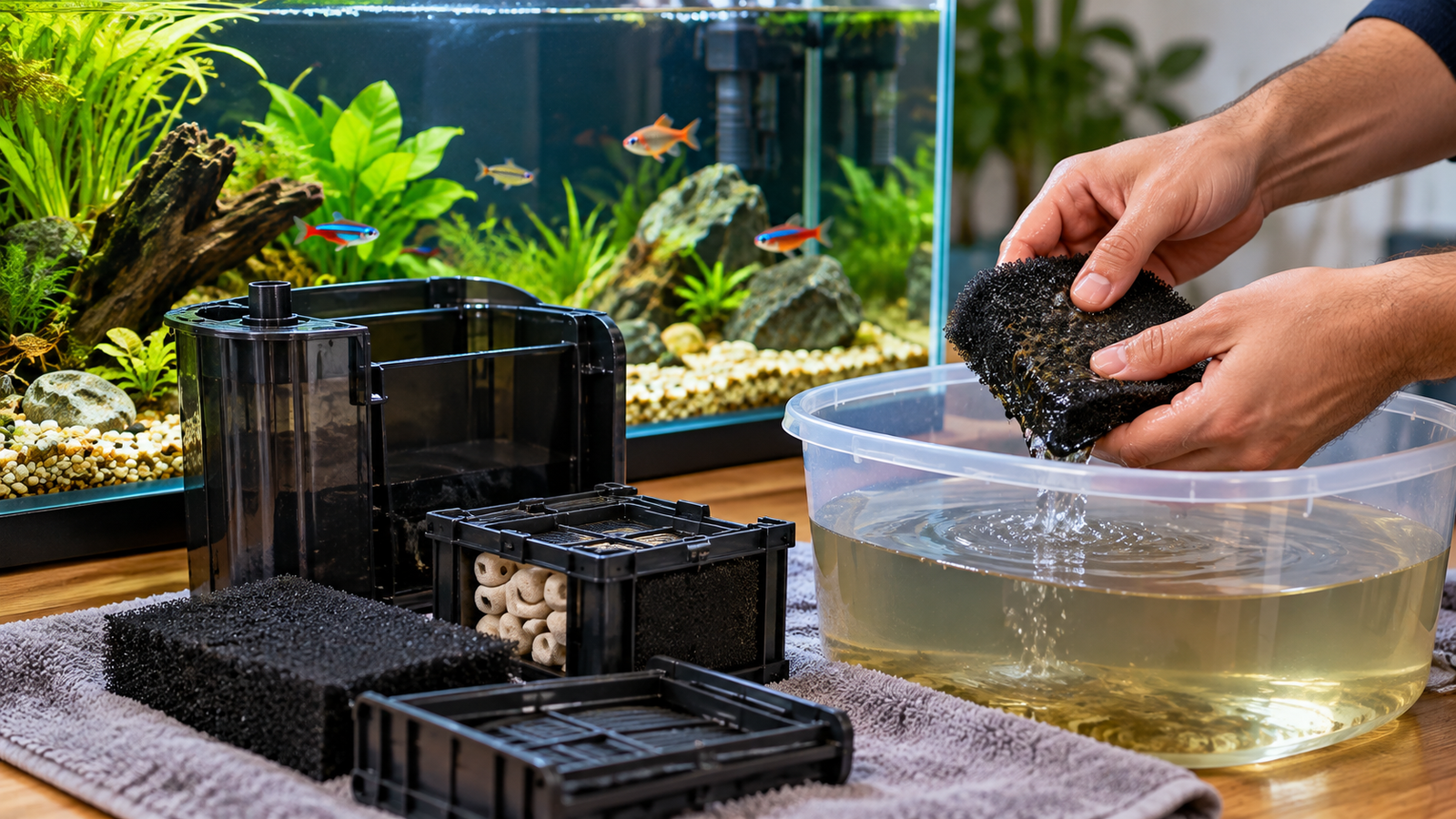
Most filters combine more than one job. Mechanical media catches particles; biological media provides surfaces for microbes involved in processing fish waste; chemical media removes particular dissolved substances, depending on the product. A sponge can have both mechanical and biological roles.
- Reusable sponge or foam: remove accumulated debris without trying to make it look factory-new.
- Ceramic rings and other biological media: gently rinse when needed to keep water moving through them.
- Disposable polishing pads: follow the product’s replacement guidance while preserving established biological media elsewhere.
- Carbon or specialist chemical media: follow its specific service life and instructions. Rinsing does not necessarily restore its chemical capacity.
Check the manual before removing a cartridge. Some systems have a separate permanent biological section; others rely heavily on the cartridge itself. Knowing that distinction prevents an apparently routine replacement from removing much of the established filter at once.
When does the filter need attention?
Compare flow with how the filter normally runs, rather than using colour alone. Reduced output, debris around the intake or water bypassing clogged pads are reasons to inspect it. Also check water level and intake obstructions: a weak stream does not automatically mean all the media needs replacing.
Use the manufacturer’s interval as a starting point and adjust inspection to your aquarium. Fish numbers, feeding and plant debris affect how quickly material accumulates. Keep a simple note of the last service and what you cleaned. A filter that clogs unusually quickly deserves a review of the tank routine, not just more frequent cartridge purchases.
A careful cleaning sequence
- Prepare before switching off. Have the manual, towels and an aquarium-only container ready. Use a container that has not held soap or household cleaners.
- Save suitable aquarium water. Set aside water removed during a routine partial change for rinsing media. Our water-change guide covers preparing replacement water.
- Disconnect equipment safely. Follow the manufacturer’s electrical and shutdown instructions. If lowering the water exposes a heater, follow its cooling and minimum-water-level requirements too.
- Keep biological media wet. Place it in the reserved aquarium water while you work. Avoid untreated chlorinated tap water, hot water, soap and disinfectants.
- Remove accumulated debris. Gently rinse or squeeze reusable foam as appropriate for the product. Swish biological media without scrubbing it sterile.
- Check the intake and moving parts. Clean accessible tubing and the impeller area only as the manual directs. Do not force fragile shafts, seals or clips.
- Reassemble and restart. Return media in the correct order, refill or prime if required, and restore power according to the instructions. Never run equipment dry if it is not designed for that.
Do not leave the filter off while you move on to unrelated chores. Once it is running, check the return flow, connections and surrounding surfaces for leaks. Confirm that any equipment disconnected for maintenance has been restored safely.
Cleaning is not the same as replacing
Replace worn, damaged or product-expired media according to its instructions, but plan the biological transition. Where the design allows it, retain part of the mature media while new media becomes established. Do not cram extra material into a filter in a way that blocks flow or prevents proper assembly.
If the manual calls for regular cartridge changes, identify which part preserves the bacteria between changes. Ask the manufacturer for guidance when the design is unclear. A universal “replace everything monthly” rule does not suit every filter.
Our explanation of aquarium cycling covers why established biological filtration matters. Choosing an appropriate system in the first place also helps; see aquarium filters and heaters.
Checks after maintenance
Observe the fish and test ammonia and nitrite, especially after substantial media replacement or a suspected disruption. Clear water alone cannot confirm that the biological filter is working. Continue testing if results change, and keep a record of the readings and maintenance you performed.
If fish are gasping, distressed or behaving abnormally, respond promptly: check flow, aeration, temperature and water tests, and seek aquatic veterinary advice where needed. Do not assume another deep clean or an unneeded medication will solve it. Our surface-gasping guide explains the immediate checks.
Sources and further reading
- RSPCA Australia: Tropical fish care and filtration
- Fluval: Filter media cleaning
- Aqueon: Filtration explained
- Aqueon: Aquarium cleaning checklist
This guide covers routine freshwater maintenance. Follow your equipment instructions and seek veterinary advice for sick fish. See our Pet Health Disclaimer.