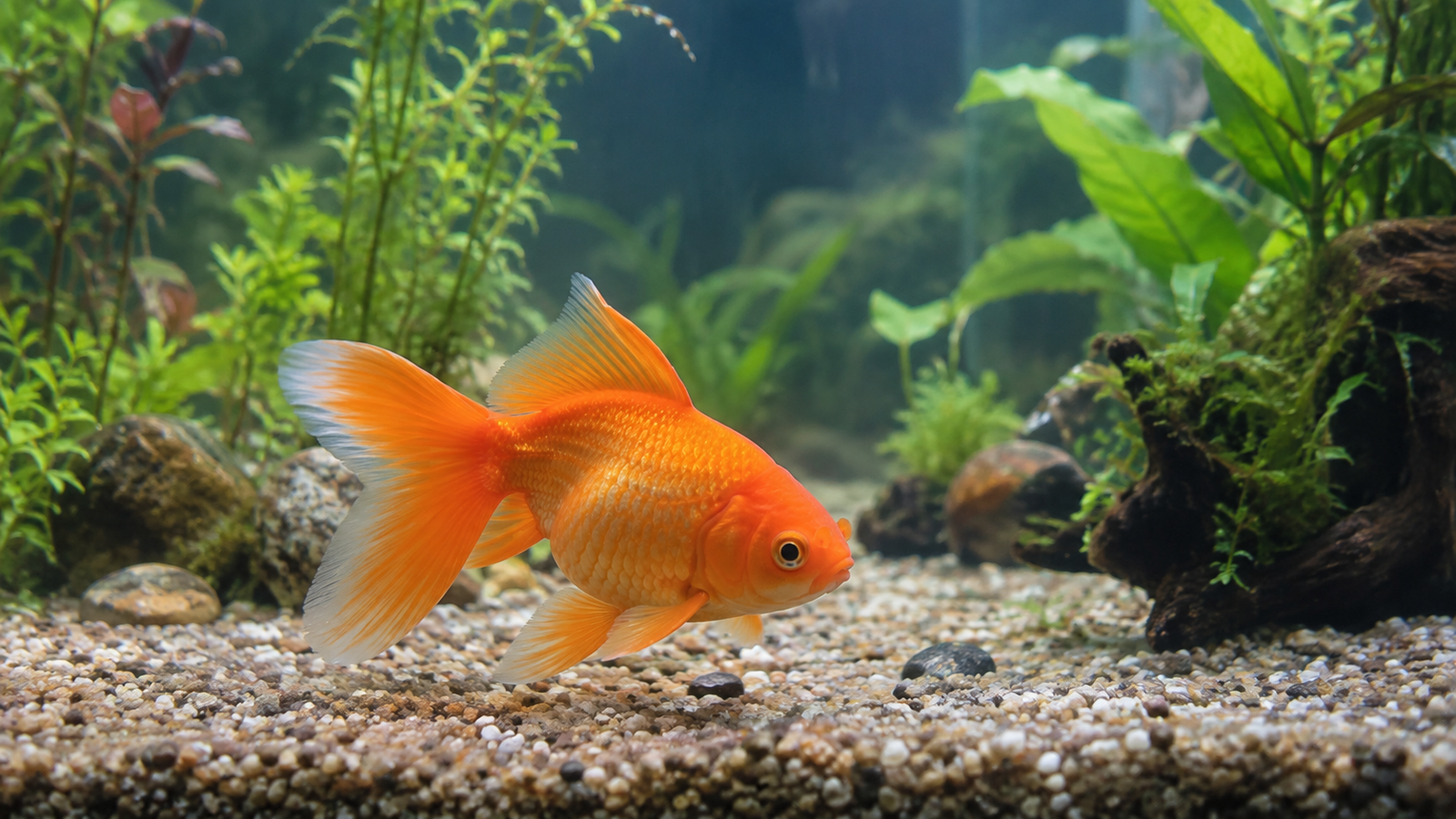

A goldfish resting near the bottom of the tank isn’t always sick, but a sudden or lasting change in behavior is worth looking into. Water quality, oxygen levels, temperature, stress and illness can all make a goldfish sit on the bottom, and most of them are things you can check and fix at home.
In short: test the water first, since ammonia and nitrite are the most common culprits. Then check oxygen, temperature and feeding. If your goldfish is otherwise eating and swimming normally, it may just be resting. If not, look for other symptoms and get advice from a fish vet.
| Possible cause | What you might notice | What to check |
|---|---|---|
| Poor water quality | Lethargy, clamped fins, red or inflamed gills | Ammonia, nitrite and nitrate levels |
| Low oxygen | Gasping at the surface or rapid gill movement | Filter flow and surface movement |
| Water too cold | Slow, sluggish movement and less interest in food | Water temperature |
| Swim bladder or digestive trouble | Difficulty staying upright, sinking or struggling to swim up | Feeding amounts and food type |
| Normal resting | Brief rest, often at night, then active and eating again | Behavior over the rest of the day |
Check the water quality first
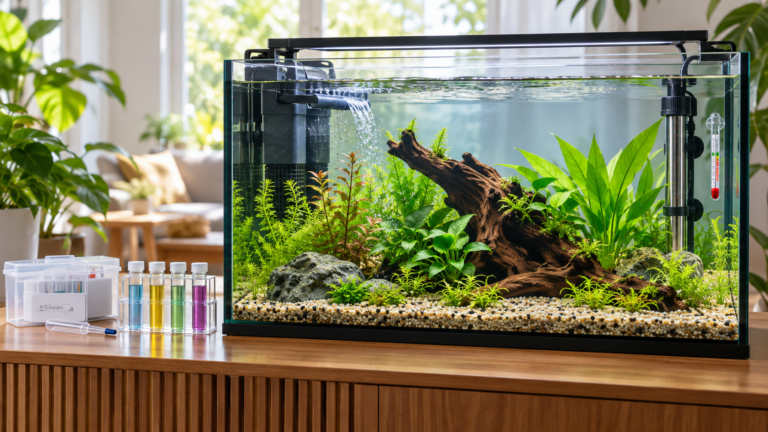
Poor water quality is the first thing to rule out. Goldfish produce a lot of waste, so ammonia can build up quickly, especially in small, new or overstocked tanks. Test the water for ammonia, nitrite and nitrate using an aquarium test kit.
In an established, healthy tank, ammonia and nitrite should both read 0 ppm, and nitrate should be kept low with regular water changes. If ammonia or nitrite show up, do a partial water change straight away using dechlorinated water matched to the tank’s temperature, and keep testing until the levels are back to zero.
Look for signs of low oxygen
Goldfish need well-oxygenated water. Overcrowding, a weak or clogged filter, or a still water surface can all reduce the amount of oxygen available. Gasping at the surface is a classic warning sign, but some fish become sluggish and sink instead.
Check that the filter is running properly and that the surface of the water is moving. An air stone or adjusting the filter outflow to ripple the surface can help quickly.
Check the temperature
Goldfish are coldwater fish, but they still slow down noticeably when the water gets too cold. Many aquarium goldfish do well at roughly 65–75°F (18–24°C). What matters most is stability, as sudden temperature swings stress fish. Very warm water holds less oxygen, which can also make a goldfish lethargic.
Could your goldfish just be resting?
Goldfish do rest, often near the bottom and usually at night or when the room is dark and quiet. A resting goldfish usually hovers just above the gravel with its fins slightly spread, and may look a little paler than usual. If it becomes active again, eats normally and shows no other unusual signs, an occasional rest is nothing to worry about.
Watch for other symptoms
Take bottom-sitting more seriously if it comes with any of the following:
- Loss of appetite
- Rapid or labored breathing
- Clamped fins held tight against the body
- Trouble swimming or staying upright
- Swelling, raised scales or unusual spots
- Repeatedly rubbing or flicking against objects
- Staying still for long periods
Review feeding and tank setup
Overfeeding is a common problem with goldfish. Leftover food breaks down and pollutes the water, and eating too much can cause digestive and swim bladder problems, particularly in round-bodied fancy goldfish. Feed small portions your fish can finish within a couple of minutes, and remove anything left over.
Goldfish grow much larger than many people expect and need far more space than a bowl or small tank can offer. Make sure the tank is big enough, with filtration suited to the number and size of the fish. Common single-tailed goldfish can grow long enough to outgrow most home aquariums and are often better suited to ponds.
When to get professional help
If your goldfish keeps staying at the bottom, stops eating or shows other physical or behavioral changes, contact a vet experienced with fish, or ask a knowledgeable aquatic store for advice while you arrange one.
Avoid adding medications before you know what’s wrong. Many treatments stress fish further, some harm the beneficial bacteria in your filter, and the wrong one can make a water quality problem worse.
Start with the environment
When a goldfish suddenly behaves differently, checking water quality, temperature, filtration and oxygen is the right first step. A clean, stable tank is the best foundation for a healthy, active goldfish.
If your goldfish is at the top of the tank instead, see why fish gasp at the surface. For long-term health, our guide on setting up a goldfish tank properly covers space, filtration and cycling.
Frequently asked questions
Why is my goldfish sitting at the bottom of the tank?
Common causes include poor water quality, low oxygen, water that’s too cold, swim bladder or digestive problems, stress and illness. Sometimes a goldfish is simply resting. Test the water for ammonia and nitrite first, as poor water quality is one of the most common causes.
Is my goldfish dying if it stays at the bottom?
Not necessarily. Resting at the bottom, especially at night, can be normal. It’s more concerning if your goldfish also stops eating, breathes rapidly, clamps its fins or struggles to swim. In that case, check the water right away and seek advice from a fish vet.
Do goldfish sleep at the bottom of the tank?
Yes. Goldfish rest, usually at night, and often hover near the bottom with their fins slightly spread. They may look a little paler while resting and return to normal activity when the lights come back on.
What should I do first if my goldfish is lethargic?
Test the water for ammonia, nitrite and nitrate. If ammonia or nitrite is present, do a partial water change with dechlorinated, temperature-matched water. Then check the filter, surface movement and temperature before considering any medication.