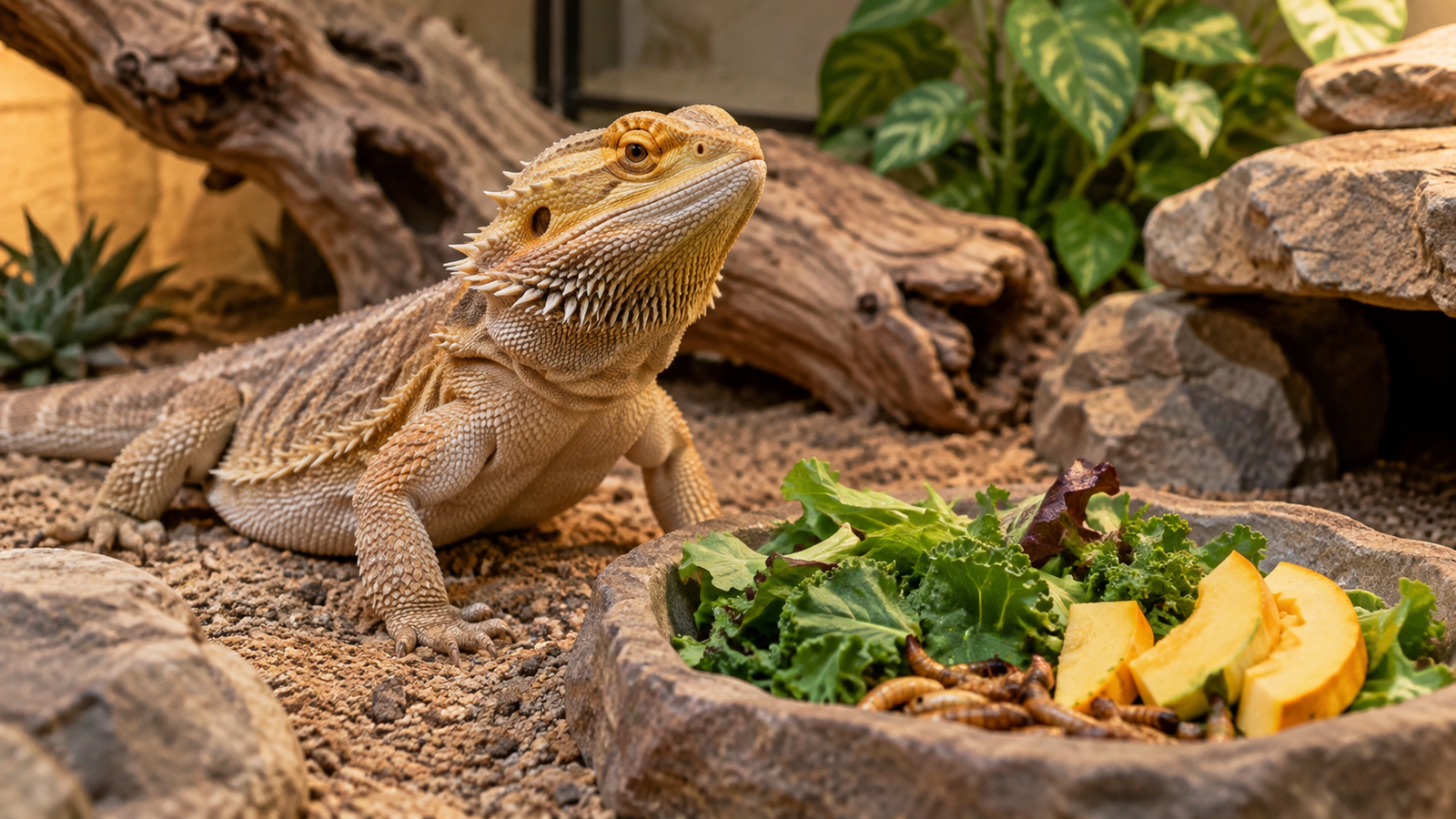

Bearded dragons are omnivores, so they eat both insects and plants. The balance shifts as they grow. Young dragons need lots of insect protein to fuel their growth, while adults do best on a diet that’s mostly leafy greens and vegetables, with insects as a smaller part.
In short: feed babies and juveniles mostly insects, and adults mostly greens. Offer a rotating mix of gut-loaded feeder insects and dark leafy greens, dust insects with calcium, provide proper UVB lighting, and never feed wild-caught insects or fireflies.
What should bearded dragons eat?
A healthy diet combines suitable live feeder insects, dark leafy greens and a smaller amount of other vegetables. Variety matters. Rotating foods gives your dragon a wider range of nutrients than sticking to the same meal every day, and keeps it interested in eating.
Good feeder insects
These make good staple insects:
- Dubia roaches
- Crickets
- Black soldier fly larvae
- Silkworms
Mealworms, superworms and waxworms are higher in fat or harder to digest, so offer them only occasionally as treats.
A useful rule of thumb is never to feed an insect larger than the space between your dragon’s eyes. Oversized insects can be hard to swallow and digest.
“Gut-load” your insects by feeding them nutritious food for a day or two before offering them to your dragon, so they pass on more nutrients. Remove any live crickets your dragon doesn’t eat, as they can nibble on a resting dragon.
Never feed wild-caught insects. They may carry pesticides or parasites. Fireflies are especially dangerous, as they are toxic to bearded dragons and can be fatal even in small amounts.
Vegetables and greens
Dark leafy greens should form the base of the plant part of the diet. Good choices include:
- Collard greens
- Mustard greens
- Turnip greens
- Dandelion greens (from a pesticide-free source)
- Endive and escarole
You can add smaller amounts of vegetables such as butternut squash, bell pepper and green beans. Chop everything into bite-sized pieces and rotate what you offer rather than serving the same mix every day.
Young vs adult bearded dragons
Growing dragons need much more protein than adults, so both the balance of food and how often you feed change with age.
| Age | Diet balance | Feeding routine |
|---|---|---|
| Babies and juveniles | Mostly insects, often around 70–80%, with greens offered daily | Insects several times a day for babies, gradually reducing as they grow |
| Adults | Mostly greens and vegetables, often around 80%, with insects making up the rest | Fresh greens daily, insects a few times a week |
These are widely used guidelines. Your dragon’s exact needs depend on its age, size and health, so check with a reptile vet if you’re unsure. Adult dragons fed too many insects are prone to becoming overweight.
Why calcium and UVB matter
Bearded dragons need plenty of calcium, and they need UVB light to use it properly. Without both, they can develop metabolic bone disease, a serious condition that weakens bones and can cause a soft jaw, swollen limbs and tremors.
Most keepers dust feeder insects with a calcium powder, along with a reptile multivitamin on some feedings. How often, and whether the calcium should contain vitamin D3, depends on your dragon’s age and your UVB setup. Follow guidance from a reptile vet or an experienced keeper rather than guessing.
Use a good-quality UVB tube designed for desert reptiles, and replace it as often as the manufacturer recommends, as UVB output fades over time even when the bulb still looks bright.
Foods to avoid
- Fireflies and any wild-caught insects
- Avocado
- Rhubarb
- Onions, garlic and chives
- Iceberg lettuce, which has very little nutritional value
- Spinach and beet greens as regular foods, since they’re high in oxalates, which interfere with calcium absorption
Fresh water and good husbandry
Provide a shallow dish of fresh water, and change it daily. Many dragons also get a good amount of moisture from lightly misted greens.
Diet is only one part of the picture. Correct basking and cool-side temperatures, strong UVB lighting and a clean enclosure all affect appetite and digestion. If your bearded dragon stops eating, loses weight or behaves unusually, contact a reptile vet.
Diet works hand in hand with heat and UVB, so see our guide on setting up a bearded dragon tank for temperatures and lighting.
Frequently asked questions
What do bearded dragons eat daily?
Adult bearded dragons should have fresh dark leafy greens every day, with feeder insects a few times a week. Babies and juveniles need insects more often, usually several times a day for babies, alongside daily greens.
How big should feeder insects be for a bearded dragon?
A common rule is that insects should be no larger than the space between your bearded dragon’s eyes. Larger insects can be difficult to swallow and digest.
Can bearded dragons eat fireflies?
No. Fireflies are toxic to bearded dragons and can be fatal. Never feed wild-caught insects of any kind, as they may also carry pesticides or parasites.
Do bearded dragons need calcium supplements?
Yes. Most keepers dust feeder insects with calcium powder and add a reptile multivitamin on some feedings. Bearded dragons also need proper UVB lighting to use calcium. Ask a reptile vet how often to supplement for your dragon’s age and setup.