
Early socialization helps a puppy grow up comfortable with people, other animals, everyday sounds and new places. The aim isn’t to expose your puppy to everything at once. It’s to build up lots of calm, positive experiences at a pace your puppy can handle.
In short: start early, since a puppy’s most sensitive learning period ends at around 12 to 14 weeks. Keep every new experience short and positive, let your puppy watch from a distance when unsure, and ask your vet which places and dogs are safe before vaccinations are complete.
What is puppy socialization?
Socialization means gently introducing your puppy to the world it’ll live in: different people, other animals, household sounds, different surfaces underfoot, being handled, and new places. A puppy that has good experiences with all of this early on is much more likely to grow into a relaxed, confident adult dog.
Why timing matters
Puppies go through a sensitive period for socialization, roughly from 3 weeks to about 12 to 14 weeks of age. During this window they accept new things more easily, and experiences have a lasting effect on how they react to the world later on. A lot of that window has already passed by the time most puppies come home, so start gently from the first week.
Socialization doesn’t stop at 14 weeks, though. Keep offering positive new experiences through adolescence and beyond so your puppy’s confidence keeps growing.
Start slowly
Introduce new things a little at a time. Keep sessions short and upbeat, and let your puppy watch from a comfortable distance if it seems unsure. Letting a puppy choose to move closer builds far more confidence than carrying it straight up to something new.
| Category | Examples |
|---|---|
| People | Men and women, children, older people, people wearing hats or glasses, people with umbrellas or bikes |
| Sounds | Vacuum cleaner, doorbell, traffic, washing machine, hair dryer |
| Surfaces | Grass, tiles, carpet, gravel, wooden floors, a wobbly cushion |
| Handling | Gently touching paws, ears and mouth, brushing, being lifted |
| Places and experiences | Car rides, the vet clinic, a quiet café or shop entrance, being alone for short periods |
Introducing different people
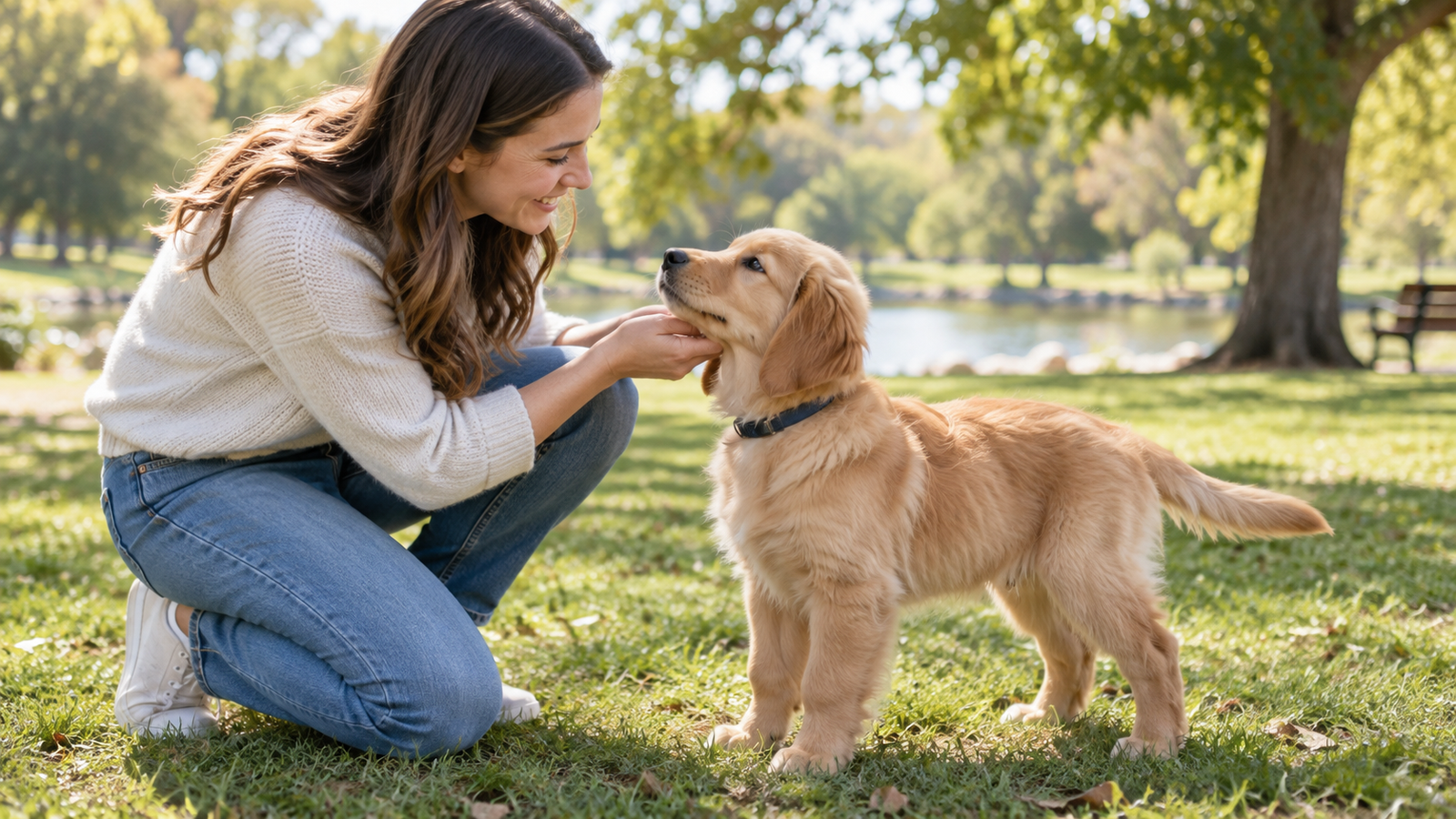
Let your puppy meet calm adults and children in controlled situations. Ask visitors to crouch down, let the puppy approach them, and offer a treat rather than reaching over its head. Don’t force interaction if your puppy looks nervous or tries to move away. With children, supervise closely and teach them to be gentle.
Keep every experience positive
- Reward calm, curious behavior with treats or praise.
- Keep introductions short and end on a good note.
- Avoid crowded or very noisy places early on.
- Always give your puppy a way to back off if it needs to.
Handling practice pays off for life. Gently touching your puppy’s paws, ears and mouth, paired with treats, makes future vet checks, nail trims and grooming much easier. You can also ask your vet clinic about quick “happy visits” where your puppy just gets a treat and a fuss.
Be careful around other dogs
For early meetings, choose healthy, fully vaccinated, calm dogs you know. One rough encounter with a pushy adult dog can leave a lasting impression.
Until your puppy’s vaccinations are complete, avoid places where lots of unknown dogs go, such as dog parks. You can still carry your puppy to see the world, or visit friends’ homes with dogs you know are healthy. Ask your vet which places and interactions are safe in your area.
Many vets and behavior experts now encourage well-run puppy classes, which can often start from around 7 to 8 weeks of age once the first vaccinations are underway, as long as the class requires vaccination records and has clean facilities. Ask your vet about the right timing for your puppy.
Watch your puppy’s body language
Learning to read your puppy helps you spot when an experience is becoming too much. Signs of discomfort include:
- Hiding or trying to escape
- Trembling
- A tucked tail or flattened ears
- Lip licking or repeated yawning
- Heavy panting when it isn’t hot
- Refusing treats it would normally take
If your puppy seems overwhelmed, move further away from whatever is worrying it, let it settle, and try again another day at an easier level.
Consistency builds confidence
Good socialization comes from lots of small, positive experiences rather than a few big ones. Patience, gentle exposure and regular practice will help your puppy grow into a confident, adaptable adult dog.
As your puppy becomes more independent, our guide on how long a dog can be left alone may also help.
Our guide on how often you should feed a dog also includes a feeding schedule for growing puppies.
Frequently asked questions
When should I start socializing my puppy?
As soon as your puppy comes home. The most sensitive period for socialization runs from about 3 weeks to around 12 to 14 weeks of age, so early, gentle experiences are especially important. Keep socializing throughout adolescence too.
Can I socialize my puppy before it’s fully vaccinated?
Yes, with care. Avoid places where lots of unknown dogs go, but you can carry your puppy to see new places, invite visitors over, introduce household sounds and let it meet healthy, vaccinated dogs you know. Ask your vet what’s safe in your area.
What are signs my puppy is overwhelmed?
Common signs include hiding, trembling, trying to escape, a tucked tail, flattened ears, lip licking, yawning, heavy panting and refusing treats. If you see these, increase the distance and try again another time.
Are puppy classes worth it?
A well-run puppy class is a great way to socialize safely with other puppies and people. Many classes accept puppies from around 7 to 8 weeks once vaccinations have started. Choose a class that uses reward-based training and asks for vaccination records.